Trong bài viết này, cùng Đội ngũ Học thuật ILP xem qua giải đề IELTS Writing 2022 – tổng hợp các bài mẫu cho đề thi thật từ tháng 5 – tháng 7.
Dưới mỗi bài viết đều có chú thích Band điểm rõ ràng, các bạn theo dõi và tham khảo nhé!
ĐỀ WRITING TASK 1 CHÍNH THỨC – UPDATED 2021 ILP TỔNG HỢP
TỔNG HỢP ĐỀ THI IELTS WRITING THẬT NĂM 2022 (THÁNG 1 – THÁNG 4)
Giải đề IELTS Writing 2022 – Tháng 5

Ngày 07/5/2022
TAST 1: The plan below shows the village of Pebbleton 20 years ago and now.
The map illustrates changes made in Pebbleton over the period of 20 years.
|
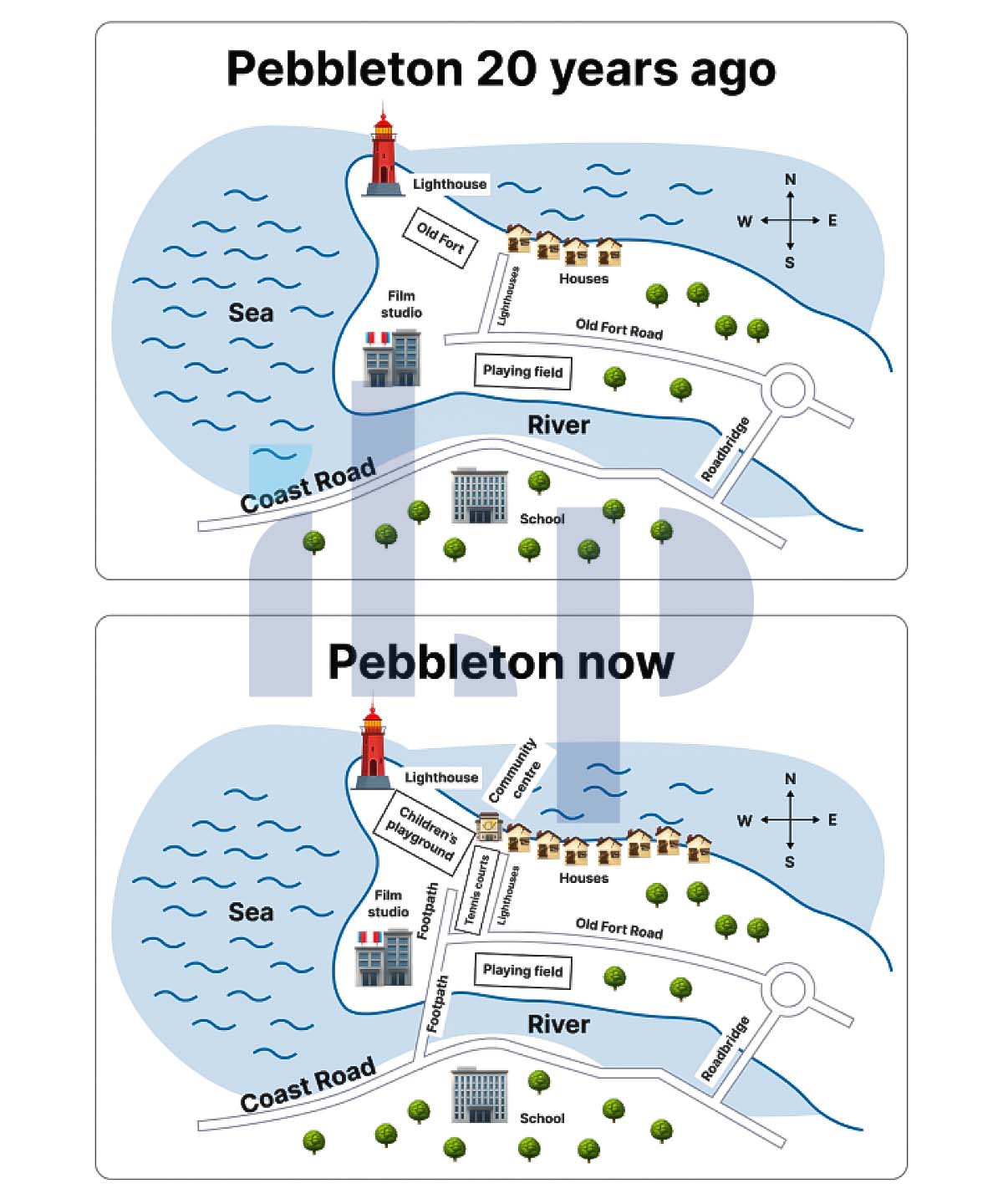
The given illustrations provides data on the states of the town of Pebbleton 20 years ago as well as currently. Overall, it can be seen that the most noticeable change was the addition of houses and other facilities such as footbridge, tennis court, community center as well as the replacement of old fort with a children’s playground.
Specifically, on the western side of the city, while the lighthouse has not changed its initial position for 20 years, the substitution of the old fort with a children’s playground and the film studio with flats has been recorded. At present, a footbridge has been built to connect the coast road to the old fort road, which greatly assisted students of the school in the south to cross the river. There was a footpath at the end of the footbridge and a tennis court was added in the middle of the footpath and the lighthouse land.
Towards the north of the map, the number of houses increased and the city had a new community center located near the residential area. Regarding the eastern side, almost every feature such as the old fort road, the playing field and the roadbridge remained unchanged.
⇒ Band 7.0 – 7.5
TASK 2: Any country should be able to sell goods to other countries without the restrictions of the government. Do you agree or disagree?
|
It is suggested that unrestrictedly cross-border trading of products among countries in the world should be encouraged. Although I acknowledge the benefits of this suggestion, I still believe that its drawbacks including the possibility of smuggling and detrimental impacts on local culture worth more concern.
Those who advocate unrestrained transnational commerce may point to opportunities to promote domestic and international economy as well as access to a variety of products. Chief among these is that commercial freedom stimulates importing and exporting activities which provide enterprises with more opportunities to connect with a myriad of international business partners, thereby expanding their trading environment. Such a practice is of paramount importance in generating more profit, which subsequently boosts the growth of the economy domestically and internationally. Another point worth mentioning is that exchanging goods under no governmental restrictions offers full accessibility to a diversity of products. Therefore, all citizens in the world have chances to experience exotic items originating from other far-flung regions, which consequently expand one’s knowledge and widen their horizons.
Despite the aforementioned benefits, I still argue that the disadvantages of cross-border commerce namely the probability of smuggling and adverse effects on national culture should be taken into consideration. With regard to the former, the proliferation of illegal trading would be negatively encouraged when no policy is established by the government. For instance, under no national restrictions, there will be an upsurge in the amount of marijuana imported from Portugal, where it is decriminalized, to our country due to an exceeding demand and substantial profits. From the cultural viewpoint, a strong preference for foreign products, such as food or clothes, may exert disadvantageous impacts on local culture. Gradually, people’s understanding of their national cuisines, as well as traditional costumes, become eroded, which leads to the unexpected consequence of assimilation.
In conclusion, despite acknowledging the benefits of selling goods transnationally, I hold the belief that freedom in cross-border trade would be more unfavorable in terms of trafficking and cultural erosion.
⇒ Band 6.5 – 7.0
Ngày 08/5/2022
TASK 2: It is better to be unemployed in jobs rather than to be employed in jobs even if they don’t feel happy or enjoy. Do you agree or disagree?
|
To find a satisfying and enjoyable work with a contentment paycheck is hard. The company hired someone because of skill and experience to make a company profit. As an employee, one thing that I learned after working for a couple of years is that the company did not hire you to make you feel happy or enjoy your job. If you are not happy you can quit anytime, but before that ask yourself are you sure about your financial situation after being unemployed?
In this modern economic system it has become a common thought that people have to work to earn money which is used for living. Financial and debt is a first reason to consider, weighting between monthly bills and unsatisfied job. If you still had to have a monthly income to live on, such as the cost of utilities, house rent and phone bill. A choice to quit the job might not be a good answer if you do not have any financial support.
Seeking a new job might be an answer for some people. But it has no guarantee that everyone will be lucky to fit in one place at one time. Starting in a new company is another gamble for life. A new working environment, colleagues, clients and pressure might cause a loop of stress more over again. For some people who could not handle the disappointment of changing work many times could likely lose motivation or enthusiasm in their career path.
However, it does not mean people’s mental health is not important to consider with work. Mental health from work can occur and not many companies have a measure to provide it. Working in a dissatisfied job and bad feeling might affect work. Also, It might create a negative atmosphere in the working environment for other employees.
To summarize, people try to succeed in their dream jobs but that does not mean everyone can. In this modern economic system, Happy or not enjoyable work or job is a common thing that can happen to anyone, but to be unemployed by feeling without financial support or career opportunity is to risk. So that is my reason why people devote their income and career path more than personal mental pleasure and find other ways to enjoy their life.
⇒ Band 6.0 – 6.5
Ngày 12/5/2022
TASK 1: The charts below show the internet use in different purposes in Australia in 2010,2011 and the percentage by users. Summarise the information by selecting and reporting the main features and make comparisons where relevant.
|
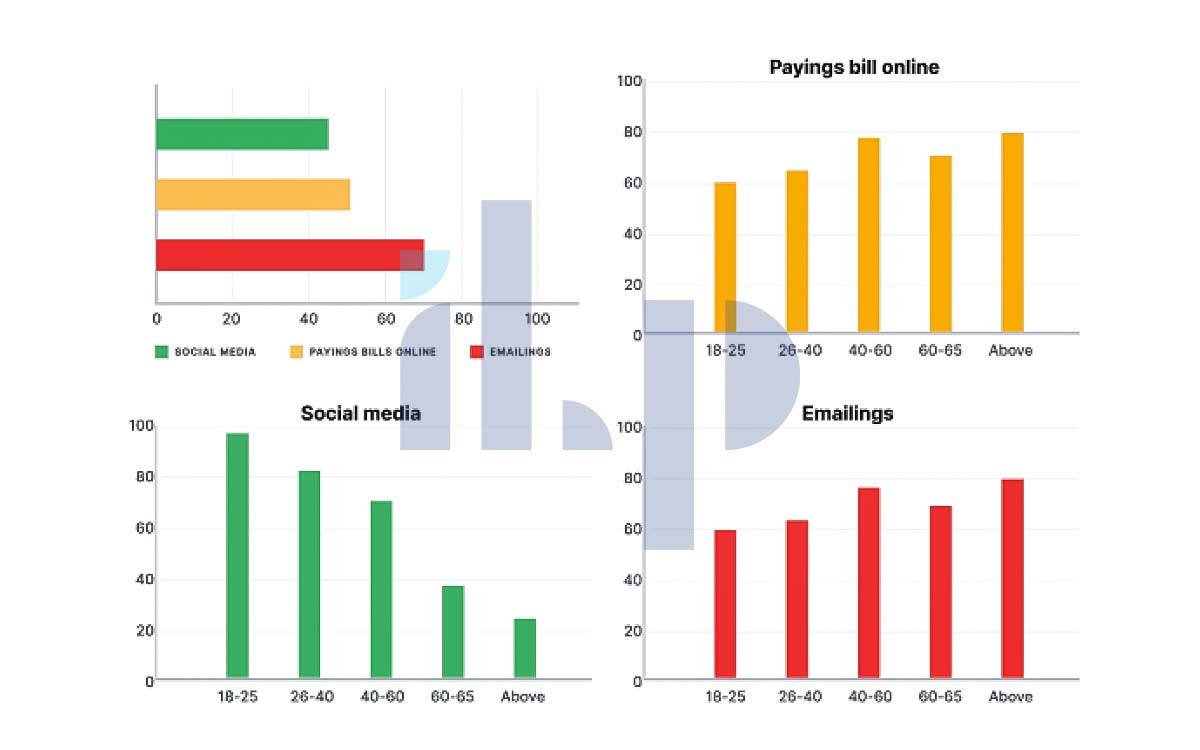
The given bar charts illustrated different intentions of Internet users in Australia between 2010 and 2011, together with the proportion based on various age groups.
In summary, it can be seen that most Australians used the Internet to communicate by emails in 2010 and 2011. In addition, the purposes of paying online invoices and social networking shared the same percentage by user’s age.
With regards to various purposes, about 70 percent of individuals in Australia surfed the Internet with a view to contacting via emails, which was the highest figure. Meanwhile, social media and online payments were less popular as these purposes showed noticeably lower statistics, at about 49 percent and 50 percent relatively.
According to different age groups, approximately 80 percent of Australians used the Internet in order to pay off bills online as well as contact via emails among individuals who were 65 and above. Meanwhile, almost 100 percent of people between 18 and 25 years old used the Internet for social networking purposes, which was obviously the vast majority. Besides, this group also accounted for the lowest users who paid bills online and emailed at 60 percent. Only 28% of adults from 65 years old and above surfed the Internet for social media purposes, which was comparatively lower than 32 percent owing to the smallest groups in other categories.
⇒ Band 7.0 – 7.5
TASK 2: Major cities in the world are growing fast, as well as their problems. What are the problems that young people living in those cities are facing? Suggest some solutions.
|
Increased industrialization has led to the proliferation of young people moving from the countryside to cities. However, the growth of cities has created many social problems. In this essay, I will highlight some of these problems as well as ways to combat them.
The increasing rates of suicide and homelessness could be the main problems of social rapid development. It is true that higher rates of suicide have gone hand in hand with the rise of cities. This is because of the extreme amount of stress originating in harsh competition in working environments that exists within cities. Another common issue with cities is homelessness. The more people move to the cities, the more unaffordable prices of houses in the central area become. This leads to a high concentration of homeless within cities such as London or New York. Also, as automation increases within cities, it is likely that there will be a higher rate of unemployment. Hence, the problem of homelessness will likely persist.
Possible solutions to solving these problems may include the provision of access to more mental health services and the relocation of industrial zones to the suburbs. Chief among these is that more funds should be allocated to the healthcare system or passing legislation that would make it mandatory for companies and schools to provide assistance to those with psychological problems. Regarding the latter solutions, urgent actions should be taken to move major industries to the outskirts, which consequently prevents people from migrating to cities and hence lower the homelessness rate in metropolises.
In conclusion, there have been many problems that have been associated with the rise of cities, such as higher suicide rates and homelessness. Nonetheless, there are steps that can be taken to help remedy these issues.
⇒ Band 7.0 – 7.5
Ngày 14/5/2022
TASK 2: Advertisements are becoming more and more common in our everyday life. Is it a positive or negative development?
|
The development of businesses has given rise to the growing number of advertisements that can be seen anywhere, on streets or in the media. In my opinion, this phenomenon could be both positive and negative.
On the one hand, advertising has brought a number of benefits for not only consumers but also businesses. Certainly, advertising provides details about newly launched products, which is important for consumers who are still unaware of such products. In fact, improving quality alone would be less effective if producers failed to commercialize their commodities. Putting it in another way, companies, entrepreneurs for example, spend a great deal of money on publicity materials in order to approach prospective customers. This, in return, generates higher profit and enhances those companies’ competitiveness in the market.
On the other hand, the surge in quantities of commercials exerts several undesirable impacts on customers. First, instead of being well-informed about a new line of product, people are being bombarded with all kinds of advertisements. Those can be either deceptive or annoying; and such information overload has become a nuisance to many people, particularly when their favorite telecasts are constantly interrupted by irrelevant promotions. Second, advertising encourages people to purchase what they do not really need. Images of celebrities are used in many extravagant commercials, especially cosmetics, to stimulate people to purchase products that are being advertised. However, in reality, most of those products are of little use to buyers.
In conclusion, advertisements of various types have become prevalent in modern society; and this is, in my view, advantageous and detrimental as well.
⇒ Band 7.5 – 8.0
Ngày 19/5/2022
TASK 2: The natural resources such as oil, forests and freshwater are being consumed at an alarming rate. What problems does it cause? How can we solve these problems?
|
Our modern society is heavily relying upon power to thrive, and there is an unfortunate truth that the rate of using natural resources is at an unhealthy bar in recent times. Some devastating problems could occur if this trend keeps continuing in the near future.
Firstly, It is apparent that natural resources are limited, but It has deeply integrated into our daily routine like refilling gas for our vehicles. Moreover, the need for strength and resources keeps increasing due to some demanding industries like automobiles and overseas transportation put a toll on the mines of our beloved planet. As a result, when the earth no longer can supply our daily insanely demand of resources, the whole modern civilization would collapse in a matter of days as many industries depend on it, as a consequence, many would become unemployed, which put a strain on our modern society as the governments have to allocate other resources to support them. Therefore, overly consume natural resources could have a highly negative impact on humanity in the long run.
To combat the issue of limited resources, governments along with enterprises have to look for alternative sources of energy and solutions. For instance, instead of using gasoline, solar spirit can be used as a replacement to help the engine running, or in the case of water, companies could develop a converting system that transforms salted to drinkable water at a larger conversion rate. There is a downside for these approaches, which is the cost of developing these intricate systems is unimaginably huge, and the journey could take years or even decades to be considered a success, nevertheless, that is the only way for our society to achieve long-term sustainable growth.
In conclusion, the fact that our life is depending on the natural resources cannot be denied, but instead of waiting for the reservoirs to be emptied, our responsibility in ensuring the long-lasting future of our mother-earth via the replaceable energy has to be fulfilled.
⇒ Band 7.0 – 7.5
Ngày 20/5/2022
TASK 2: Whether or not someone achieves their aims is mostly by a question of luck. To what extent do you agree or disagree?
|
It is argued that lucky is the key to some people’s achievement. As achievement is only attributed by hard work and dedication, I completely disagree with this opinion.
If success was free, everyone would have it. In fact, there are few successful individuals because each of them is determined and industrious. The harder people work on their dream, the more confident they become. Those who lack self-esteem also lacking determination and end up losing hope and giving up, as a result they are the failure. For instance, Thomas Edison, one of the greatest inventors in the 20th century, conducted thousands of failed experiments with the filament until the finest light bulb was produced. His success is made by his hard work, rather than luck. Another clear case of success through determination is Nguyen Ngoc Ky, a disabled man. He could not write by hand; however, with his determination and hard word, he is able to write by his foot and became a successful teacher.
By contrast, luck does not play a role on one’s achievements. Luck is just a state of mind, so if people are dependent on luck they could never be successful. For instance, a student who does not study for an exam, might fail. Moreover, it is clear that a person who wins a lottery, might soon lose all of his or her money as it does not require anything to achieve.
In conclusion, for all reasons I have mentioned above, I believe that to become a successful person at the end of the day, people must be hardworking and determined to work on their dream , rather than rely on luck.
⇒ Band 6.5 – 7.0
Ngày 21/5/2022
TASK 1: The chart shows the number of people working in 4 sports sectors in an Australian town in 2015.
|
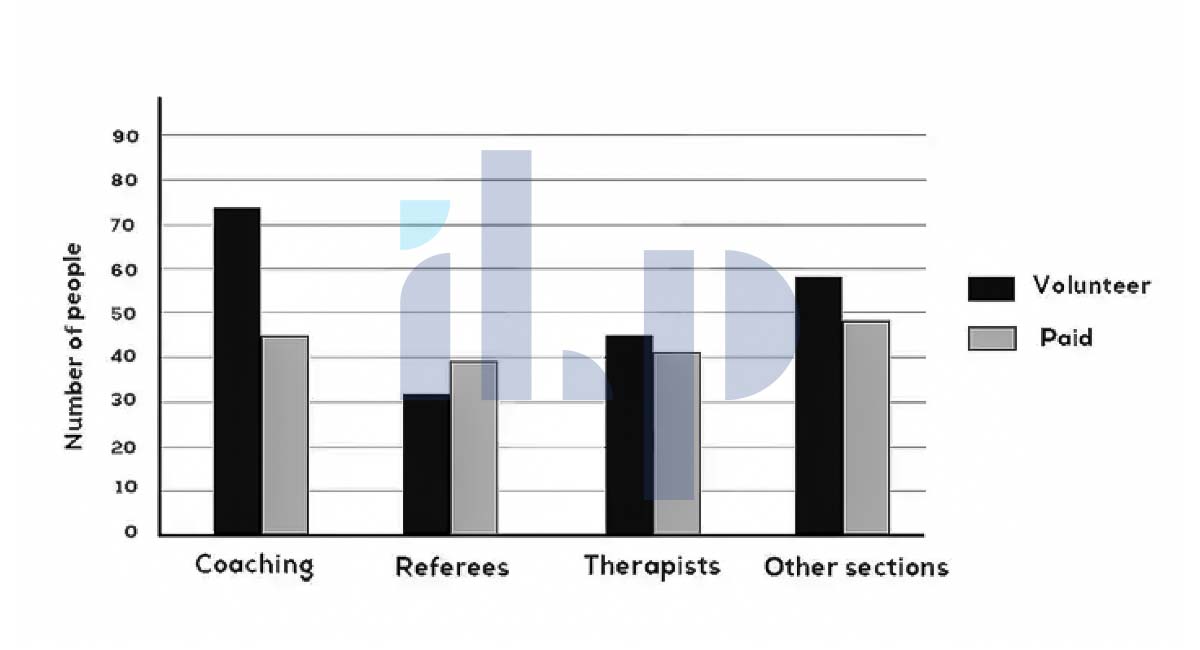
The bar chart compares the number of paid and unpaid workers involved in four sports roles, namely coaching, referees, therapists and other sections, in the year of 2015 in an Australian town. In general, it can be seen that volunteers clearly favored coaching over any other roles. Meanwhile, there were no significant changes in the number of paid workers among the four roles.
The number of unpaid participants interested in coaching was highest, as around 75 of them enlisted to become volunteer coaches, followed by other sections with nearly 60 volunteers. The figure for volunteer therapists was half of that in coaching, with almost 45 volunteers, while only about 30 volunteers became referees.
Nearly 50 paid workers preferred to work in other sections, which was marginally higher than the number of paid coaches (over 40 people). The figures for workers in therapist and referee sections witnessed almost no clear distinction, as each welcomed more or less 40 workers.
⇒ Band 7.0 – 7.5
TASK 2: To succeed in business, one needs to learn and know math. To what extent do you agree or disagree?
|
Some people argue that maths is an essential skill in order to do well in business. I partly disagree with this notion because although basic maths is required to properly run a business, more complex maths can be outsourced.
Basic maths is an integral part of running a business. Success in business requires a broad range of knowledge including finance and accounting which both use maths. Business owners should have a solid understanding of basic arithmetic as well as algebra in order to run their business effectively. In addition, maths is required when performing business operations like accounting, inventory management, and forecasting sales. If business owners fail to have proper knowledge of dealing with figures, financial loss will be inevitable.
However, strong maths skills are not required to do well in the business field. While maths is undeniably an important part of running a business, it is possible to outsource this skill. This includes hiring an individual skilled in the financial side of business as well as using spreadsheets and computer programs that will do financial models for business owners. Though using spreadsheets does require a basic understanding of the principles of finance and maths, it does not require a high level of math skills in areas such as calculus. Moreover, maths is a broad field that encompasses a number of subtopics such as geometry, calculus, algebra, and statistics. Not all of these areas are required when running a business.
In conclusion, I partly disagree with the notion that business success requires strong maths skills. While many aspects of business do require basic maths skills such as finance and accounting, being good in all types of maths is not a requirement and many higher level maths skills can be outsourced.
⇒ Band 7.5 – 8.0
Ngày 22/5/2022
TASK 2: Many different countries have most shops and products that are the same. Some people consider this to be a positive development, while others think it is a negative development. Discuss both views and give your opinion.
|
Nowadays, globalisation has led to international trade across many countries. Similar goods and products are available all over the world via e-commerce websites and offline markets. In this essay, we will discuss both positive and negative aspects of it.
To begin with, international trade has increased exponentially in the last 2 decades due to technological advancement and brand establishments. Big brands like Zara, Gucci and Prada have their presence across the globe. Their stores can be found in almost all the countries. Just like this brand , there are many other brands which are available across the globe. Due to globalisation, it has become convenient for buyers to buy products of international brands in their own country. Initially, only people who could afford to travel to different countries were able to buy international products. However, now the scenario has changed and many of this brand’s shops are available in almost all the countries where people can buy them offline or they can order them online.
On the other hand, there are a few negative aspects of having similar shops and products in different countries. First, there is no diversity in designs. Similar designs can be found in different countries. Second, countries lack the authenticity of their local products as they are available or listed on platforms like Amazon which allows sellers to sell products internationally. For example, recently one of my colleagues had visited Paris for her vacation. she wanted to do some shopping in Paris however, she could not find any unique design which she can buy as a souvenir. Those same shops and designs were also available in her home country with a minimal variation in price.
To sum up, there are many benefits which surpass the negative aspects of having similar shops across the globe as this give a homelike feeling to someone who is planning to stay in a different country for months or years.
⇒ Band 7.0 – 7.5
Ngày 24/5/2022
TASK 2: Some people believe that to prevent illness and disease, governments should focus more on environmental pollution and housing problems. To some extent do you agree or disagree?
|
In these days, while urgent health-related problems, according to some, is attributed to the pollution of our planet’s atmosphere and the issues of housing, I agree up to this point that the governments have to take the full responsibility to mitigate this overwhelming obstacle.
It is initially true that the unprecedented number of people are suffering from environmental catastrophe and housing scarcity. In this way, in order to save the valuable life of innocent people who lack homes and are facing such serious illnesses as cancer, radiation, skin lesions and others, the governments are obliged to vanish the factors leading to the emergence of this problem – the toxic gases emitted from the transport system (mainly cars) and high costs of accommodation which are not affordable for the impoverished class of the population. The initial step would be the forced decline in the number of cars by which people are commuting, and following this, the provision of free accommodation for homeless people is a plausible alternative to avert the vast trend of illnesses. Thus, the governments have a key role in altering the process the aforementioned problems emerge.
Another point to consider, persuading people to realize the environmental and housing problems is not ethereal. First, each government ought to supply its citizens with an adequate source of knowledge so that they would not only get rid of their peccadilloes like wasting, throwing rubbish – all of these factors leading to the environmental issues, but also assist other impoverished members of society, and this paves the way for the heyday in every country. Therefore, the question is not just about avoiding problems, but is the realization of the whole Earth’s population to diminish their adverse impact on their surroundings.
In conclusion, the more people recognize the threat of polluting sources and accommodation problems, the more thriving our planet will be.
⇒ Band 7.0 – 7.5
Ngày 26/5/2022
TASK 2: In some countries, more and more people are becoming interested in finding out about the history of the house or building they live in. What are the reasons for this? How can people research this?
|
Nowadays, getting more knowledge and researching about dwelling places and their historical facts is gaining huge popularity among communities all over the world. This essay will first discuss the causes of this phenomenon and then will suggest the appropriate ways for the research process.
First of all, it is quite clear that the public at this point in time are being very curious about the history and the development of our world. The fact that more and more residents are searching for extra instruction about the houses where they live can be a confirmation of this opinion. People want to obtain more knowledge about their living places because they wonder if their apartments were socially valuable in the past and if any prominent personalities lived there. For example, the last survey conducted by The Historian magazine showed that 48 per cent of residents of Germany desire to gain some new knowledge of their living slots in order to know if the place was critically important in the past.
Regarding the possible resources that assist to find out the new data on the history of the building, there are several options for the research. Firstly, it is quite helpful to interview the neighbours in order to receive brief yet reliable material from them that might be preserved by previous generations. Moreover, another prime example is the Internet. There are many articles and documentaries available online. People can find the required information at the touch of the button. For instance, my friend searched for the history of his apartment and eventually found an appropriate article on the website which provided in-depth material about his house.
In conclusion, it is undeniable that the everyday population are prying to perceive the previous story of the habitant. It might be caused by people’s urge to satisfy common curiosity and to discover the significance of the place they live in. Thus, with the aid of online resources, it is extremely possible and affordable.
⇒ Band 7.0 – 7.5
Ngày 28/5/2022
TASK 1: The graph shows the average Japanese month salary (Yen) from 1953 to 1983, and the prices of black and white televisions and color televisions during the same period.
|
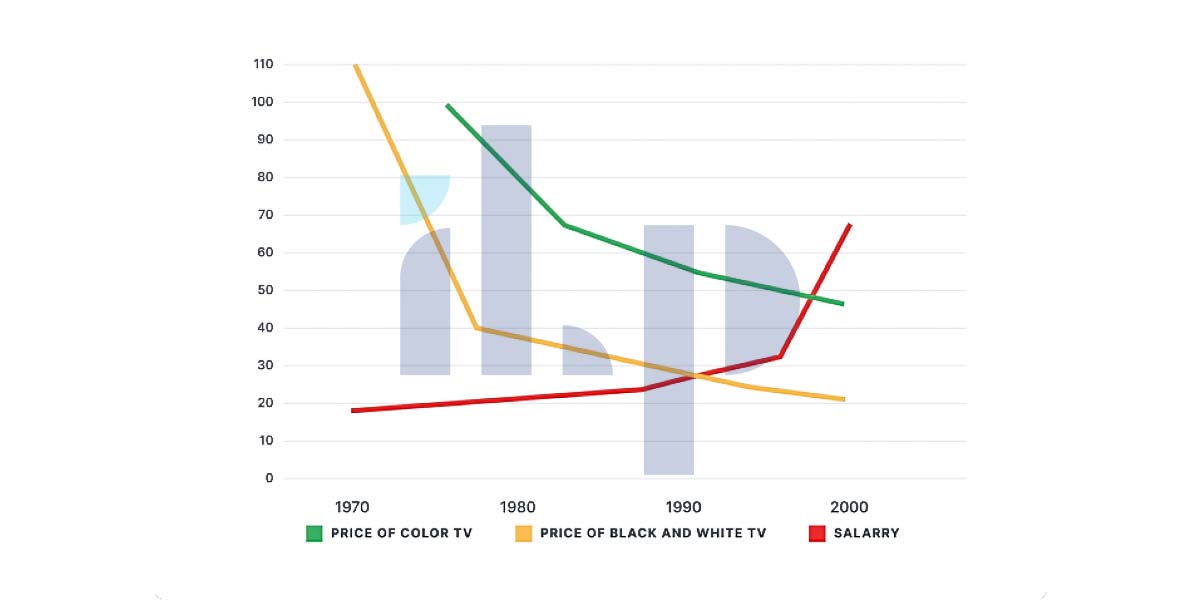
The line graph shows data on the changes in the monthly income of Japanese people and the prices of two types of television during the thirty-year period from 1953 to 1983. In general, the amount of money they earned increased considerably, whereas the price of television followed the opposite trend. In addition, color televisions cost much more than black and white ones.
In 1953, the income of the Japanese was just below 20 thousand yen per month. Meanwhile, the price for black and white television was 110 thousand yen, which was approximately five times as high as the average salary. However, after a decade, there was a steady growth of around 5 thousand yen in how much money they earned, while the amount they paid for television saw a plunge to 40 thousand yen. Also in this year, color television started to be sold in Japan at 100 thousand yen.
The prices of the two types of television became much more affordable during the rest of the period. The cost of color television plummeted to nearly 55 thousand yen, compared to about 25 thousand yen of black and white models. The figures continued to drop gradually to just under 50 thousand yen and 20 thousand yen respectively in 1983. The monthly salary, on the other hand, witnessed a substantial rise to 30 thousand yen and overtook the cost of black and white TVs in 1973. After that, it soared to around 65 thousand yen in 1983.
⇒ Band 7.0 – 7.5
TASK 2: Human activity exerts negative impacts on plant and animal species. Some people believe that it is too late to solve the problem. Others say we can have effective actions to deal with the situation. Discuss both views and give your opinion.
|
Considerable impacts on the environment made by human activities have been a heated debate. Some individuals are of the opinion that tackling those environmental issues is impossible. However, another school of thought opines that changes can be made to reverse the current situation. Personally, I suppose that only if urgent actions are taken, those aforementioned problems will soon be solved.
Those who advocate the lateness in improving environmental problems may point to the extinction of animals and the exceeding rate of global warming. Chief among these is that human activities, such as hunting and poaching, are the major culprit in the vanishment of a myriad of fauna and flora species. Accordingly, the ultimate adverse consequence is the imbalance in our ecosystem, which creates obstruction in the food chain. However, no feasible approach can be applied to rebirth those species. The second idea is that the substantial increase in industrial production combined with excessive deforestation has contributed to the alarming situation of global warming. And it is a bitter truth that efforts made to decrease the world average temperature once it rises will eventually become fruitless.
Nevertheless, I still argue that fostering awareness among citizens and global cooperation will be effective measures in addressing the issue. Regarding the former, thanks to being fully aware of the detrimental impacts on the environment, a myriad of workshops or propaganda are organized to educate and encourage an environmentally-friendly living style. For example, using canvas bags instead of plastic ones in shopping has become a trend among youngsters nowadays. Another point worth mentioning is that various international law in protecting the environment has been established on the foundation of international agreement. For instance, governments have made attempt to eradicate destructive habits and save the lives of endangered species by raising funds to protect their natural habitats.
In conclusion, although human activities pose great risks to the environment, including the vanishment of species and the warning rate of global warming, I believe that certain methods, namely the raising of individuals’ awareness and the enhancement of cross-border corporations, can be applicable in addressing the problem.
⇒ Band 7.5 – 8.0
Ngày 30/5/2022
TASK 2: Widespread of technology has given people more freedom to work instead of travelling to work or college. Do the advantages of this outweigh the disadvantage?
|
Nowadays, due to the high technological development people in many countries have an opportunity to work and study from anywhere in the world rather than driving to the office or university. Thankfully, to the easy access of Internet everywhere, earning money and elevating your mind from home has many more strengths than weaknesses.
Working and studying remotely increase the health results of many people. In other words, the amount of stress decreases significantly because people are not stuck in traffic jams or can eat healthy at home, to cook a nutritious food for the whole family, as they have much more time. Moreover, they can stretch or do some exercises as a break to boost their mental process, whereas, when they are in the office they can not do all these stuffs.
Besides, these humans can work and study from any part of the world, from where they wish. So, they can explore the whole planet only having a computer and an access to the Internet between the flights, for example. Unfortunately, when you have a regular working day you can have a holiday just a week or two and are bored from day to day routine, which can lead to a frustration for the life.
However, the working and studying hours may rise considerably or even to be non-limited. Owing to the fact that people aren’t spending driving to work or to the particular educational institution any time, so they will have more than 8 hours in front of the digital devices to fill the gap. As a result, citizens are going to have less leisure time for themselves or family and relatives. For instance, regarding recent UK survey shows that more than half of the respondents earning money from their house fulfil that they prefer to work from offices because there are no children disturbing them and the tasks for a day are fewer than from home.
In conclusion, although it is controversial studying and working from your home is beneficial or not, more of the opinions are that the advantages of this dilemma are significantly higher.
⇒ Band 6.5 – 7.0
Giải đề IELTS Writing 2022 – Tháng 6

Ngày 02/6/2022
TASK 1: The graph below shows the price of bananas in 4 different countries from 1996 to 2004.
|
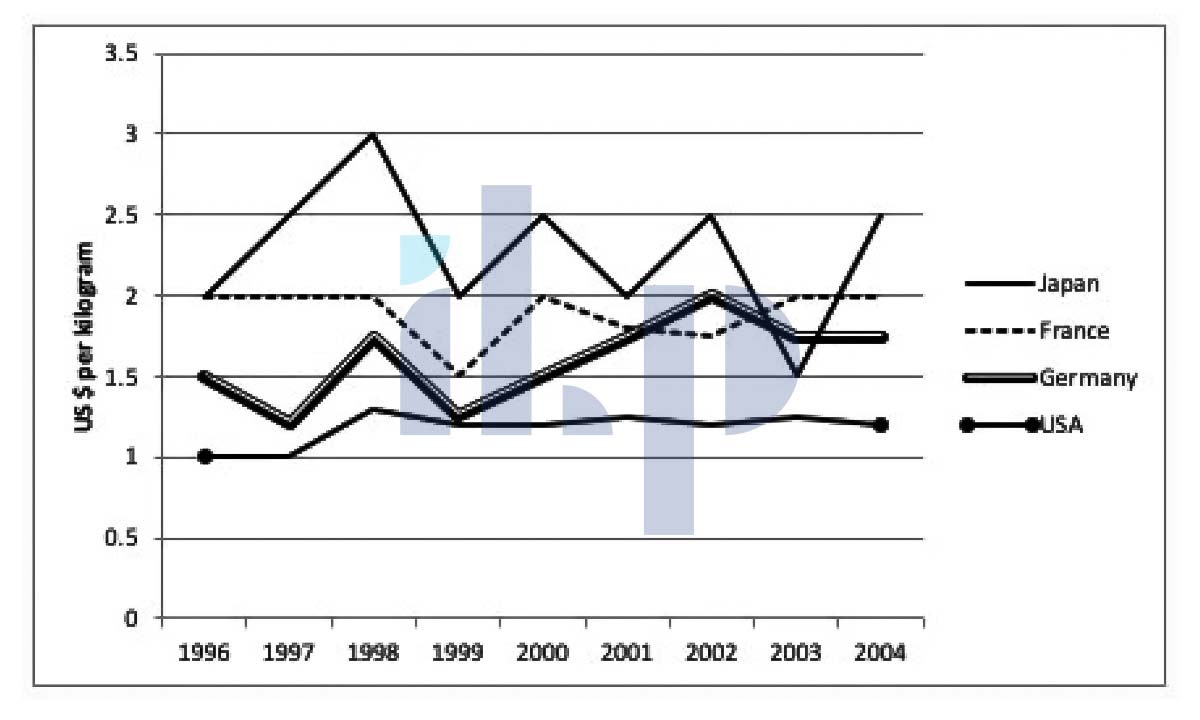
The line chart depicts/compares the price of bananas over eight years from 1996 to 2004 in four different nations named Japan, France, Germany and the USA. Overall, it is apparent that for most of the period, the price of bananas was very high in Japan, whereas the least the price was in the USA.
In 1996, the bananas were sold at similar prices in Japan and France amounting to 2 USD/kg. There was no change saw in the price of bananas for a next one and half year in France, but the price was inclined to 3 USD/kg in Japan in the same period, but it dwindled to 1.5 USD/kg and 2 USD/ kg respectively in 1999. Cost of bananas fluctuated till the end and accounted for 2.5 USD/kg in Japan and 2 USD/kg in France in 2004.
Furthermore, with Germany and the USA, 1.5 USD/kg cost was recorded in Germany that was .5 USD/kg higher than the price of bananas in the USA in 1996. Price was risen by .25USD/kg in both countries in 1998. The cost remained stable in the USA at 1.25USD/kg from 1999 to 2004, but price grew slightly to 2 USD/kg in 2002 in Germany before dropping to 1.75 USD/kg in 2004.
⇒ Band 7.0 – 7.5
TASK 2: Nowadays people have cosmetic surgery to improve life. Why do many more people choose these operations? Do you think this is a positive or negative development?
|
In recent years, some people have decided to improve their body through surgery to make their appearance more attractive. In my opinion, there are many different reasons why they decide to have plastic surgery and I believe the trend is favorable but sometimes problematic.
First, there are people who choose to reshape their body with the help of a plastic surgeon or plastic surgery because they consider it necessary. For example, patients who are victims of acid attacks or car accidents that adversely affect their appearance may need plastic or reconstructive surgery. These types of people have no choice but to undergo surgery. They need the help of a surgeon to restore a normal appearance or make it look pleasant. In this case, plastic surgery or plastic surgery is extremely beneficial because it rebuilds the patient’s self-esteem and helps them live a normal life like everyone else.
However, there are some people who decide to have surgery to make their appearance more attractive because they simply want to fit or want to be validated by those who set beauty standards. In other words, these people are pressured by what they see on social media or on advertisements about the beauty of plastic surgery. They believe that the way to be recognized and valued by society is to improve appearance through surgery. In addition, they believe that doing so will make them more confident in themselves and successfully fulfill the definition of beauty that they believe in. Although it is their right to enhance their looks, the fact that their decision is influenced by societal pressure is psychologically damaging which is unacceptable.
In conclusion, people differ in their reasons for improving their appearance and I think this practice can be both favorable and unfavorable depending on what influences their decision.
⇒ Band 7.0 – 7.5
Ngày 04/6/2022
TASK 1: The pie charts show the percentage of male & female workers in country A & B.
|
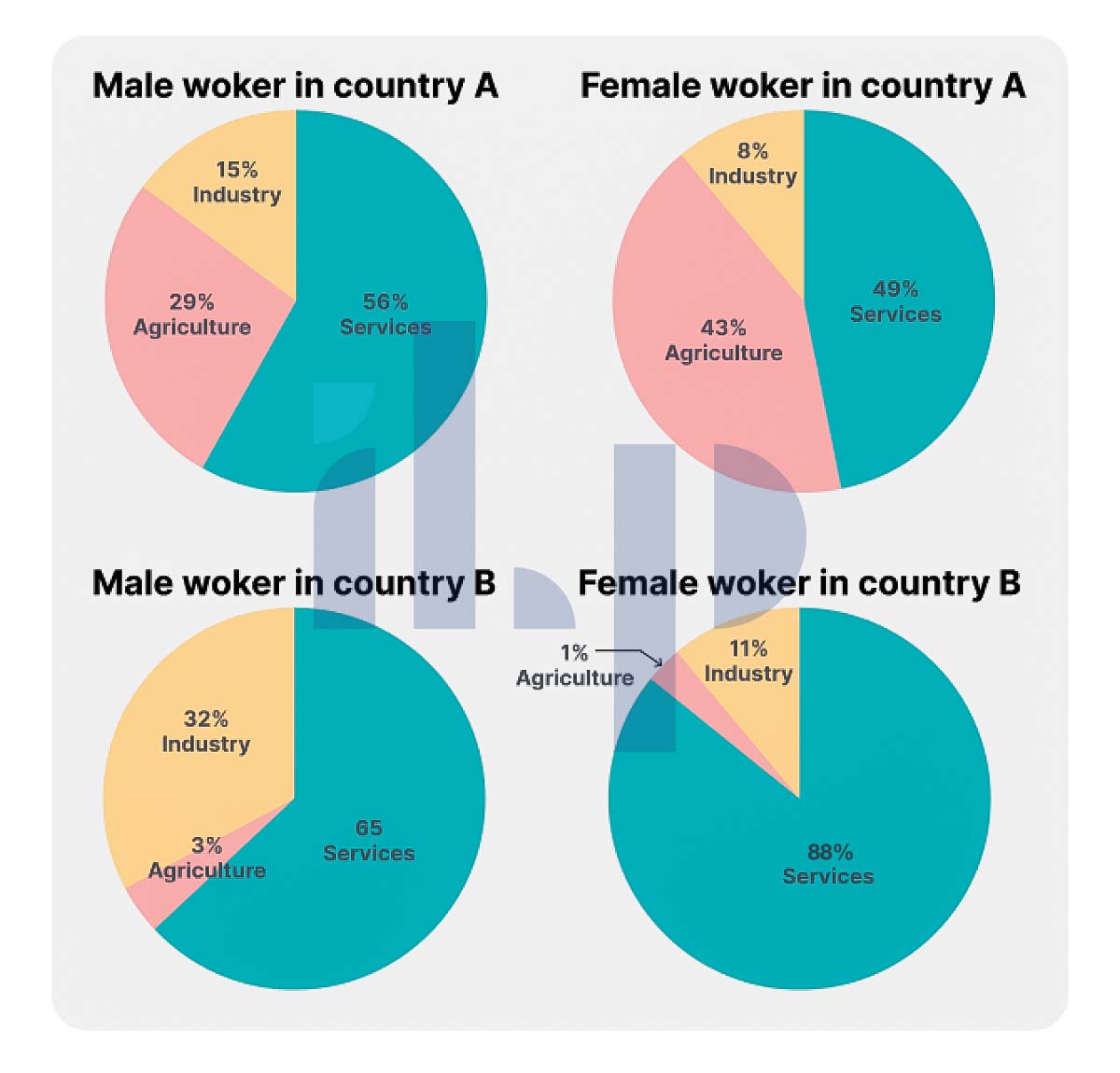
The given pie charts illustrate data about the percentage of laborers (man and woman) in 3 sectors, namely industry, agriculture and services in countries A and B. Overall, it can be seen that services attract the majority of workers in both nations. In addition, in country A, male and female laborers prefer to work in industry; whereas only a relatively small proportion of people in country B have jobs in agriculture.
Regarding country A, more than half of male workers are engaged in services sector while the figure for female counterparts is 49%, which makes this field the most favored among the three. Besides, there are 29% of men living in this country working in agriculture compared to a higher percentage of 43% of female laborers. Only 15% of men work in industry, which is double the figure recorded in women.
The same patterns can be observed in country B, which shows that while a significant proportion of men and women (65% and 78%) work in services sector, there are only 3% and 1% of male and female laborers in agriculture. And the percentage of male employment in industry in this nation is 32% which is triple that of female ones in the same field.
⇒ Band 7.0 – 7.5
TASK 2: Environmental damage is the problem of most countries. What factors damage the environment and who should take responsibility?
|
The deterioration of environment has been one of the major issues that need urgent action to be addressed. I believe that air pollution and deforestation are the main culprits of this phenomenon. Therefore, both parties, namely individuals and governments, should ensure accountability to solve the problem.
The two main factors behind this degradation are contaminated air and clearing forests. Concerning the former, the excessive growth of industrial production combined with the substantial increase in the number of transportation leads to the disposal of harmful gases to the environment. These substances are generally considered as the key factor destroying the ozone layer which protects the Earth from detrimental effects of ultraviolet rays. The second point is that overpopulation and lucrative timber harvesting have negatively driven people to deforest. As a result, some adversely worth-concerning consequences are animals’ struggling to survive and the frequent occurrence of natural disasters, which creates an imbalance in the whole ecosystem.
Both authorities and individuals are accountable for the issue of environmental damage. Obviously, governments have to pioneer in saving the environment as those competent authorities can make collaborative efforts in enacting new international laws which ensure citizens’ compliance with all regulations in protecting our surroundings. In addition, each person is responsible for not doing harm to the environment as his or her daily performance would directly impact the habitat. For example, provided that individuals awareness of reducing plastic use on a daily basis, the total amount of this substance disposed to the environment would significantly plummet.
In conclusion, environmental degradation is the disadvantageous impact of polluted air and deforestation; therefore, there is a call for responsibility of both governments and individuals in tackling this problem.
⇒ Band 7.5 – 8.0
Ngày 05/6/2022
TASK 2: Some people believe that children should be taught about recycling and avoiding waste at home, while others believe children should learn this at school. Discuss both views.
|
While certain individuals feel that children should learn at school about recycling to prevent waste generation, other people think that it should be done at home. This essay will discuss whether recycling should be taught at home or school and give a concluding view.
On the one hand, those who are for teaching children recycling at an institute to avert garbage production do so because they have the understanding that teachers are professionals and are also authoritative. Thus, they are best fitted for the job of educating children on how to reclaim substances to prevent waste. These children can be shown a demo on recycling, furthermore, it can be incorporated into subjects like geography and biology. To Illustrate, my niece who learnt about recyclable trash in the school is always concerned about how plastic bottles are disposed. In addition, she aspires to champion a movement on environmental justice in the future.
By contrast, the opposing side feels that parents are the ones to tutor their children on recycling. Undoubtedly, the home front generates more trash than the learning environments. Thereby, enabling these children to put what they have learned to practice. Also, they spend more time in their houses, therefore, their recycling habits can be controlled, hence, making the process more effective. For instance, if parents see their child put a recyclable bottle in the wrong bin, they can be corrected immediately and shown the right bin to drop it in.
To conclude, although, some people think that learning establishments ought to tutor children on recycling, others feel their parents are in the best position to do it. Hence, it is clear that proficiency in the recycling of waste can be achieved by the two means. Consequently, it should be taught at both places.
⇒ Band 6.0 – 6.5
Ngày 06/6/2022
TASK 2: Some people say that economic growth is the only way to end hunger and poverty, while others say that economic growth is damaging the environment so it must be stopped. Discuss both views and give your opinion.
|
Many people believe that applying economic development is the most effective way to solve some problems about starvation and poverty. Other people suppose that because of economic development, the environment is being radically destroyed . This essay will illustrate both views given above and give the recommendation which aspect is more beneficial from my perspective.
On the one hand, increasing the economy dramatically not only creates a better life for many people but also resolves an eclectic mix of issues. For the most part, when having accurate judgement in any country, people always base on these country’s economies which play a fundamental role in building up a strong foundation. With these positive aspects, people will receive a lot of extravagant profits which is attributed to the fact that people’s lives will enhance radically. For example, the GDP in Vietnam in 2019 was 7,9 that described correctly apply to people’s lives, compared to 2020 ,when we witnessed a sharp decline, at around 2,9. With these numbers, we also know that people struggled to a low standard of life.
On the other hand, apply the rapid development of the economy can also pose a serious threat to the quality of human life. If the government wants to invest to lift up the economic growth, they need to increase the number of productions in many aspects which actively lead to low quality of the environment. For instance, many huge factories in Vietnam also increase productivity, they will discharge tons of smoke which is the main reason for air pollution and a greenhouse effect.
In conclusion, there is no doubt about the necessity of developing an economy that solves starvation and poverty, but a fresh environment is definitely crucial for health. Therefore the combination of both of them will create a fulfilling life for people.
⇒ Band 5.5 – 6.0
Ngày 7/6/2022
TASK 2: If people could choose between a life without working or a life spending too much time working, people would choose a life without work. To what extent do you agree or disagree?
|
People spend most of their time working as it is the only option for survival in this world. There are perspectives when asking people whether they choose between having a work-free life or getting a job. So it is possible in a case that they will decide to have no work. In my opinion, having a job is more beneficial than without working.
To begin with, the job allows persons to find colleagues who have similar interests leading enables them to socialize, build contacts and find support. The reason behind this is people’s need for communication with others due to social animals. Increasing relations within groups make the bond between people stronger, and help each other in unusual situations especially colleagues’ contacts. As a result, without work social skills will not occur, and be hard to participate with others.
Moreover, jobs provide income to support expenditure because money influences the quality of life. Humans have to buy basic needs such as food. Besides, they use a significant of money to deal with issues to pass life smoothly. In other words, if persons do not do any tasks and choose to relax all time, they face financial predicaments. One of them stops working, then the others will follow this action. Consequently, without doing jobs will be a negative effect on the well-being of the community as a whole citizen.
In conclusion, although working most of the time keeps people busy, it challenges and gives means to develop themselves. They will make progress on their knowledge and improve life to meet other people depending on experiences in their work.
⇒ Band 6.5 – 7.0
Ngày 10/6/2022 (comp-based)
TASK 1: The chart below show the percentage of people who ate five portions of fruits & vegetables per day in the UK from 2001 to 2008.
|
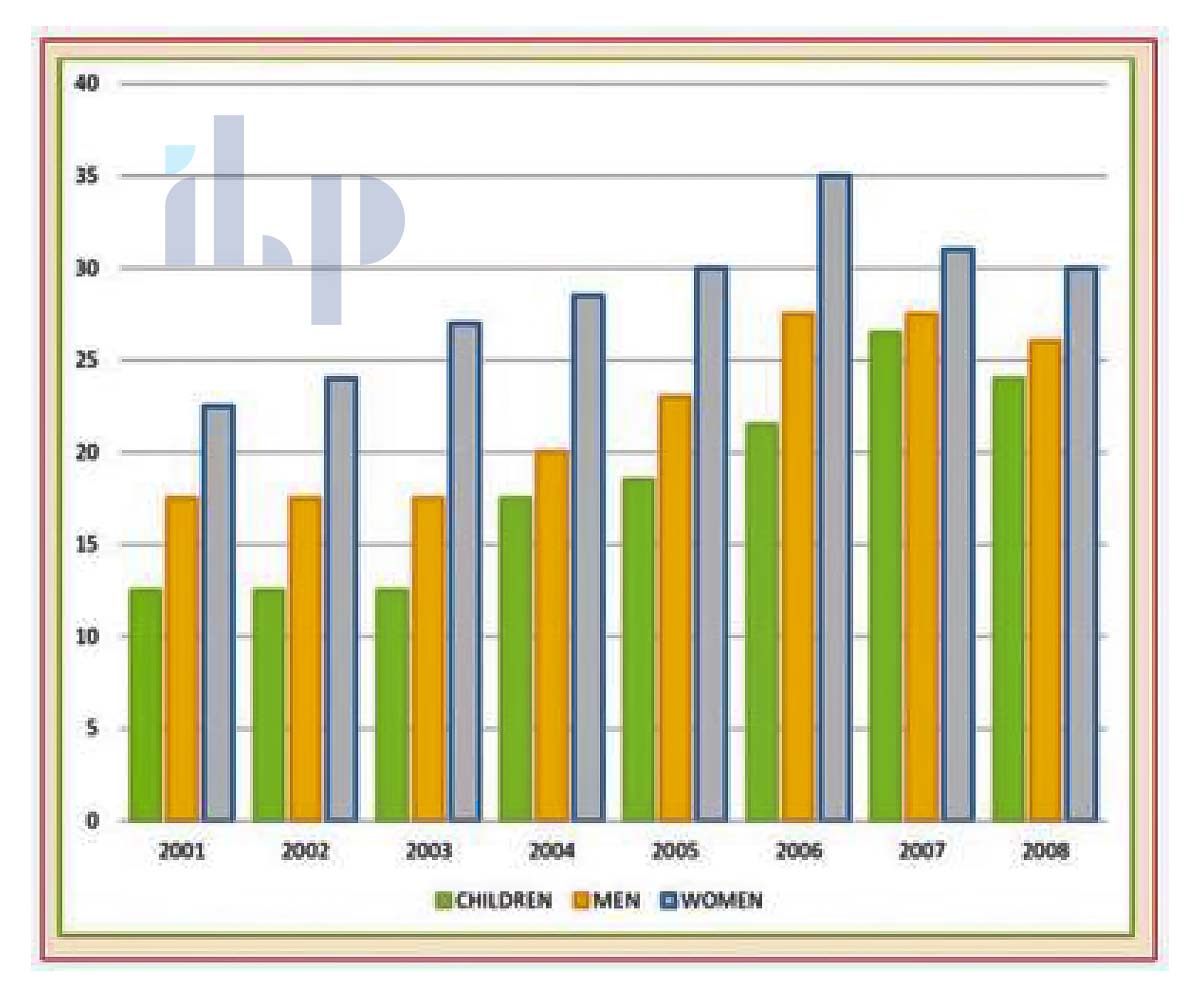
The graph illustrates the share of the UK population who ate fruit and vegetable five times per day between 2001 and 2008. Overall, there was an uptrend over the entire period for all categories; the figures for children and men increased sharply, while the share of women went up moderately.
The figure for children remained the lowest all over the time frame; it started at roughly 12% in 2001, remained constant until 2003 and then grew with a steady rate to about 25% in 2007. The share of men had a similar trend, but in 2001 it was around 17%, had no changes over next 2 years and then it started to increment rapidly to nearly 27% in 2007. Both segments of population suffered from a slight decline over last year in the graph.
In contrast, the percentage of women who ate five portion of fruit and vegetables in 2001 was the highest, among other categories. Over time, it incremented gradually between 2001 and 2006, from roughly 21% to about 34%, while in the last two years it declined by almost 3%, remaining the highest figure in 2008.
⇒ Band 7.0 – 7.5
TASK 2: Some people think watching TV is bad for children, while others think that watching TV has more beneficial effects on children. Discuss both views and give your own opinion.
|
It is argued that watching television has an adverse impact on children, whereas other people believe that it brings various benefits to them. I personally agree with the second group.
On the one hand, there are a number of reasons why some people think that children’s development would be negatively affected by watching TV. The first reason is that sitting in front of TV screens for too long is detrimental to children’s health. Many kids these days suffer from various health problems such as obesity, eye strain or fatigue due to prolonged television watching. Another reason is that many TV programmes and movies contain violent contents or sexual images which are inappropriate for children to watch. Heavy exposure to violent movies can put a child at a higher risk of violent behaviour, which could ruin their future.
On the other hand, I personally believe that television has an essential role to play in the development of children. Watching educational TV programmes gives children the opportunity to widen their horizons and enrich their knowledge of the world they live in. Planet Earth and Discovery Channel are prime examples. Their programmes not only take the viewer into unknown natural habitats which are home to various plants and animals, but also educate them about the importance of preserving the wonders of the Earth. In addition, many TV shows and channels provide children with limitless knowledge of almost every aspect of life. A programme called ‘Talent show for kids?’, for example, not only gives children enjoyable moments but also informs them about various subjects.
In conclusion, although some people say that watching TV is harmful to children, I would argue that it is very beneficial for them.
⇒ Band 7.0 – 7.5
Ngày 11/6/2022
TASK 1: The maps show how the industrial area will change into a housing area in the future.
|
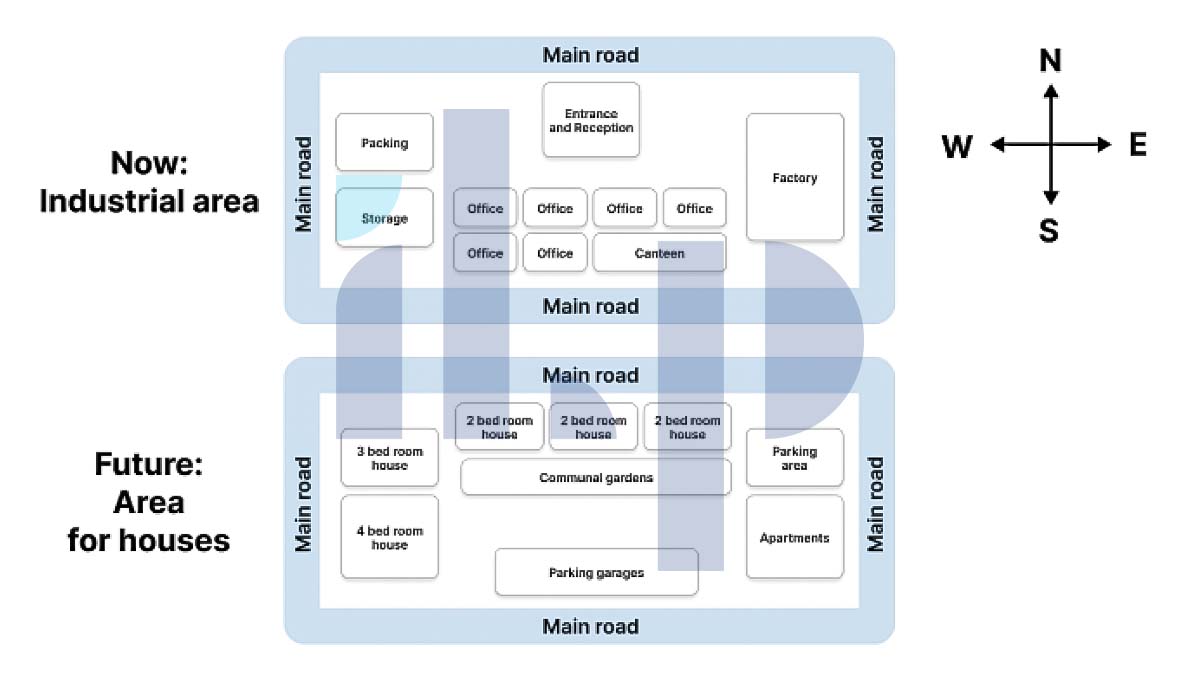
The given table illustrates certain forecasted alternations in an industrial site, which will be transformed into residential areas in the future. Overall, the most noticeable changes will be the addition of various buildings to the North and East of the spot; also the modification of names of specific areas and their facilities will be recorded.
Regarding the East side of this place, the factory is predicted to be replaced by apartments, which will be located next to the newly-added parking area. While the current Entrance and Reception are placed to the North, the plan proposes its substitution by residential areas including 6 bedroom houses which will be accessed through communal gardens.
Significant changes will also be projected on the remaining sides of this site. The 3 bedrooms house and 4 bedroom house will replace the packing and storage areas in the Western part. Additionally, the substitution of offices and canteen for parking garages is also suggested in this plan. The only feature that is predicted to remain its original position is the main road which surrounds the whole area.
⇒ Band 7.0 – 7.5
TASK 2: Pop stars earn much more than classical music performers. Discuss both views and give your opinion?
|
Some individuals opine that celebrities performing pop music should be paid higher salary in comparison to those majoring in classical music. While others are not in consummate accord with the aforementioned idea. This essay would delve into discussing the two perspectives as well as stating my support for the former one.
It is reasonable for classical music performers to earn more money due to their huge effort in mastering instruments and traditional values that they preserve. Chief among these is that those who pursue traditional music has spent a plethora of time and attempt to be adept at using instruments and the specific style of each category of classical music. Obviously, traditional music requires not only thorough understanding of its nature but also the talent as well as constant practice to deliver the best piece of music enjoyed by the public. Concerning the second viewpoint, classical music plays a paramount importance in preserving traditional values of a country. It is true that the more money artists performing classical music can earn, the more possible that they would not change jobs. As a result, there are chances that future generations can still enjoy one of some masterpieces in music field.
Nevertheless, I strongly believe that more financial means should be paid for pop celebrities due to their short-term contribution and great attempt in maintaining positive images. With regard to the former, the majority of pop stars have to face the challenge of a short-lived career since the entertainment industry is constantly changing. Consequently, for around one or two decades of contribution, most of those well-known artists would be replaced by other more talent and dynamic ones. Another point is that performers of pop music always trying to set good examples especially when presenting in public. Since they aware of their significant impact on people, particularly teenagers, great effort in creating and maintaining favourable figure has been made by these individuals. Therefore, it is logical that stars performing pop music should earn more money.
In conclusion, although artists of classical music have to make great attempt in mastering their skills and retaining traditional value, I suppose that pop performners should be paid with higher salary due to their contribution in a short period of time and their responsibility maintain positive images.
⇒ Band 7.5 – 8.0
Ngày 13/6/2022
TASK 2: Only reason to work hard is to earn money. To what extent you do agree or disagree.
|
It is the universal truth that money is an utmost important aspect of everyone’s life. Therefore, people work hard to recieve a handsome salary. Eventually, they can fulfil their needs and sustain themselves in modern society. Apparently, there are people who work for the nation which gives mental pieces and inner satisfaction. than monetary terms. Hence, I partially agreed with the statement correspondingly, the upcoming paragraphs will shed light on my viewpoints related to the very conception.
To begin with, This is so evident that every individual has their preferable needs such as basic and lavishing. It can only be fulfilled by remuneration which they get from their job. Due to technology advancement and modernisation, Life has changed a lot. Nowadays people run after opulent lifestyle and enormous wealth. Owing to, they can buy gadgets, luxurious cars, lavishing homes. As a result , They do extra shifts, freelancing accordingly they get paid double. To exemplify, Mostly multinational companies set a monthly target for their employees whom so ever achieved that should get the incentives which are icing on the cake for them as they already get handsome salaries. Correspondingly , Employees put full efforts.
On the other hand, Some masses perform duties for the country and society irrespective of concerning much about monetary benefits. Their motive to always serve the nation and the civilians. It gives them immense satisfaction. Soldiers , Athletes, social workers, painters and so on. They indulge themselves in long hours demanding duties and paid less as compared to white-collar workers. For Instance, Mother Teresa was a social worker and devoted her life to the caring the sick and destitute people. Many times we read the news that Army officials martyr during wars, Still, the young generation has that patriotism they want to become soldiers despite having a risk of survival at borders.
To recapitulate, Working for Monetary benefits is the foremost and primary driving force behind many people but still,there many of them Perform tasks for self-satisfaction. With money,they can buy tangible items. However, complacent also necessary to lead a meaningful living.
⇒ Band 7.0 – 7.5
Ngày 15/6/2022
TASK 2: Some people say that increasing fuel costs could reduce environmental problems, do you agree or disagree?
|
The earth’s average surface temperatures are increasing every year by the pollutions which are emitted by vehicles. However, some people believe that the rise in fuel prices is the best way to solve environmental problems. Although it is a controversial statement, I completely disagree with this statement.
Firstly, it is important to solve the environmental problems due to the global warming effect on the earth’s surface. Many harmful gases are released into the atmosphere by fuel vehicles, while electric vehicles can be the best way to this problem. For instance, electric vehicles do not emit any harmful gases into the atmosphere as it runs through electricity. Although it saves fuel, but it takes more time to charge. Whereas growing more trees is also a solution for that cause.
In contrast, many people cannot afford those electric cars, so they use normal fuel vehicles. Raises in petrol or diesel price can affect the people in various ways. For example, when the petrol price is raised, many people usually prefer to use public transport. Excess use public transport leads to more traffic jams on roads for hours. This makes people feel uncomfortable as well as late to their work . So, it causes many disadvantages to normal middle class people who tends to use normal vehicles for their daily uses.
In conclusion, by the above aforementioned points, the rise in fuel rates has various effects on normal people and it is not the best way to solve the environmental pollutions. However, the electric vehicles and growing more trees can solve the majority of the problem. The government should implement new awareness of pollution in schools can also results to decrease environmental problems.
⇒ Band 6.5 – 7.0
Ngày 16/6/2022
TASK 1: The table shows data about what people in the UK thought the government should increase spending on.
|
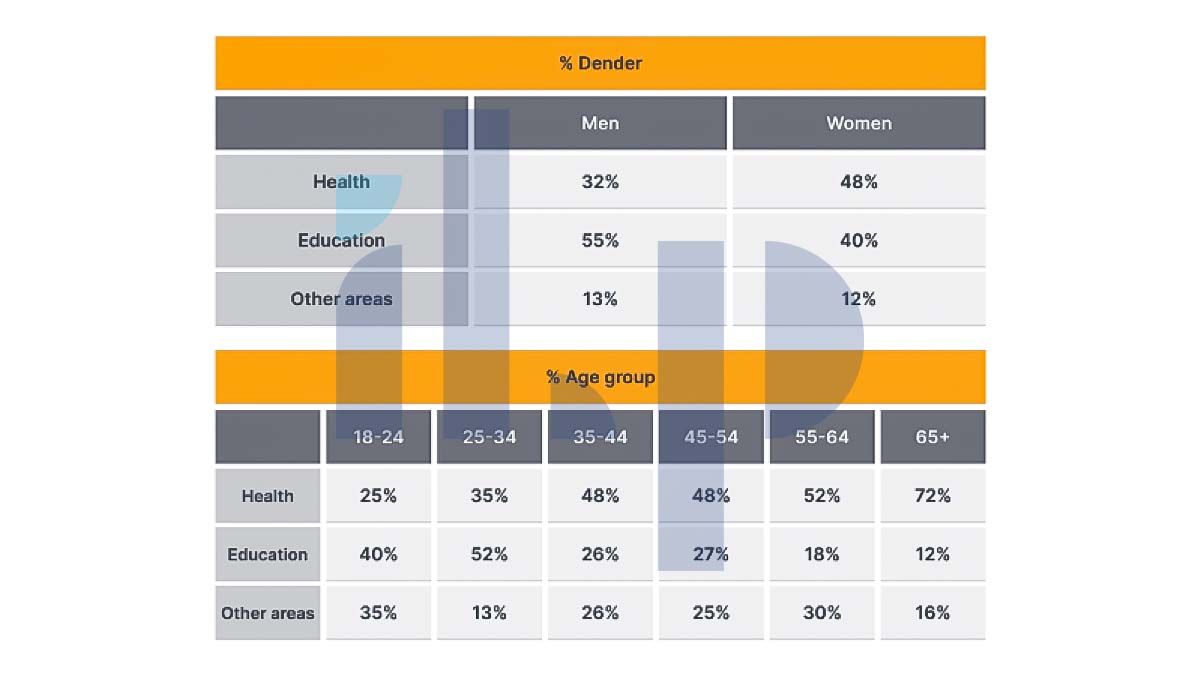
The table illustrates information about 3 main sectors that English people think their government should allocate more funding. Overall, it can be seen that women prefer the idea of increasing state spending on health while most men support more financial investment in education. Regarding age group, while young people prioritize education and other areas, the elderly put more emphasis on funding for health sector.
In terms of gender, 55% of British men focus on the improvement of education while only one-third of them support the allocation of finance for the health field. On the other hand, health care attracts more attention from women living in the UK, as nearly half of them agree that more money should be spent on this sector and 40% of this group advocated financial funded for education.
Regarding the age group, it is understandable that people aging from 35 – 64 think the government should spend more money on health (approximately 50%). Noticeably, there are 72% of old people (aged 65+) prioritized spending more on health. In addition, the majority of young adults whose ages are from 18 – 24 (49%) and 25 – 34 (52%), are strong advocates of funding for education.
⇒ Band 7.5 – 8.0
TASK 2: The best way to solve the world’s environmental problem is to increase the cost of fuel for cars and other vehicles. To what extent do you agree or disagree?
|
The notion that raising the cost of fuel for transportation can alleviate environmental issues have been gaining traction. From my point of view, while this solution can help tackle environmental problems to a degree, creating an incentive for individuals and enterprises to take action against these problems would be a more effective approach.
On the one hand, an increase in the cost of fuel may prove effective in decreasing the traffic volume, thus reducing harmful emissions that can affect the environment. First, this policy would raise people’s awareness of the frequency and length of their travels. Due to the rise in expenses, people would have to cut down on unnecessary trips. Moreover, as fuel prices soar, more sustainable mobility choices that rely less on carbon-intensive fuels, namely buses that run on biofuel, will witness a surge in demand. To illustrate, in America, since 2010, hybrid vehicles and smaller transports have had a growing market as a consequence of rising fuel prices.
On the other hand, increasing fuel cost cannot tackle all environmental issues. As a matter of fact, car emissions are not the sole cause, but emissions from livestock farming and other industries are also significant contributors to pollution. To illustrate, what is surprising is that livestock accounts for 64 percent of total methane emission – a destructive gas for the ozone layer. Hence, providing individuals and businesses with an incentive to protect the environment would be more effective. For example, the government can apply a lower tax on companies which leave less impact on their surroundings. In this way, enterprises will proactively find ways to reduce their carbon footprint.
All in all, increasing fuel prices can help solve environmental problems to a degree. However, the most effective solution would be to provide a stimulus for society to intentionally reduce damaging impacts to our habitat.
⇒ Band 7.5 – 8.0
Ngày 17/6/2022 (comp-based)
TASK 2: In education and employment, some people work harder than others. Why do some people work harder? Is it always a good thing to work hard?
|
Owing to some reasons, few people like to make extra efforts at their institutes and workplaces as compared to their peers. This essay will outline the reasons behind this, and discuss why, I believe, in spite of its merits, it also has demerits.
At the outset, there could be various causes for which individuals like to work harder. Firstly, from a career perspective, career progression is one of the motivators that drive employees to outperform. Because it can lead to better chances of promotions, huge wages, bonuses and other non-monetary rewards. As a result, such hard workers can reap the bounties of their dedication towards works.
Moving on, while industriousness is considered as a formula that leads to success, overwork could have negative outcomes. By making extra efforts not only the pupils can enjoy the success at their academies, but also hardworking workforce can reach the top-notch positions. As a result, they can live a highly admired materialistic life. Prime Minister Narendra Modi, for example, once a tea vendor, is now enjoying a successful political career due to his industriousness. However, the obsession with career and education might be a cause of physical and psychological disorders. People, who are over-indulged into their interested field, perhaps may not bother about their diet, hygiene and recreation, and its negative effects could be dire ailments like diabetes, hypertension and many more. A report published in the Times of India revealed that school-going children are suffering from various health complications because of stress due to over-study.
In conclusion, although hard work can be beneficial to have better study and successful career, not all the consequences of its have been positive.
⇒ Band 7.5 – 8.0
Ngày 18/6/2022
TASK 2: Crimes committed by young people are increasing in major cities throughout the world. Discuss the causes and how to solve for this problem.
|
Every discussion forum on the planet is focusing on jubilant crime. The rate of violence by adult people in metropolises has been continually increasing in recent years. This essay will not only discuss the various reasons but will also provide some insight into possible solutions.
Experts from all over the world have submitted their explanations for this problem. The most common reason for this issue is, first and foremost, the increasing consumption of alcohol by adults. To support this, the young generation frequently exceeds their limit while drinking alcohol, losing control of their minds, and engaging in inappropriate behaviour. Mark Fortywood’s research, for example, concluded that 74% of young people were drunk when they committed crimes. However, alcohol is not the only possible factor for a given issue; the increasing number of crime TV shows are also responsible factors for encouraging them to commit a crime. Furthermore, a recent study found that TV shows frequently impart vulnerable ideas of crime to the young generation. These are two possible causes of the problem.
On the other hand, there are some preventive measures that can solve the problem. To begin, the government should impose strict alcohol laws, which means that underage people are not permitted to consume alcohol. For example, the most developed country has strict laws prohibiting retailers from selling alcohol to people under the age of 18; if they do, they will be fined by the government. Second, the government should limit the number of crime TV shows that are broadcast on television. Because people often get erroneous ideas about crime while watching such TV shows.
To conclude, there are several causes for this problem, including increased alcohol consumption and the number of crime TV shows are being broadcasted more frequently. However, the aforementioned solutions are capable of resolving the issue at hand.
⇒ Band 7.0 – 7.5
Ngày 22/6/2022
TASK 2: Parents should encourage children to spend less time studying and more time doing physical activities. To what extent do you agree or disagree?
|
Every parent thinks the best for their kids. But sometimes they unintentionally overlook their youngster’s interest, so in my opinion parents should consider children’s opinion and give them the freedom to follow their passion. However, if a child is more into studying and doing less physical activity then in that case parents should motivate their child for physical activity.
First of all, I believe that good parenting is a crucial part of any child’s life. It should be done wisely and in a proper manner then it is beneficial for both. For example, if a child is spending more time studying then parents should come up with different ideas so that the child will develop an interest in physical activity. Such as, they can enrol their child in a swimming class or football club. This kind of activity will definitely help that child to grow their liking in outdoor pastimes.
Secondly, only performing fun and games is not acceptable. Some students focus only on games and the majority of the time they invest in sport as a result this highly impacts student academics. In this case parents need to explain to their kids the importance and the value of the study. Moreover, study educates children in every possible way which helps them to be wise people. Having knowledge means they are capable of making decisions.
To conclude, I totally agree that parents should motivate children for the physical sport if the child is not going out and only into the study. Like maintaining balance is mandatory in growing age. In addition, it sculpts the children in an appropriate manner.
⇒ Band 6.5 – 7.0
Ngày 23/6/2022
TASK 2: All fathers should be entitled to time off from work when their children are born. What is your opinion?
|
Whether fathers should be given paternity leave has become a topic of debate. From my point of view, this notion is commendable for several reasons.
To start with, allowing for men’s use of parental leave will help relieve stress off their partners and themselves. First, fathers and mothers alike experience tension prior to, during, and after childbirth; therefore, paternity leave should be given to help them cope with a new phase in their lives. It has been scientifically proven that males can undergo couvade syndrome, in which fathers-to-be suffer from some of the similar symptoms as their pregnant partners. If these men are forced to work, their productivity could decrease and their work quality may be affected negatively. Moreover, taking care of a newborn is oftentimes a taxing phase in a woman’s life; that is why having their partner share the burden of childcare will be mentally and physically beneficial to new mothers. Spouses can take turns looking after the baby, letting the other parent rest and at the same time, forming close bonds with their child.
In addition, paternity leave can be financially beneficial, especially towards working mothers. In families where the woman is the main breadwinner, having the husbands stay at home to look after their children can help relieve financial stress. Additionally, paternity leave can also contribute to reducing the wage gap between males and females by empowering mothers to preserve their profession and delegating equal parenting responsibilities between the two sexes, leaving more time for women to focus on their careers. Moreover, for families in which the grandparents cannot help taking care of newborns, the parents can save a huge amount of money on nannies to support new mothers since the fathers can play that role.
To conclude, fathers should have the right to take time off work after their children are born. This is because paternity leave will help new parents relieve stress, both mentally and financially.
⇒ Band 7.0 – 7.5
Ngày 24/6/2022
TASK 2: Art classes should be compulsory in high school. Do you agree or disagree?
|
In this modern education, where young generations have to study numerous subjects; drawing or painting is one of those subjects. There is a fair amount of people think that high schools should not make arts to be compulsory subjects in their curriculum. In my opinion, I totally agree with this opinion and this essay will argue why the arts should not be required for high school students.
On the one hand, there is no denial that drawing or painting develops creativity. When children participate in art classes, they will be learning how to imagine as well as how they could develop their ideas, which definitely bring positive impact to their creation. For example, even when painting a simple object like a house or a tree, children need to image the real ones and vividly translate them into their works of art.
On the other hand, although drawing or painting might develop creativity, I believe this subject should not be mandatory to learn because of several reasons. The first one is that the ability of drawing or painting is gifted. Because not all students have talent in art, so they will easily give up when they find it difficult to complete a paint assignment. The second reason is that adding art subjects as mandatory classes increase pressures on students who do not have painting ability, which also reduces the time of learning other core subjects such as math or science; Those subjects give them more benefits in this current society.
In conclusion, this essay argued why high schools should not require their students to study drawing or painting. While these subjects have a positive impact on human development to some extent, I believe that it should be an optional subject in high schools because art classes are not suitable for everyone.
⇒ Band 7.0 – 7.5
Ngày 25/6/2022
TASK 1: The table show questionnaires about the opinions of club members and general public for the new theatre in one town in 2012.
|
The given table illustrated information about the points of view of club members and the public towards the three components of the newly-built theatre in a town including facilities, information and quality in 2012. Overall, it can be seen that the majority of both parties show their deep contentment with the three surveyed elements. In addition, there is a relatively small proportion of people from the club and the public expressed their dissatisfaction towards the facilities and quality.
In specific, regarding facilities, nearly three-fourths of the club members graded the equipment in excellent state, compared to a lower number of 64% obtained from the public perspective. Noticeably, there were only 8% of the general public considered facilities in the new theater as poor, which was 4 times higher than the figure collected from the club members.
The general public gave more positive comments (66%) for the information about the theater than the club member (54%). However, this category gained a more moderate percentage of satisfied and dissatisfied answers from both studied groups of participants in comparison to the remaining varieties.
In terms of quality, the highest percentage of 88% was the data collected from club participants who graded the theatre’s quality as excellent, which was roughly 30% higher than the figure from the general public. In contrast, 40% of the public preferred the quality as satisfied, which was 4 times higher than the proportion of the club members.
⇒ Band 7.0 – 7.5
TASK 2: Some people believe that the government should not spend money on international aid when they have their own disadvantaged people like the homeless and unemployed. To what extent do you agree or disagree?
|
Evolution of globalization makes the connection between countries stronger. Nowadays, every country is finding useful resources for their economic growth. The government of these countries uses these resources to earn money in order to progress and to provide international aid to those countries who are in need. However, some people offend such actions of their nation’s government. I disagree with this statement and will provide credible reasons to prove.
Firstly, I believe that providing international aid will help the country itself because this can strengthen their relationship, among other nations and will open a door to many opportunities. For instance, when the richest country provides health and education facilities to the poor country, this will enable them to recruit more staff to work in that country which will solve their problem of unemployment. Moreover, working in these areas might improve the resources of the poor nation which will further open more scopes in these sectors. Also, setting up industries in various nations will turn out to be the two way profit. Like, Telecommunication industries benefit both giver and recipient nations.
Secondly, providing assistance on natural calamities occurrences like earthquake, floods etc. Are what we called humanity. Every country should have the separate foreign aid account for the sake of humanity. This can help the suffered nation to recover fast. When the developed countries give aid and abet to underdeveloped nations in return they get some share to use their resources. For example, USA, holding shares in oil companies of the Middle East nations.
In the end, I think it would be appropriate to say that the international subsidy will be useful in eradicating poverty, unemployment, and homelessness in their own home rather than creating it.
⇒ Band 7.0 – 7.5
Ngày 26/6/2022
TASK 2: Some believe that younger family members should be legally responsible for supporting older family members when they become physically, mentally and financially unable to look after themselves. Do you agree or disagree?
|
The vast majority of the population deems junior members of the house should legitimately take care of the senior households as they become not capable of doing so. I strongly advocate with the opinion of the majority and am going to reflect my own view of such a common issue.
First of all, since humans are the only intelligent being on the face of the earth we have to help people who are in need. Humanity is gifted with empathy, compassion and kindness in comparison with animals. For example, every other creature leaves their family after getting mature enough to live by itself. Therefore, sharing love between one another is the right way in the eyes of the morality in hardship and also kind of pay-back to our elderly members for looking after us when we were kids.
On the other hand, it can be spotted that the government indeed must give a hand in this particular situation. In other words, after all the paid taxes and contribution put into country growth cannot be forgotten in my opinion. In fact, many individuals live not just for themselves but for the sake of family as well, in addition to that most of them have sacrificed their precious lives for country development like scientists, doctors, teachers and etc. I think authorities take action on this problem by stable pension to older members of society and building nursing houses in order to look after people who are unstable mentally or physically.
To conclude, although looking after someone may be a burden sometimes, generally it is our moral duty to do and legalization of that is something we have to accomplish.
⇒ Band 7.0 – 7.5
Ngày 28/6/2022
TASK 2: Government should support care vs finance for retired people while others believe that they should save money when they get older. Discuss both views and give your opinion?
|
There has been a controversy about whether the government should support retired people financially. I think it is necessary for the government to take care of retired people, and my reasons will be explained in the following paragraphs.
Firstly, the pension system fosters the re-productivity of today’s labour force. Because there is a pension system, the lives of retired people are guaranteed; young people don’t worry about their retired lives. Therefore, a healthy substitution process is formed; when elder people retire, young people can take over their work. At this point, such a phenomenon is advantageous to the employment structure.
Secondly, financial support for retired people brings harmony to our society. A pension system guarantees the basic life of retired people. Besides, due to the advent of an ageing population, the ratio of elderly is getting bigger. Hence, if the government can guarantee the lives of those people, in other words, our society can be more peaceful. It’s worth mentioning that a reasonable pension system is a good sign for the working population as well. They can see that their retired lives can be treated well.
Thirdly, financial support can propel the country’s economic development. For example, the pension system in many countries is linked with the individuals’ working efficiency. If you work hard, you can gain more pension. Such a design can stimulate workers’ enthusiasm and cause them to work harder. As a result, the country’s economy can be well promoted on account of improved working efficiency.
On the other hand, the pension system has been a blight on the country as well. For example, due to the advent of the ageing population, the number of retired people is rising; in other words, the government need to pay them a sizeable portion of money annually. As a consequence, it can worsen the country’s financial issues unquestionably.
In conclusion, there are some advantages and disadvantages of supporting retired people financially.
⇒ Band 7.0 – 7.5
Ngày 29/6/2022
TASK 2: Some people say that advertising encourages us to buy things that we really do not need. Others say that advertisements tell us about new products that may improve our lives. Which viewpoint do you agree with?
|
In the modern life, a lot of advertisements introducing multiple products. While some people think that advertisements are important and it is a good way to know about new products, others believe that advertisements push people to buy unnecessary products. I totally agree that advertisements are important and useful. I believe that advertisements have a lot of benefits. This essay will discuss the positive sides of advertisements followed by a conclusion.
To begin with, there are several advantages of advertisements that considered as an added value. Firstly, advertisements help to introduce new products to people that could facilitate their life. Since there are a lot of new products can be useful in the daily life and without the advertisements people would not know about it. For example, there are a lot of people get know about new products through the advertisements and found it very useful, such as the rice cooker, printers and microwaves. Secondly, advertisements help people to know the new options added to already existing products or new enhancements to the new version of products. For instance, many advertisements show the new options in the new mobile phones and the enhancements added to it.
In addition, advertisements help people see what products available in the market with the prices, which make the comparison much easier for the customers. Due to this, people will make a right decision about their purchase items. For example, people may compare the product prices and the options shows with advertisements to help them choose which products to buy.
In conclusion, there are several positive sides of advertisements that are considered as an added value for people, such as introducing the new products available in the market, and the new options added to the existed products. Moreover, it helps people to make the comparison between the available products to make the right choice.
⇒ Band 6.5 – 7.0
Ngày 30/6/2022
TASK 2: It is important for parents to read stories to children. Others think it is unnecessary because children can find them in other sources e.g books, and TV. Discuss both views and give opinions.
|
Many people argue that it is the responsibility of parents to read or tell stories to their offsprings, while others think that such activities are unnecessary since children can read books or watch television by themselves. This essay will discuss both views, but I personally believe that it is preferable for parents to tell stories to their children.
On the one hand, there are several reasons why it is mandatory for parents to tell stories or read books for their children. First of all, reading stories for children in their formative years can develop family bond and help shape the child’s personality. Parents who devote time and thought to raising and educating their children can improve family tie and give their kids a good preparation to enter adult life. They are also able to bridge the generation gap by telling stories and reading books to their offsprings and discussing the books with them. Secondly, it is undeniable that children cannot fully understand stories by reading themselves. Therefore, if parents explain the story while reading and translating it, they can understand it much better.
On the other hand, many say that children should be encouraged to read books by themselves for many reasons. One reason is that the parents these days have heavy workload to deal with, therefore they have little time left for themselves let alone telling stories to their kids. For example, with single parent, household becomes the norm in today’s world, single mother or father have to balance the demands of home and work. In this case, supporting their family is more vital than wasting time reading some books or accompanying their offsprings. Another reason is that children should learn to be independent from the earliest stage of life. Children can independently choose to read every kind and genres of book as they wish and thus broadening their knowledge on their own.
In conclusion, although today’s children have the ability to read books or watch movies on their own without having their parents to hold them on each and every step, I believe that it is more preferable for parents to spend time accompanying their children by telling stories.
Giải đề IELTS Writing 2022 – Tháng 7

Ngày 04/7/2022
TASK 2: Scientists tell us that some activities are good for health and others are bad. Despite knowing that, millions of people still continue doing unhealthy activities. What are the causes and what are the solutions for this?
|
Modern people are regularly informed about the dangers of leading unhealthy lifestyles. Despite the spectacular advances in the medical field, many people are still suffering from and being killed by diseases, most of which are preventable.
There are some reasons why there is still a prevalent habit of doing unhealthy activities. This can be, firstly, explained by the fact that most people are prone to undue optimism. Although powerful and constant reminders of what unsound lifestyles can bring are readily available everywhere, people still keep the faith that they would hardly be inflicted. Even for those who are aware, they are often in denial and convince themselves these unhealthy habits are not as terrible as the media want them to believe. Secondly, once people are addicted to unhealthy habits, it is very difficult for them to break. For example, people with smoking habits cannot reduce their dependency on cigarettes due to their high addictiveness, or people with sedentary lifestyles are unable to bring themselves to be more active on the simple grounds that exercises are not pleasurable.
To address these problems, multiple solutions can be proposed. One of which is imposing higher taxes on unhealthy products, such as food with a high concentration of fat, alcohol, or cigarettes. This solution promises direct impacts. Moreover, healthy lifestyles should be further promoted, and likewise, unhealthy lifestyles should be strictly criticised on the media. With a sense of self-protection and knowledge that everybody around them practices the same habit, I believe that people would find it easier to break their old self-destructive lifestyles.
In conclusion, it could thus be inferred that the menace of unhealthy lifestyle and people’s cohesion with it could be recuperated with the prudential and aware health measures.
⇒ Band 7.0 – 7.5
Ngày 05/7/2022
TASK 2: Some people think that the main purpose of schools is to turn children into good citizens and workers, rather to benefit them as individuals. To what extent do you agree or disagree?
|
Studying in school plays an important role in our life. Some people argue that the target of leading in school is to change the children into perfect citizens and not benefit them as an individual. However, I do not agree with this point.
On the one hand, teachers teach lots of basic knowledge about being a standard citizen or worker.However, there is some news on the tv talking about a man who cannot find a suitable job so he killed numerous people. Even though not all student will become a criminal in the future, it will be a consequence while the school become a factory producing good and ordinary student,which are useless to society.
On the other hand, I think schools need to benefit the different students as individuals. Because,there are various types of jobs in society. Hence,the school need to help the children to develop their own talent and individual. For example, there is a student who can run very fast but is not good at math. So what the school need to do is to train him to become a professional athlete in the future ,not a mathematician.After being trained in school, every student can find a suitable job in the future because of their own talent and individual.
To summarize, I do not agree the main purpose of school is to transform the kids into good citizens or employees. Society needs numerous kinds of jobs and personalities to finish different kinds of work. Hence, what schools need to do is train the student to become individual people in the future.
⇒ Band 6.0 – 6.5
Ngày 06/7/2022
TASK 2: Some people think that all teenagers should be required to do unpaid work in their free time to help the local community. They believe this would benefit both the individual teenager and society as a whole. Do you agree or disagree?
|
In today’s era of modernisation, some advocates promote that teenagers should be given an opportunity to do unpaid work in their spare time for the benefit of the local community and society. I strongly agree with this proposition and will highlight the numerous advantages of encouraging teenagers to take up social service
I would like to highlight 3 advantages of engaging teenagers in social work. Firstly, it can be considered a better utilisation of their time. A study shows that boredom is a major cause behind a large number of teens resorting to crime and drugs. Therefore, keeping them occupied in social activities like cleaning of public areas or creating awareness about important social issues should be definitely preferred to wasting time on unproductive ways to tackle boredom. Secondly, data suggest that community service plays a valuable role in the character development of teenagers. For example, if a teen takes part in cleaning the road of his/her locality, he/she would realise the importance of cleanliness and hygiene. As a consequence, this would create a society that consists of morally sound adolescents. Thirdly, it can help the teenagers learn how to function in a working environment. Henceforth, students would have a prior experience of working before actually joining their jobs and therefore, are ready for the future.
This vision can thus be achieved by 2 methods. As an initial step, students should be given various incentives, for example, credits for their university applications if they have performed community service. Secondly, teachers and parents should create awareness about the valuable experiences to be gained by these teenagers when they take part in such activities.
To conclude, there are practically no disadvantages of promoting teenagers to engage in unpaid social work for their own communities. I hope these ideas are implemented by the government in the near future for the betterment of our society.
⇒ Band 6.5 – 7.0
LÀM THẾ NÀO ĐỂ TẬN DỤNG HIỆU QUẢ MỘT BÀI WRITING SAMPLE?
Ngày 07/7/2022
TASK 1: The diagram below shows the stages in processing cocoa beans.
|
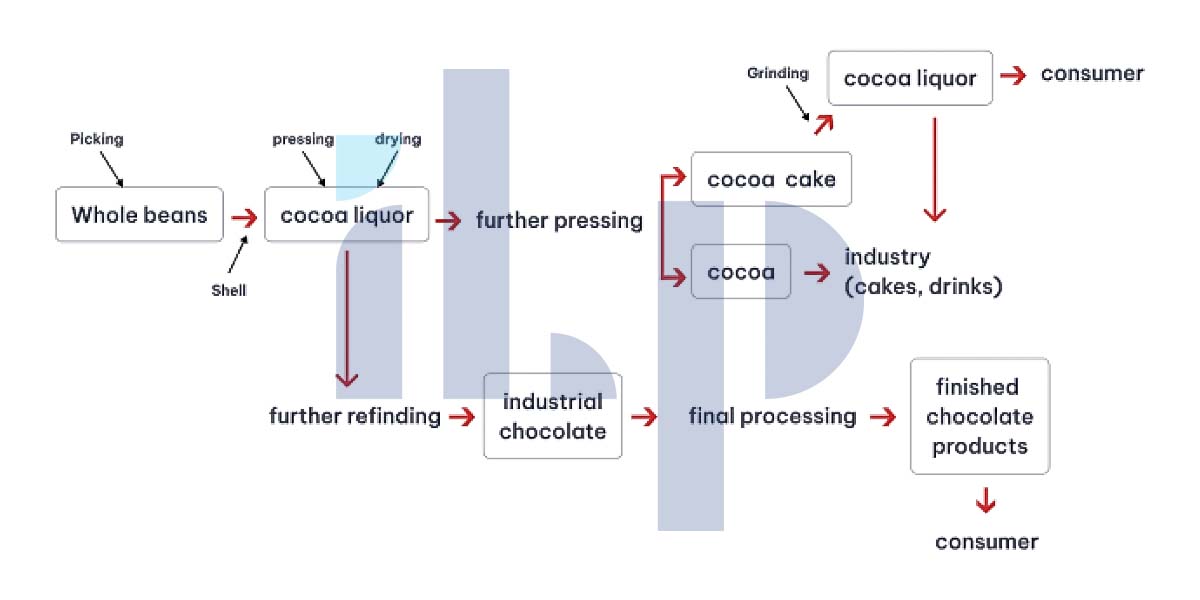
The diagram illustrates the steps in the processing of cocoa beans to make cocoa powder and chocolate. Overall, there are 3 main stages during the procedure, starting with choosing the cocoa beans and ending with the final products to reach customers.
In the initial stage, whole beans are selected from the picking up process before being dried to extract their shell. Next, those beans are pressed to make cocoa liquor which then experiences one of the two approaches, further pressing or further refining. In the former way, the liquor is continued to be pressed to make either cocoa cake or cocoa. Or else, this alcohol is refined before it reaches the industrial chocolate stage where sugar and cocoa (extracted from the other approach) are mixed together.
To enter stage 3, while the cocoa cake experiences a grinding step to make cocoa powder to be marketed to customers, the cocoa will be shifted to industry to make cakes and drinks (cocoa powder may be included in this step). The finished chocolate products are manufactured from the final processing stage of industrial chocolate before it is sold to the public.
⇒ Band 7.0 – 7.5
TASK 2: Nowadays people depend on technology for leisure activities. Is this a positive or negative development?
|
In the modern world, the technology significantly plays an important role in many human activities, especially the pastime. This causes lives’ dependence on most of the growth of smart equipment. In my perspective, I firmly believe that the purpose of automation initiatives is serving the residents’ life qualifications. Once people rely on it, the back draw overweighs the benefit.
On the one hand, it doubtlessly persuades that the more innovative invention the more convenient residents’ lives are. After sticking their eyes on the equipment all working day, more people enjoyed using digital for their free time because they find it easy to approach the diversity and interesting content. Moreover, this kind of entertainment has widespread accessibility. To illustrate, those who are similarly used to machinery will choose to go to the cinema, play video games, or even surf social media through smartphones, while those who are not would rather harmonize with the natural places.
On the other hand, there are more negative sites than positive ones for some reasonable reasons. Initially, the interesting creative content which suits many audiences’ insight may become excessive if it is not controlled. These due to life imbalance and lead to many diseases such as obesity, cardiovascular, and an extreme case of eating disorders or depression when people communicate face to face and keep themselves isolated. Furthermore, the more contact with the technique the less touching the nature which is believed to affect many psychological problems. For instance, some research demonstrates the higher and more critical mental diseases nowadays and the ways to transfer this suffering are by spending time for your inner spaces and society.
In conclusion, the increasing reliance on automation for recreation is beneficial in terms of its variety as well as accessibility. However, I strongly see the harm to health is not worthy to exchange.
⇒ Band 7.0 – 7.5
Ngày 09/7/2022
TASK 1: The charts below give information about different types of waste disposed of in one country in 1960 and 2011.
|
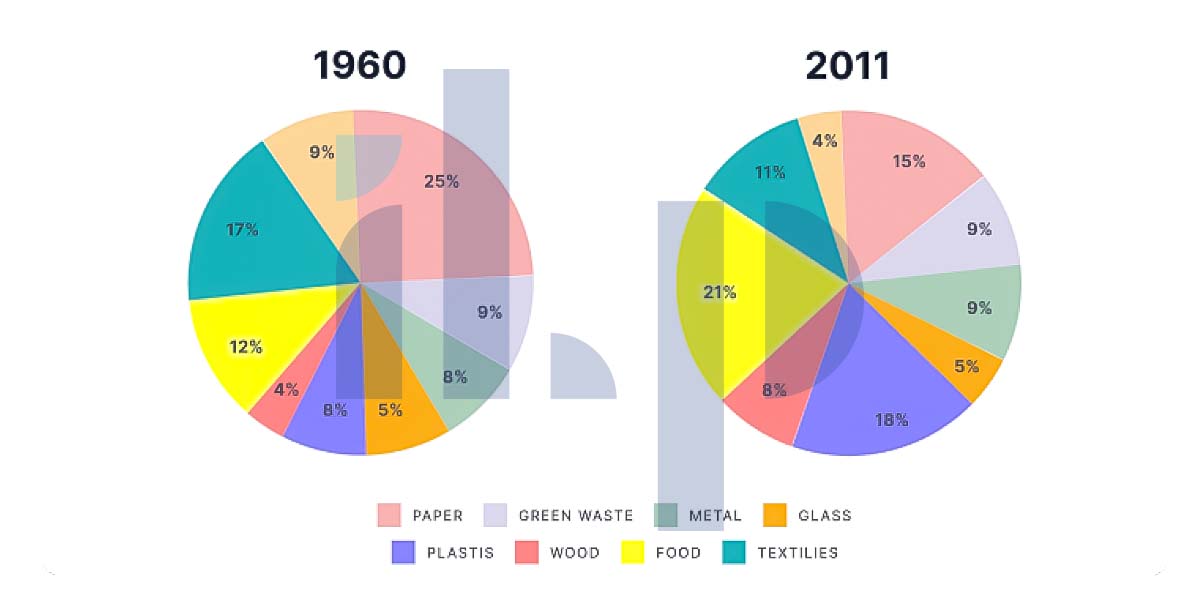
The given pie charts illustrated data on waste disposal of various categories in a nation in 1960 and 2011.
Overall, it can be seen that there was an increase in the proportion of plastic, wood and food disposal while people threw away less paper, textile and other types of waste. In addition, disposed metal, glass and green waste shared almost the same figure in two years.
In 1960, 25% of paper was discarded but this percentage fell by 10% in 2011. Regarding textile, this category also experienced a slight decline of 6% (from 17% to 11%) in the same time frame. Besides, the amount of other waste got rid of in 2011 was 3 times lower than that in 1960.
It is clear that the proportion of plastic and food waste grew by roughly 10% in 2011 compared to the other year. And people disposed of a two-fold amount of wood 51 years after 1960. In terms of glass, metal and green waste, these types of disposal shared almost constant figure over the period. Specifically, the two latter types’ disposal were approximately 9% while the percentage of glass thrown away was only 5%.
⇒ Band 7.0 – 7.5
TASK 2: Large companies use sport events to promote their products. Some people think this has a negative impact on sports. To what extent do you agree or disagree?
|
The discourse regarding the impact of product advertising in sporting events has generated controversy in recent years. Some argue that corporations exert a positive influence on sports since they promote products that can encourage participation in sports. In my estimation, I do not agree with this sentiment since corporations promote products that enable a sedentary lifestyle.
Admittedly, corporations can use these events to promote products that will encourage active lifestyles. To cite an example, during the 2014 World Cup, Adidas released the official tournament ball named ‘Brazuca’ and heavily promoted it on their social media accounts including Twitter and Instagram. The company made a concerted marketing effort to advertise the ball’s design, aerodynamics and production process. The marketing push behind ‘Brazuca’ during the 2014 World Cup actively encouraged viewers to buy the ball and it sold out in Adidas stores worldwide. This encouraged and continues to exert an influence on the exercise habits of millions around the world. This instance clearly illustrates the positive influence corporations can exert when promoting their products during sports events.
However, corporations have more often been known to promote products during sports that precipitate passive lifestyles. For instance, McDonald’s was the official restaurant of the 2012 Olympics in London. During the event, they released an exclusively branded menu that included burgers, fries and milkshakes. According to a spokesman for the Academy of Royal Medical Colleges, the menu was recklessly unhealthy as the average calorie count for each item was over 900. When combined together to make a meal, the calorie count reached upwards to 3600, which is nearly twice the recommended intake for the average adult. Essentially, McDonald’s was promoting obesity in countries such as England where such a lifestyle is becoming more prevalent and represents a present danger to public health.
In conclusion, while there have been instances of corporations having a positive influence on sports through the promotion of their products, the evidence to the contrary is more substantial. In the future, sporting event organizers should be more discriminatory in choosing sponsors, preferring preferably those with products that spread a meaningful message.
⇒ Band 7.5 – 8.0
Ngày 16/7/2022
TASK 2: In some parts of the world it is increasingly popular to research the history of one’s own family. Why do people want to do this? Is it a positive or negative development?
|
People nowadays are becoming increasingly keen to learn about their family history. There are some compelling reasons for this; and I strongly feel that this is a positive development.
Most people do research on their family history to find out whether their ancestors had the similar personality traits and to have deeper understanding about their roots and heritages. Or some others study their family historical background for less significant reasons, one of which is curiosity. For example, my uncle used to spend a great deal of time and effort tracing my family tree back to the 18th century just out of curiosity. Also, I think news media have a major part to play in this trend. There are a lot of news articles and advertisements that encourage genealogy and convince people that it is necessary to know about their ancestry.
In my view, this is a good way to teach children about history and how their ancestors lived, which is linked in part to family traditions. And it is even more important for children to carry on such valuable and unique traditions, given that this fast changing world is somehow making young generations ignore the spiritual legacy that their ancestors left. On top of that, family history can be a fascinating discussion topic whenever there is a family meeting. How my grandparents struggled to bring up their offspring during the Vietnam War, for example, has become my father’s favorite subject when all my relatives gather for a traditional holiday feast.
In conclusion, people like to study their family history for a variety of reasons as I have discussed in my essay, and personally I consider this a positive modern trend.
⇒ Band 7.0 – 7.5
Ngày 23/7/2022
TASK 2: Nowadays, most people try to balance between work and other parts of their lives. Unfortunately, not many achieve this balance. What are the problems with this? Suggest some solutions to solve the problems.
|
It is true that in contemporary society many people would like to balance work with other commitments and leisure time. While this is not easy to achieve, it is possible to overcome some obstacles and enjoy a more balanced lifestyle. There are two aspects of task which make huge demands on employees today.
Firstly, the modern working environment can be extremely stressful. Even if employees have a desk job, they may have to cope with a heavy workload, leaving them exhausted at the end of the day. Then, time must be spent commuting home where there is cooking to be done, cleaning and looking after children. Secondly, the workplace is very competitive, and few people are able to pursue a successful career. Many workers put in extra hours, to improve their promotion opportunities and move up the career ladder.
However, there are solutions which will contribute towards a better work-life balance. In terms of work, it may be better to have no career ambitions and, instead, to have a steady job with supportive work colleagues. To avoid rush hour traffic jams, flexible working hours would make commuting easier and quicker. From the perspective of life outside work, people would then have the time and energy to take up sport or gentle exercise. The British, for example, love to walk their dogs. Instead of earning high salaries to spend on consumer products, workers could earn less and enjoy simpler lifestyles, with more time for their families or friends.
In conclusion, although it is difficult to achieve the right balance between work and other parts of life, it is possible to do so by living more simply with less work-related stress.
⇒ Band 7.5 – 8.0
Ngày 24/7/2022
TASK 2: In the modern world, it is possible to shop, work and communicate with people via internet and live without any face-to-face contact with others. Is it a positive or negative development.
|
The Internet is making everyone’s lives easier to live. Nowadays, it is more accessible to do online shopping, work, and facetime without going out through social media. Although they can get the advantage of saving schedules for other things, they will also struggle with a lack of understanding while communicating online. However, the disadvantages outweigh the advantages because people are far better off meeting in person and going out themselves despite the benefits they might gain.
The main benefit of working from home and buying stuff from websites is that it saves hours and money for other things which cannot be done while working on site. Because it gives more turn to stay with closed ones at home and spend quality space with children. And people spent less petrol to go out for these reasons. For example, due to pandemics, everyone depends on laptops or computers for work. Additionally, while malls were closed people were preferring electronic shopping more. For these reasons, individuals strengthen their relationships and improve their social well-being.
One possible drawback is that someone will face is the absence of human interaction and insufficiency in understanding. Because cyberspace will replace the desire for human touch which everyone needed. For instance, I have been living in Canada for two years in a long-distance relationship which sometimes causes misinterpretation of things that cannot be possible while living with someone. Similarly, advice cannot be given by retailers online which are only possible in person and helps to hide true identity to someone by promoting fake products. That’s why face to face interaction is really important to get away with uncertainties.
In conclusion, Advancement in technology releasing an individual’s tension. While a person will no doubt experience some understanding barriers that lead to the main advantage of using Cybernet which is less time-consuming.
⇒ Band 7.0 – 7.5
Ngày 25/7/2022
TASK 2: Employers should give their staff at least a 4-week holiday a year to make employees better at their jobs. To what extent do you agree or disagree?
|
The employers work hard to determine the holiday allocations for their employees in the contemporary workplace. Some people claimed that staff should have one-month break annually, and the merit of this policy is obvious to help staff release from high stress and endless tasks. However, from my point of view, I partly disagree about this statement.
It is undeniable that the extended holiday has some advantages to motivate staff performing better at work. This is mainly because it provides more time for employees to take care of themselves and their families, and it leads to a balance of work and quality life. This results in higher life satisfaction among those employees. I believe that most of those staff will appreciate the 4-week holiday. In return, those staff will be willing to devote more of their attention on the processing of their jobs.
On the other hand, extending the length of the holiday will also cause some drawbacks, which may put a company at stake. This is mainly because personnel are passive after a long period of a break since they are not doing their regular tasks such as customer service and commercial communication. In a result, the working environment is not effective, and it will definitely affect badly on the company’s achievements. Furthermore, small companies which contain few staff and each of them is responsible for a certain position may likely cause delay on projects if any employee is on a long leave. In the end, this policy may lead to economical losses in a long run.
In conclusion, even though the passive effects of a four-week vocation is obvious in reducing work stress from employees as well as motivating the staff to do better at work. I concern more about the negative impacts of long vocations, such as destruction of the working environment when the staff just be back from the long leave and economical losses if someone were not on-site to complete the projects on time in small companies.
⇒ Band 7.0 – 7.5
Ngày 26/7/2022
TASK 2: Some scientist thinks that there are intelligent life forms on other planets and messages should be sent to contact them. Other scientists think it is a bad idea and would be dangerous. Discuss both views and give your own opinion.
|
The scientific community is divided on the topic of whether we should try and contact extra-terrestrial life forms. Some are for the notion, whilst others are against it. However, in my opinion, I feel that we should try and contact them, as this will help us in making massive discoveries in the name of science. I shall substantiate my reasons in this essay.
On one hand, they could possess the technology, which is way more advanced in comparison to ours, and also, they might have more knowledge on other planets which would help us to decide which ones are habitable. In other words, contacting the extra-terrestrials will help us understand the complexities of the galaxies and the universe. To illustrate, a recent report published by NASA claimed that information about the existence of other creatures will be the key to decide if the other planets will be suitable to be inhabited by humans.
Alternately, people believe that since we do have no knowledge of these extra-terrestrial forms, any communication with them could be seen from their end, as a provocation, which may lead them to attack, and as we suspect their technology to be highly advanced, we would not be able to survive such a battle. However, since these are just theories, no conclusions can be made in this regard.
In conclusion, although they are varying opinions on whether we need to contact extraterrestrial beings, I feel that attempts should be made to contact them, because if we lead to the advancements in science, and we will get a better understanding of the galaxies around us.
⇒ Band 7.5 – 8.0
Ngày 29/7/2022
TASK 2: Today news plays an important role in people’s lives and news media are more influential than ever before. Why is it this case? Is it positive or negative?
|
The first problem that needs to be considered is some media actually write down untruly messages it is affected our environment and economic stability. News is a very important part of our life. They bring us as a reader much crucial information from many sources as urgency is really needed.
The main negative aspect is that our population was easily influenced by television, likewise social television, electronic television and other kinds of publishing. Instead of the pandemic, the journalist should work properly on the area already stated. Furthermore, they really understand about the public interest alike as special themes or topics today, next week and on every occasion. It is very crucial due to the effectiveness of daily data. they explore the artist and politician’s scandal and make it a highlight of the day. It is such an incredible crime of the journalist to blew up the bad side of a person and make a bad behaviour of our children for instance.
On the other hand , many beneficial steps through this activity. the positive aspects of mass media are they teach us to gain knowledge, use critical thinking, keeping in alert, particularly to our government projects. For example, the development of our country is always be monitored and reported by the publishing to all citizens. Moreover, entertainment is also our favourite one.
In conclusion, I think broadcast publishing is a fascinating and essential aspect for any kind of reason. Subsequently, each of us must be careful while reading or assuming a picture or a passage in the newspaper and other public places.
⇒ Band 6.5 – 7.0
Chúc các bạn hoàn thành tốt bài thi IELTS và đạt band điểm mong muốn.
Cải thiện kỹ năng IELTS Writing cùng Đội ngũ Học thuật ILP:
TIÊU CHÍ “GRAMMATICAL RANGE AND ACCURACY” TRONG IELTS WRITING TASK 2 BAO GỒM NHỮNG GÌ?
CÁCH LẤY VÍ DỤ TRONG IELTS WRITING TASK 2 – ĐƯA RA VÍ DỤ SAO CHO HỢP LÝ & THUYẾT PHỤC
TỪ VỰNG MIÊU TẢ XU HƯỚNG TĂNG GIẢM TRONG IELTS WRITING TASK 1