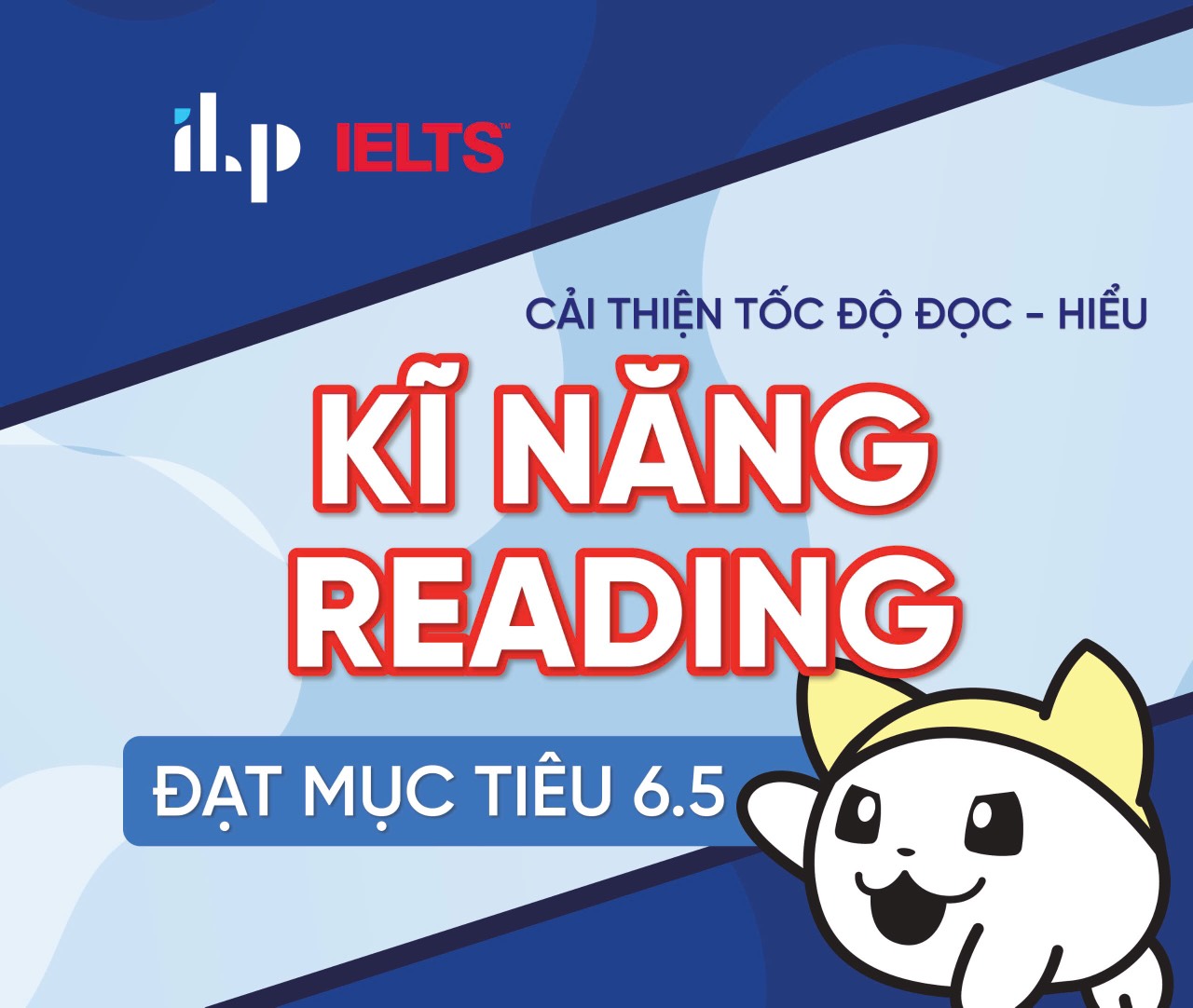
CHIẾN LƯỢC CẢI THIỆN TỐC ĐỘ ĐỌC – HIỂU ĐẠT MỤC TIÊU BAND 6.5 KỸ NĂNG READING

Mục lục

Chào mừng các bạn đã đến với bài chia sẻ của Mr. Di!

Để đạt được band 6.5 cho phần thi Reading, đáp án đúng tối thiểu bạn phải đạt được là 26 trên tổng số 40 câu. Điều này đồng nghĩa với việc các bạn phải hiểu và nắm vững các kỹ năng, làm nhiều dạng bài thường gặp, không chỉ tập trung vào một dạng hay chỉ phát triển mỗi kỹ năng Reading.

Dù có là một người chưa từng tiếp cận với IELTS, hay một người đã trải qua quá trình ôn luyện miệt mài với đủ các dạng bài, bạn đừng lo lắng nếu kỹ năng Reading vẫn chưa tốt. Đó đơn giản là những khó khăn mà bất cứ ai cũng đã, đang và sẽ trải qua.

Cùng thầy điểm qua một số cản trở mà các IELTS-ers thường gặp phải trong quá trình ôn luyện kỹ năng Reading nhé!

02 khó khăn khi làm Reading cản trở mục tiêu IELTS 6.5

Vốn từ vựng khan hiếm, chưa đa dạng
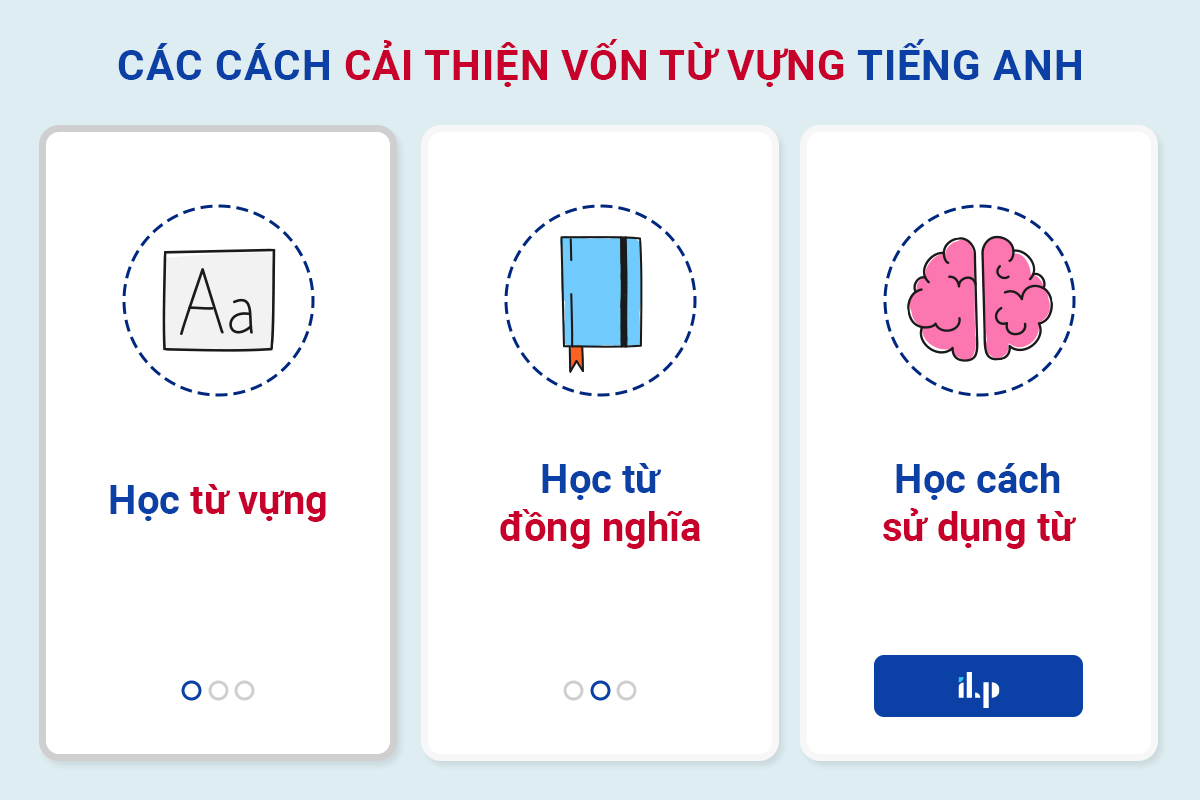
cải thiện vốn từ vựng tiếng Anh kỹ năng Reading 1

Từ vựng thực sự không chỉ là vấn đề đối với kỹ năng Reading, đây còn là yếu tố gây khó khăn trong việc sử dụng ngôn ngữ nói chung. Về cơ bản, bài thi Reading IELTS là một bài kiểm tra từ vựng, đánh giá năng lực nhận dạng ngôn ngữ thông qua việc lồng ghép, kết hợp giữa những cách diễn đạt mang tính chất tương đồng về mặt nghĩa giữa văn bản và các câu hỏi.

Đối với IELTS, việc học từ vựng thôi là chưa đủ, các bạn còn phải học luôn cả những từ đồng nghĩa lẫn cách sử dụng từ sao cho phù hợp.

Đối với những người học tiếng Anh như một ngoại ngữ, khả năng tiếp thu từ vựng mới sẽ khó theo kịp với người bản xứ. Bên cạnh đó, khả năng chuyển ngoại ngữ sang ngôn ngữ gốc của mỗi người cũng rất khác nhau. Vậy nên có người chỉ cần nhìn sơ nhớ được từ vựng trong khi có người học rất kỹ nhưng lại khó để ghi nhớ dài hạn.

Một lý do khác khiến vấn đề đọc hiểu nội dung trở nên khó hơn chính là đa phần những bài đọc IELTS (nhất là Passage 2 và 3) đều là những văn bản mang tính chất hàn lâm, học thuật cao mà phần lớn người đọc ít tiếp cận trong đời sống hằng ngày.

Không những thế, chủ đề bài đọc thường khá lạ, khó bắt gặp trừ khi bạn đã có nền tảng nghiên cứu sâu từ trước, ví dụ như “lịch sử phát triển công nghệ vi sinh”, “khai quật di tích còn sót lại của nền văn minh cổ”, “ảnh hưởng trầm trọng của hiện tượng El Nino”,… cũng là những rào cản tâm lý rất lớn khiến cho biết bao IELTS-ers phải đau đầu.

Kỹ năng để làm các dạng bài IELTS Reading chưa vững
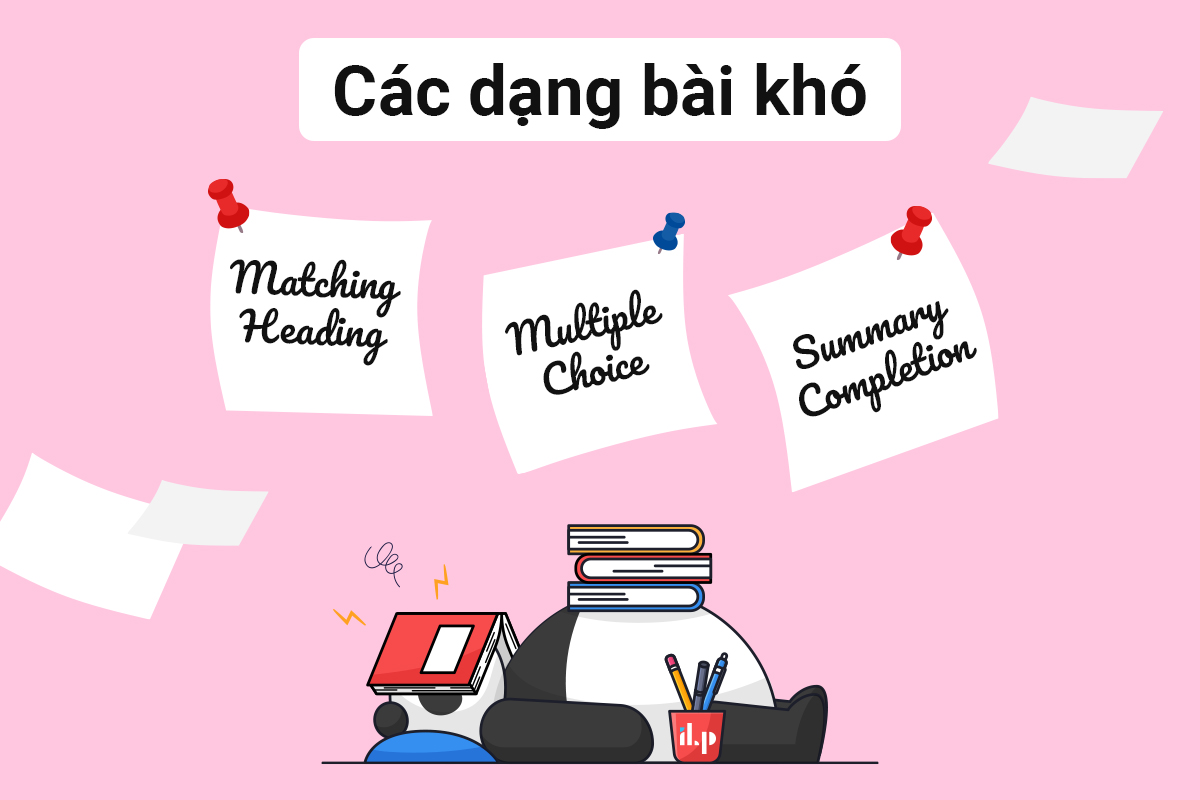
Dạng bài gây khó trong kỹ năng Reading 1

Một trong những vấn đề khác thầy nhận được từ các IELTS-ers là có những dạng bài dễ dàng vượt qua, nhưng lại có những dạng khiến các bạn phải cân nhắc, suy nghĩ rất nhiều.

Nhìn chung, các dạng bài đòi hỏi cần có sự thấu hiểu về đại ý chung và cốt lõi, chẳng hạn như Matching Heading, Multiple Choice hay Summary Completion thường khiến bạn cảm thấy khó nhằn, hơn là các dạng chỉ cần xác định chi tiết cụ thể.

Đây hoàn toàn là điều bình thường, bởi lẽ những gì hiện hữu sẵn vẫn dễ dàng tìm ra hơn những gì đòi hỏi phải có sự hiểu sâu.

Kỹ năng đọc là yếu tố quan trọng nhất để hoàn thành tốt một bài Reading IELTS. Tuy nhiên, nếu bạn đang hướng tới các band điểm cao thì không chỉ có kỹ năng Reading, các kỹ năng làm bài, tiếp xúc thường xuyên với đa dạng các câu hỏi cũng rất cần thiết. Trừ khi bạn thực sự suất sắc, nếu không được rèn luyện, khả năng cao bạn vẫn sẽ gặp trục trặc với các dạng bài khó.

Những chiến lược để cải thiện kỹ năng Reading, gia tăng tốc độ đọc – hiểu một văn bản Reading IELTS

Xây dựng cho bản thân nền tảng từ vựng và kiến thức ở đa dạng các chủ đề

cách hiểu văn bản qua kỹ năng Reading 1

Practice makes perfect. Thực tế, từ vựng và mức độ am hiểu là những cốt lõi giúp kỹ năng Reading của các bạn phát triển, chinh phục band điểm 6.5. 

Khi đọc càng nhiều, các bạn sẽ sở hữu một vốn từ phong phú, cũng như nền tảng kiến thức trở nên sâu sắc hơn. Điều này không chỉ mang lại lợi thế khi giao tiếp mà còn giúp bạn không bị bỡ ngỡ trong trường hợp gặp phải chủ đề khó.

Về cách đọc và nguồn đọc, thầy khuyến khích các bạn nên tìm hiểu các chủ đề tự nhiên – xã hội mà các bạn cảm thấy hứng thú thay vì tập trung vào một lĩnh vực nào đó nhất định. Để làm được điều này, các bạn có thể bắt đầu bằng việc đọc báo mỗi ngày. 

Dưới đây là danh sách những trang báo nước ngoài bạn có thể đọc để nắm tin tức, nâng cao hiểu biết, cũng như rèn luyện kỹ năng Reading của mình.

Danh sách trang báo nước ngoài giúp bạn rèn luyện kỹ năng Reading

  • New York Times.
  • Wall Street Journal.
  • HuffPost.
  • Washington Post.
  • Los Angeles Times.
  • Reuters.
  • ABC News.
  • USA Today.

Ngôn ngữ báo chí có thể xem là tổng hòa giữa ngôn ngữ thường nhật và ngôn ngữ khoa học. Do đó, các bạn sẽ dễ dàng tiếp cận từ vựng và tiếp thu kiến thức hơn so với việc đọc những quyển sách khoa học hoặc những bài nghiên cứu tương tự như IELTS. 

Bằng việc siêng năng đọc mỗi ngày về những chủ đề bạn thấy hứng thú, thầy tin rằng kỹ năng Reading của bạn sẽ nhanh chóng cải thiện rõ rệt.

Xây dựng chiến lược đọc hiểu phù hợp với trình độ hiện tại của bạn
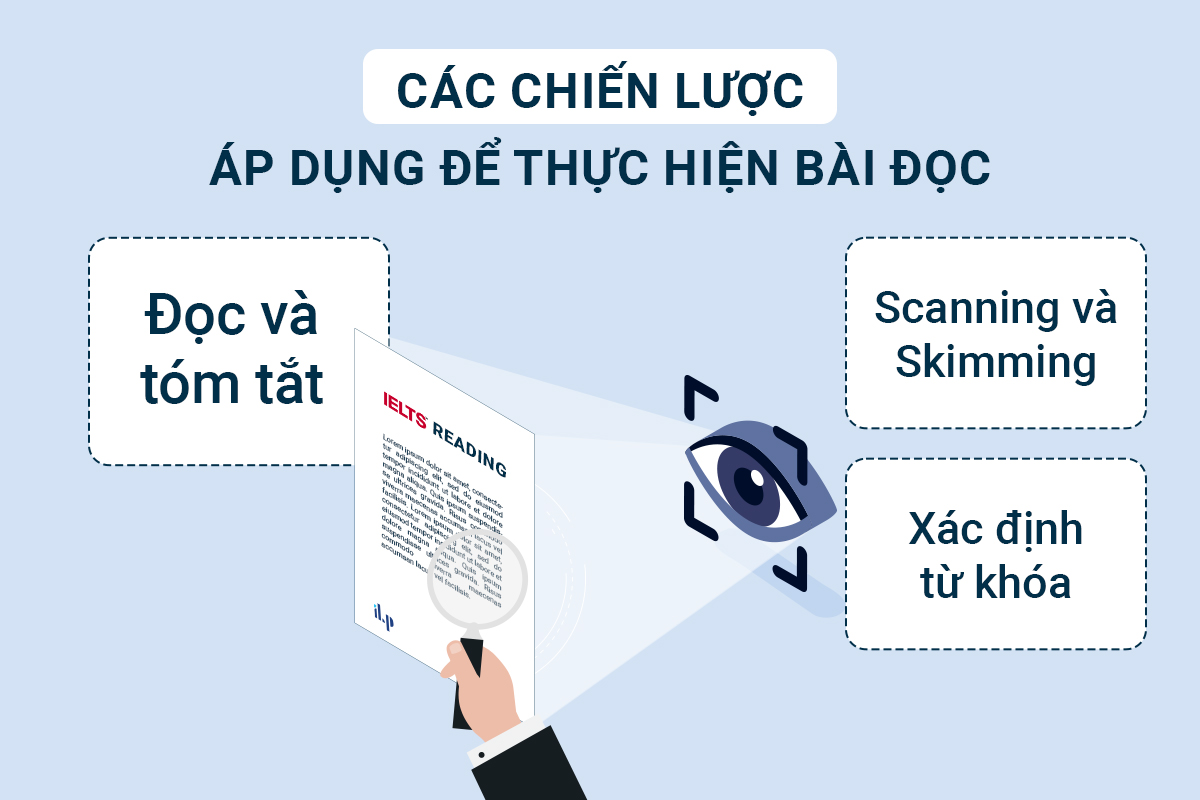
kỹ năng Reading - chiến lược đọc hiểu 1

Trong bài thi IELTS, Reading gồm 14 dạng câu hỏi, mỗi dạng câu hỏi cần những chiến lược đọc hiểu khác nhau. 

Ở band điểm 6.5, như thầy đã đề cập, các bạn phải làm nhuần nhuyễn nhiều dạng bài khác nhau, cũng như có mức độ am hiểu nhất định về bản chất của dạng bài đó. 

Ví dụ, dạng Yes/No/Not Given thường hỏi về các học thuyết, quan điểm của tác giả. Dạng này yêu cầu người đọc phải luyện tập nhuần nhuyễn kỹ năng suy luận (inference) tốt. Vì vậy các bạn cần học cách suy luận, diễn dịch dựa trên các bài đọc mỗi ngày để có thể xác định được tính đúng – sai chuẩn xác nhất.

Các bài đọc IELTS thường dài và khó, vì vậy những chiến lược như đọc và tóm tắt, scanning và skimming, xác định từ khóa cần được vận dụng để thực hiện tốt các dạng bài yêu cầu suy luận ở mức cơ bản (hoàn thiện câu, bảng biểu, câu trả lời ngắn, và nối tiêu đề).

Nhưng quan trọng hơn hết, bạn phải là người nắm rõ trình độ hiện tại của bản thân, để tạo dựng chiến thuật tiếp cận các dạng bài phù hợp. 

Nếu đang ở mức 5.0, bạn sẽ rất khó để hoàn thành một bài Matching Heading trong thời gian 5 – 10 phút. Hãy cố gắng luyện tập nhuần nhuyễn những dạng bài cơ bản, rồi từ từ đi lên bạn nhé!

Trong bài viết này, thầy đã điểm qua một số trăn trở mà các IELTS-ers gặp phải trong quá trình làm bài Reading, và đưa ra chiến lược giúp bạn có thể cải thiện kỹ năng Reading của mình hơn cho mục tiêu là band 6.5. Hy vọng các bạn sẽ thật kiên trì để tiếp tục chinh phục IELTS ở những band cao hơn!

Nguyễn Vương Cao Duy

Xem thêm

CÁCH LÀM BÀI READING IELTS, CÁC DẠNG CÂU HỎI VÀ TÀI LIỆU TỰ LUYỆN CHUYÊN SÂU

KỸ NĂNG SKIMMING: PHƯƠNG PHÁP ĐỂ ĐỌC HIỂU NHANH BÀI READING IELTS

ỨNG DỤNG KỸ NĂNG SCANNING TRONG IELTS READING ĐỂ LÀM BÀI NHANH CHÓNG
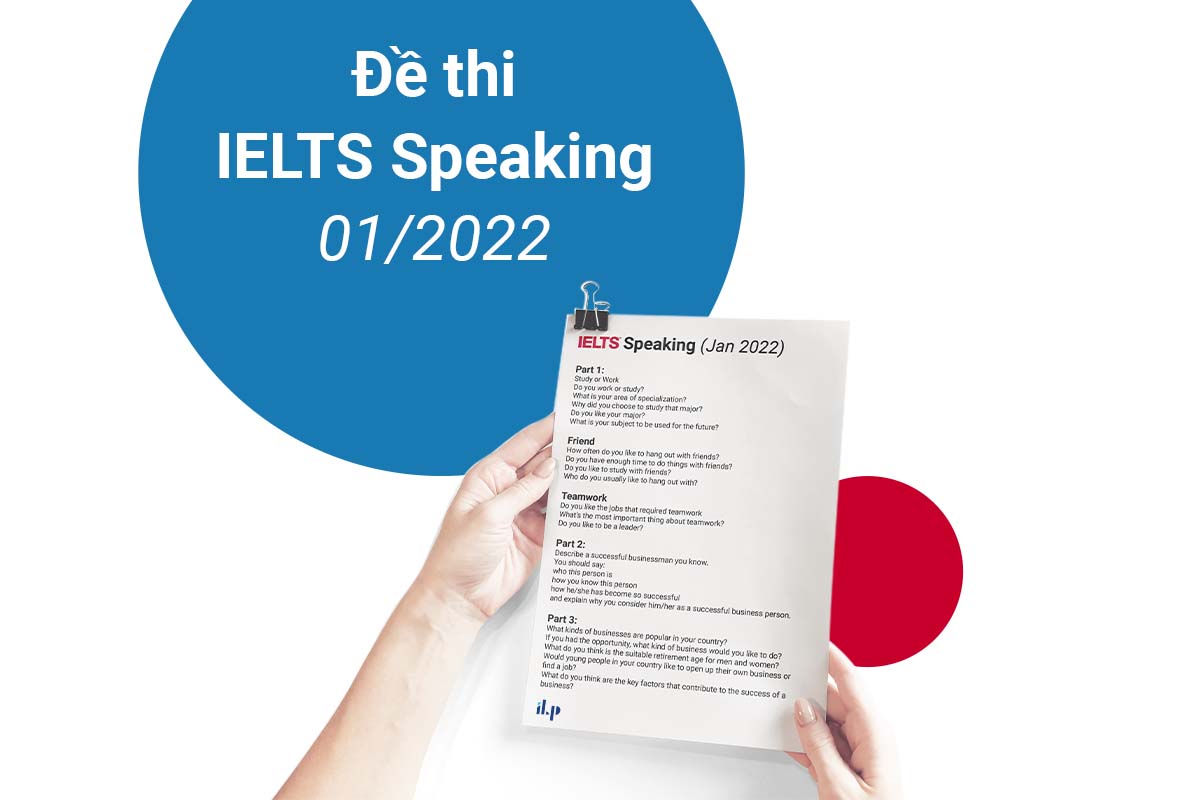
TỔNG HỢP ĐỀ THI IELTS SPEAKING THẬT NĂM 2022 (THÁNG 1 – THÁNG 4)

Mục lục

Nhằm giúp các bạn ôn luyện kỹ năng Speaking một cách tốt và tiệm cận nhất với đề thi thực tế. Sau đây sẽ là toàn bộ những đề thi IELTS Speaking thật năm 2022 (tháng 1 – tháng 4) được tổng hợp một cách đầy đủ và chi tiết nhất. Cùng theo dõi và có cho mình một cách ôn tập phù hợp để đạt band điểm mong muốn nhé.

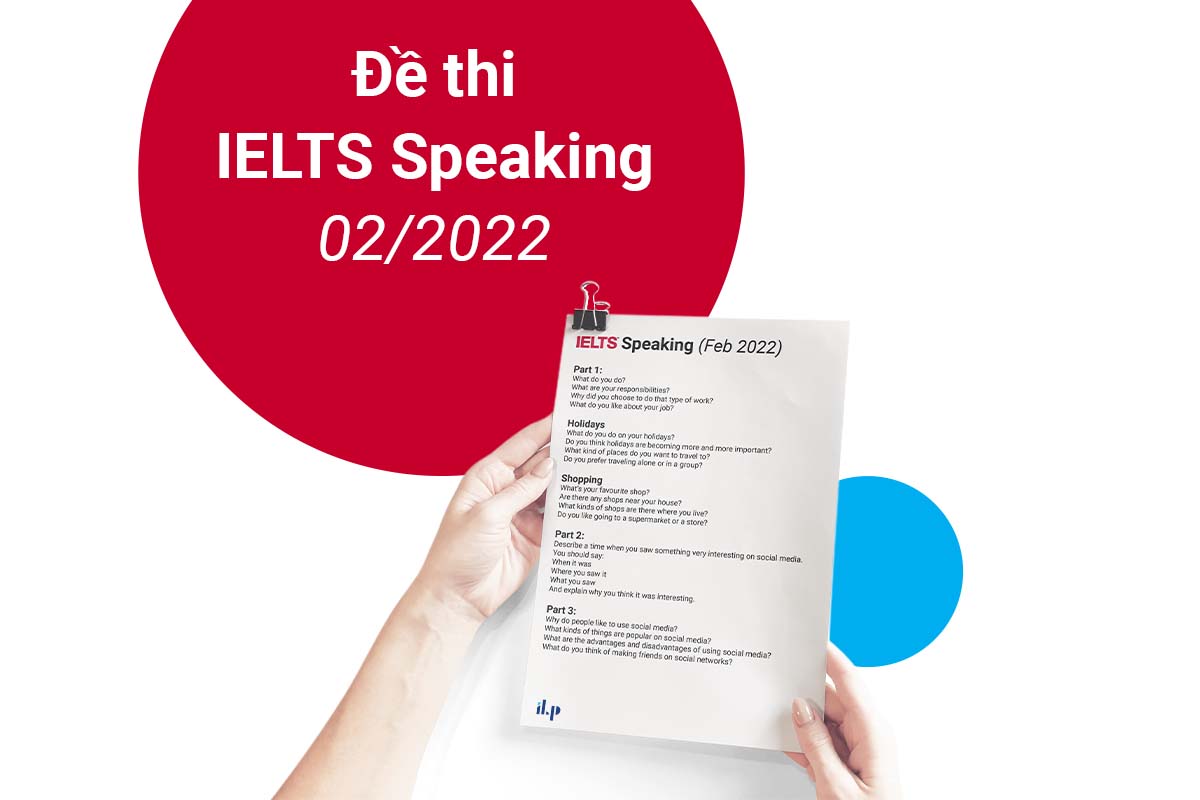
Đề thi IELTS Speaking 01/2022

đề thi ielts speaking tháng 01/2022 ilp new

Ngày 02/01/2022 – Tại IDP Ngọc Khánh Hà Nội (computer-based)

Part 1: 

Study or Work

  1. Do you work or study?
  2. What is your area of specialization?
  3. Why did you choose to study that major?
  4. Do you like your major?
  5. What is your subject to be used for the future?

Friend

  1. How often do you like to hang out with friends?
  2. Do you have enough time to do things with friends?
  3. Do you like to study with friends?
  4. Who do you usually like to hang out with?

Teamwork

  1. Do you like the jobs that required teamwork
  2. What’s the most important thing about teamwork? 
  3. Do you like to be a leader?

Part 2:

Describe a successful businessman you know.

You should say:

  • who this person is
  • how you know this person
  • how he/she has become so successful
  • and explain why you consider him/her as a successful business person.

Part 3:

  1. What kinds of businesses are popular in your country?
  2. If you had the opportunity, what kind of business would you like to do?
  3. What do you think is the suitable retirement age for men and women?
  4. Would young people in your country like to open up their own business or find a job?
  5. What do you think are the key factors that contribute to the success of a business?

Ngày 03/01/2022 – Tại IDP Mạc Đĩnh Chi TP.HCM

Part 1:

Work or Study

  1. What do you do?
  2. What are your responsibilities?
  3. Why did you choose to do that type of work?
  4. What do you like about your job?

Holidays

  1. What do you do on your holidays?
  2. Do you think holidays are becoming more and more important?
  3. What kind of places do you want to travel to?
  4. Do you prefer traveling alone or in a group?

Shopping

  1. What’s your favourite shop?
  2. Are there any shops near your house?
  3. What kinds of shops are there where you live?
  4. Do you like going to a supermarket or a store?

Part 2:

Describe a time when you saw something very interesting on social media.

You should say:

  • When it was
  • Where you saw it
  • What you saw
  • And explain why you think it was interesting.

Part 3:

  1. Why do people like to use social media?
  2. What kinds of things are popular on social media?
  3. What are the advantages and disadvantages of using social media?
  4. What do you think of making friends on social networks?

Ngày 05/01/2022 – Tại IDP Triệu Việt Vương Hà Nội

Part 1:

Work or Study

  1. What subject are you studying?
  2. What are your favorite subjects at university?
  3. What are your future study plans?

App

  1. What kinds of apps do you like?
  2. What was the first app you used?
  3. What apps have you recently used?
  4. What kinds of apps would you like to use in the future?

TV Program

  1. What kind of TV programs do you like?
  2. What do children like watching on TV?
  3. Has television changed your life in any way?

Part 2:

Describe an activity you usually do that wastes your time.

You should say:

  • What it is
  • When you often do
  • Why you think it’s a waste of time
  • Will you continue to do it when you are aware it’s a waste of time?

Part 3:

  1. How can people balance life and work?
  2. What usually makes people feel pressured?
  3. Do you think young people or old people are better at managing time?
  4. Why do young people waste more time?
  5. What kinds of activities do you consider a waste of time?

Ngày 05/01/2022 – Tại IDP Mạc Đĩnh Chi TP.HCM

Part 1:

Hometown

  1. Where is your hometown?
  2. What is a famous thing in your hometown?
  3. What is the history of your hometown?
  4. Do you study history in secondary school?

Website

  1. Which websites do you often use?
  2. Why do you like this website?
  3. How have websites changed today compared to the past?
  4. Is there anything you don’t like about websites?

Part 2:

Describe a famous city you have visited/know.

You should say:

  • Where is it?
  • What is it famous for?
  • How to travel there?
  • and explain how you feel when you go there?

Part 3:

  1. Do tourists like to travel to historical or modern places?
  2. What do tourists often do when traveling?
  3. How to attract tourists?
  4. What are the advantages of attracting tourists?
  5. What are the disadvantages when attracting tourists?

Ngày 07/01/2022 – Tại British Council Thụy Khê Hà Nội

Part 1:

Countryside

  1. Where do you like to go in that area?
  2. Do you like the area that you live in?
  3. Do you think you will live in the countryside in the future? Why?

Headphones

  1. Do you use headphones?
  2. What type of headphones do you use?
  3. When would you use headphones?
  4. In what conditions would you not use headphones?

App

  1. Do you have many apps on your phone?
  2. What is your favorite app?
  3. How do you find out about different apps?

Part 2:

Describe an exciting book that enjoys reading.

You should say:

  • When you read it
  • What kind of book it is
  • What it is about
  • And explain why you think it is exciting

Part 3: 

  1. Do you prefer books or movies?
  2. Do you think it is very important to read the book before watching the movie version of it?
  3. Do boys and girls like the same kind of books?
  4. What kind of books do Vietnamese people like reading?
  5. Why do many people say that the movie version is a lot worse than the book?

Ngày 07/01/2022 – Tại IDP Bình Dương

Part 1:

Work or Study

  1. Do you work or study?
  2. What subject are you studying?
  3. Is that a popular subject in your country?
  4. How have you applied this subject in your life?

Science

  1. Do you like science?
  2. When did you start studying science?
  3. Which science subjects are you interested in? 
  4. How have you applied science in your life?

Part 2:

Describe something interesting you learned from the Internet. 

You should say:

  • What you learnt?
  • What website did you learn it from? 
  • How you learnt it?
  • And explain why you think it was interesting

Part 3:

  1. Do older people have a hard time learning new things?
  2. How do they learn new things?
  3. Do you think the government should invest in education for elderly people?
  4. Do you think it is good to invest in finance for the elderly or the young?

Ngày 09/01/2022 – Tại IDP Triệu Việt Vương Hà Nội (Đề 1)

Part 1:

Food and Cooking

  1. What are some traditional foods in your country?
  2. On what occasions do you eat special foods?
  3. Do you like to cook? Why?
  4. Did you learn how to cook when you were younger?

Art

  1. Do you like art?
  2. Are you good at art?
  3. Are art galleries popular in your country?
  4. How often do you visit art galleries?
  5. Do people in Vietnam like visiting museums and art galleries?

Car

  1. Do you care about the color of the car?
  2. If you were to buy a car, which one would you choose? Why?
  3. Do you like to travel by car?

Part 2:

Describe an occasion where you had a cake that was special.

You should say:

  • What kind of cake it was.
  • When you ate the cake
  • Whom you are with
  • And explain why you think it was special.

Part 3:

  1. Do you think it is important to have dinner with family?
  2. Why do some people not always eat with their family?
  3. Is food now better than in the past?
  4. Do you think that meals are the best way to communicate with family members? Why?

Ngày 09/01/2022 – Tại IDP Triệu Việt Vương Hà Nội (Đề 2)

Part 1:

Work or Study

  1. Do you work or study?
  2. Do you like your major? Why?

Mirror

  1. Do you often look in the mirror?
  2. Have you ever bought mirrors?
  3. Do you think mirrors are a necessary decoration?
  4. Do you check yourself when you decide to buy a mirror?

Getting lost

  1. Have you ever lost your way?
  2. How can you find your way when you are lost?
  3. Can you read a map when you get lost?
  4. Have you ever helped someone who got lost?

Part 2:

Describe a time when you saw two of your friends arguing.

You should say:

  • What they argued about
  • Why they argued with each other
  • What happened at the end
  • And how you felt about it.

Part 3:

  1. What do family members usually have arguments about?
  2. Is it easier for you to have arguments with your family or with your friends?
  3. How old are children at the age beginning to have personal opinions?
  4. Should parents change their minds or not? Why?

Ngày 09/01/2022 – Tại IDP Ngọc Khánh Hà Nội (computer-based)

Part 1:

Work or Study

  1. Do you work or study?
  2. What’s the best thing about your job?
  3. Will you continue your job in the future?

Public gardens and parks

  1. Would you like to play in a public garden or park?
  2. What do you like to do when visiting a park?
  3. How are the parks today different from those you visited as a kid?
  4. Would you prefer to play in a personal garden or public garden?

App

  1. How many apps do you have on your phone?
  2. What app have you downloaded recently?
  3. What kinds of apps would you like to use in the future?

Part 2:

Describe an interesting person from another country

You should say:

  • Who this person is
  • How you think of this person
  • What this person does
  • Why this person is interesting

Part 3:

  1. Do you have any friends from other countries?
  2. Do you find any differences in that culture from what you have learned from books?
  3. How important is knowing about the culture before you travel?
  4. What are the disadvantages of working for an international company?

Ngày 10/01/2022 – Tại BC Hàm Nghi TP.HCM

Part 1:

Study

  1. Describe your education
  2. What is your area of specialization?
  3. Why did you choose to study that major?
  4. Do you like your major? Why?

Pets and Animals

  1. Do you like to see animals in the zoo?
  2. What is your favorite animal?
  3. Have you ever had a pet before?
  4. What animals would you like to have as pets?
  5. Where do you prefer to keep your pet, indoors or outdoors?

Colours

  1. What’s your favourite colour?
  2. What’s the colour you dislike? Why?
  3. What colours do your friend like most?
  4. What colour makes you uncomfortable in your room?

Part 2:

Describe a bicycle/motorcycle/car trip you would like to have.

You should say:

  • Who you would like to go with
  • Where you would like to go
  • When you would like to go
  • And explain why you would like to go by bicycle/motorcycle/car

Part 3:

  1. Which form of vehicle is more popular in your country, bikes, cars or motorcycles?
  2. Why do people prefer to travel by car?
  3. Do you think air pollution comes mostly from mobile vehicles?
  4. Do you think people need to change the way of transportation drastically to protect the environment?
  5. How are the transportation systems in urban areas and rural areas different?

Ngày 12/01/2022 – Tại IDP Ngọc Khánh Hà Nội (computer-based)

Part 1:

Hometown

  1. Where is your hometown?
  2. Do you know much about your hometown’s history?
  3. What’s your hometown well-known for?

Street Market

  1. When was the last time you went to the street market?
  2. Do you like going to the street markets?
  3. Do you prefer supermarkets or street markets?

Getting lost

  1. Have you ever lost your way?
  2. How can you find your way when you are lost?
  3. Can you read a map when you get lost?
  4. Have you ever helped someone who got lost?

Part 2:

Talk about a lesson that you took.

You should say:

  • When it was
  • What it was about
  • What happened
  • And explain why you liked it.

Part 3:

  1. What do people have to remember in their daily life?
  2. What do people remember most during their life?
  3. Is it good for people to remember those memories?
  4. Do you think it’s good if people practice memorizing?
  5. Do people nowadays remember more or less?

Ngày 12/01/2022 – Tại IDP Mạc Đĩnh Chi TP.HCM

Part 1:

Hometown

  1. Did you grow up in a city or in the countryside?
  2. Do you think living in the countryside is good for your development?
  3. In the future, do you wanna live in the countryside?

Pets

  1. Have you ever had pets?
  2. What kind of pets do people in Viet Nam usually have?
  3. Should pets be indoor or outdoor?
  4. Do you wanna have pets in the future?

Parks

  1. Do you usually go to public parks when you were a kid?
  2. Do people in your hometown go to the park?
  3. How are the parks today different from those who visited as a kid?

Part 2:

Describe a famous person that you are interested in.

You should say:

  • Who this person is.
  • How this person is you know about.
  • What this person is famous for.
  • Why you are interested in this person.

Part 3:

  1. What are the advantages and disadvantages of being a famous person?
  2. Should famous people have privacy or that’s something they have to accept as part of their job?
  3. What are the advantages of being a child of a famous person?
  4. What do famous people do when they are no longer famous?

Ngày 13/01/2022 – Tại IDP Ngô Gia Tự Đà Nẵng

Part 1:

Hometown

  1. Where do you live?
  2. What is your hometown famous for?
  3. Do you think you will continue living there for a long time?

Taking photos

  1. Do you often take photos?
  2. Do you like selfies?
  3. Do you have any photos of your family?

Car

  1. Do you like traveling by car when you were a child?
  2. Do you want to be a driver or passenger?
  3. What kind of car do you want to buy in the future?
  4. What is the role of the coach?

Part 2:

Describe an ambition that you haven’t achieved?

You should say:

  • what it is
  • how long you have had it
  • what you have to do to achieve it
  • and explain why it is important to you to achieve it.

Part 3:

  1. What ambition did children have when they were young?
  2. Is having high ambition good for children?
  3. What do people get when they have high aspirations?
  4. Do you think children under ten should be ambitious?
  5. Is there any difference in the ambition of grown-ups and children?

Ngày 14/01/2022 – Tại BC Thuỵ Khuê Hà Nội (Đề 1)

Part 1:

Hometown

  1. Where is your hometown?
  2. What is your hometown famous for?

Mirrors

  1. Do you like looking at yourself in the mirror?
  2. Have you ever bought mirrors?
  3. Do you usually take a mirror with you?
  4. Would you use mirrors to decorate your room?

Street market

  1. Do you like going to the street markets?
  2. Do you prefer supermarkets or street markets?
  3. Have you ever been to the street market?
  4. What do street markets sell?

Part 2:

Describe a time when you were preparing for a happy event.

You should say:

  • What the event was
  • Where you had it
  • Who helped you to organize it
  • And how you feel about it

Part 3:

  1. How can parents help children to get organized?
  2. On what occasions do people need to be organized?
  3. Should parks be used to organize public events?
  4. Many people believe that organization is not a skill but is naturally born from birth, do you agree?

Ngày 14/01/2022 – Tại BC Thuỵ Khuê Hà Nội (Đề 2)

Part 1:

Hometown

  1. Where is your hometown?
  2. What do you like about your hometown?

Mirrors

  1. How often do you look at yourself in the mirror?
  2. Have you ever bought mirrors?
  3. Do you think mirrors are a necessary decoration?

Websites

  1. What kinds of websites do you usually use?
  2. What changes compared to the past?
  3. Why do you like this website?
  4. Do you think looking for information on the internet or from books is better?

Part 2:

Describe a song that you like.

You should say:

  • What the song is
  • What story the song tells
  • Whether the song is popular
  • And explain why you think it is interesting

Part 3:

  1. Why are music competitions popular in Viet Nam?
  2. What kinds of music do people like?
  3. What are the differences between live concerts and online concerts?
  4. Are concerts a good place to find potential artists?
  5. What are the factors, which make people like a song?
  6. Do you think people should choose music to listen to or let others recommend it?

Ngày 14/01/2022 – Tại IDP TP.HCM (Computer-based)

Part 1:

Hometown

  1. Where are you from?
  2. What do you like about your hometown?
  3. Can you talk a little bit about your hometown history?
  4. What is the most famous thing in your hometown?

Mirrors

  1. Do you like looking at yourself in the mirror? How often?
  2. Have you ever bought mirrors?
  3. Do you usually take a mirror with you?
  4. Would you use mirrors to decorate your room?

Books

  1. Do you like reading books? Why?
  2. What kinds of books do you like to read?
  3. What type of books do children read nowadays?
  4. What can be done to encourage the habit of reading among children?

Part 2:

Talk about a story someone told you and you remember.

You should say:

  • What the story was about
  • Who told you this story
  • Why you remember it
  • And how you feel about it

Part 3:

  1. Do young children like the same stories as older children?
  2. How has technology changed storytelling?
  3. Do you think children like technology more than storytelling?
  4. What are the disadvantages of technological storytelling?
  5. Do you think children should use technology for storytelling or listen to a real person’s story?

Ngày 14/01/2022 – Tại IDP Triệu Việt Vương Hà Nội

Part 1:

Hometown

  1. Where is your hometown?
  2. What is your hometown famous for?

History

  1. Do you like to learn about history?
  2. What historical events do you find interesting?
  3. Do you think history is important?

Daily Routine

  1. Do you have study routines?
  2. What’s your routine like in your everyday study?
  3. Do you want to change your daily routines in the future?

Car trip

  1. Do you like to travel by car?
  2. When do you travel by car?
  3. Where is the farthest place you have traveled to by car?
  4. Do you like to sit in the front or back when traveling by car?

Part 2:

Describe an ambition that you haven’t achieved?

You should say:

  • what it is
  • how long you have had it
  • what you have to do to achieve it
  • and explain why it is important to you to achieve it.

Part 3:

  1. Are children ambitious? What are they usually ambitious about?
  2. When children talk about their ambitions, do parents listen?
  3. Are overly ambitious people any good?
  4. What qualities do ambitious people usually have to co-workers follow them?
  5. Why are people ambitious? How does it help their lives?

Ngày 14/01/2022 – Tại BC Lò Đúc Hà Nội (Computer-based)

Part 1:

Hometown

  1. What’s the name of your hometown?
  2. Is that a big city or a small place?
  3. How long have you been living there?
  4. Do you like your hometown?

Animals and Pets

  1. Do you like to see animals in the zoo?
  2. What’s your favorite animal? Why?
  3. Have you ever had a pet before?
  4. What animals would you like to have as pets?
  5. Where do you prefer to keep your pet, indoors or outdoors?

Friends

  1. How often do you like to hang out with friends?
  2. Who do you usually like to hang out with?
  3. Where do you like to go when you hang out with your friends?
  4. Do you like to go out with a big group or just a few friends?

Part 2:

Describe an exciting book that enjoys reading.

You should say:

  • When you read it
  • What kind of book it is
  • What it is about
  • And explain why you think it is exciting

Part 3:

  1. Do you prefer books or movies?
  2. Do you think it is very important to read the book before watching the movie version of it?
  3. Do boys and girls like the same kind of books?
  4. What kind of books do Vietnamese people like reading?

Ngày 15/01/2022 – Tại BC Hàm Nghi TP.HCM

Part 1:

Study

  1. Describe your education.
  2. What is your area of specialization?
  3. Why did you choose to study that major?
  4. What kind of school did you go to as a child?
  5. What was your favourite subject as a child?

Mirror

  1. Do you like looking at yourself in the mirror? How often?
  2. Have you ever bought mirrors?
  3. Do you usually take a mirror with you?
  4. Would you use mirrors to decorate your room?

Daily routine

  1. Do you have study routines?
  2. What’s your routine like in your everyday study?
  3. Do you want to change your daily routines in the future?

Website

  1. What kinds of websites do you usually use?
  2. What changes compared to the past?
  3. Why do you like it?

Part 2:

Describe an item of clothing that someone gave you.

You should say:

  • What the clothing was
  • Who gave it to you?
  • When you got it
  • And explain why this person gave you the clothing

Part 3:

  1. Have you ever given clothes to someone?
  2. Why do people from different countries wear different clothing?
  3. What did you learn by the way of wearing someone else’s clothes?
  4. Do you think Jeans and T-shirts are popular all over the world?
  5. What about the advantages and disadvantages of wearing uniforms at work and school?

Ngày 16/01/2022 – Tại BC Vũng Tàu

Part 1:

Hometown

  1. Where are you from?
  2. What is it like where you live?
  3. Do you think you will continue living there for a long time?

Colors

  1. What is your favourite colour?
  2. Are there any colours you don’t like?
  3. What colours do your friends like the most?
  4. Would you like to change the colours of your room?

Handwriting

  1. Do you like handwriting?
  2. Do you think handwriting is important?
  3. Which do you prefer, handwriting or typing?
  4. What are the differences between handwriting and typing?

Part 2:

Describe a bicycle/motorcycle/car trip you would like to go.

You should say:

  • Who you would like to go with
  • Where you would like to go
  • When you would like to go
  • And explain why you would like to go by bicycle/motorcycle/car

Part 3:

  1. Why do more and more people drive private cars?
  2. Which form of vehicle is most common in your country, bikes, car or motorcycle?
  3. Do you think air pollution comes mostly from mobile vehicles?
  4. Do you think people need to change the way of transportation drastically to protect the environment?
  5. What are the differences between transportation systems in urban areas and the ones in rural areas?

Ngày 16/01/2022 – Tại BC Biên Hoà

Part 1:

Study

  1. Do you work or are you a student?
  2. Is that a popular subject in your country?
  3. What is your favourite subject?

Daily Routine

  1. Do you have study routines?
  2. What’s your routine like in your everyday study?
  3. Do you want to change your daily routines in the future?

Art

  1. Do you like art?
  2. Are you good at art?
  3. What kind of paintings do people like?
  4. What benefits can you get from painting as a hobby?

Part 2:

Describe a place in the countryside that you visited.

You should say:

  • Where it is
  • When you visited this place
  • What you did there
  • And explain how you feel about this place

Part 3:

  1. Is there anything special about the countryside in Vietnam?
  2. What do people usually do when going to the countryside?
  3. What is the difference between the big city and the countryside?
  4. Do people prefer to live in the big city or the countryside?
  5. Do you think people will live in the countryside in the future?

Ngày 16/01/2022 – Tại BC Lò Đúc Hà Nội (Computer-Based)

Part 1:

Hometown

  1. What is your hometown?
  2. Is that a big city or a small place?
  3. How long have you been living there?
  4. What do you like(most) about your hometown?
  5. Do you think you will continue living there for a long time?

Colors

  1. What’s your favourite colour?
  2. What’s the colour you dislike? Why?
  3. What colours do your friend like most?
  4. What colour makes you uncomfortable in your room?

Concentration

  1. Is it easy or difficult for you to concentrate?
  2. When do you need to concentrate?
  3. What do you often do to concentrate?
  4. What often distracts you?

Part 2:

Describe a good service you received.

You should say:

  • What the service was
  • When you received it
  • Who you were with
  • And how you felt about it

Part 3:

  1. What do you think of the relationship between companies and customers?
  2. As a customer, what kinds of services would you expect to receive from a company?
  3. What kinds of jobs involve coping with the public?
  4. Why should companies react quickly when customers have difficulties?

Ngày 16/01/2022 – Tại IDP Triệu Việt Vương Hà Nội

Part 1:

Hometown

  1. Where are you from?
  2. What is your hometown famous for?

Mirrors

  1. Do you like looking at yourself in the mirror?
  2. Have you ever bought mirrors?
  3. Do you usually take a mirror with you?
  4. Would you use mirrors to decorate your room?

Getting lost

  1. Have you ever lost your way?
  2. How can you find your way when you are lost?
  3. Can you read a map when you get lost?
  4. Have you ever helped someone who got lost?

Part 2:

Describe a gift you would like to buy for your friend.

You should say:

  • When it happened
  • What gift it was
  • Who you gave it to
  • And explain why you chose that gift

Part 3:

  1. When do people normally send gifts to others?
  2. Do people give gifts or red packets on traditional festivals?
  3. Is it easy to choose clothes as gifts?
  4. Will people feel happy when receiving an expensive gift?

Ngày 16/01/2022 – Tại IDP Mạc Đĩnh Chi TP.HCM

Part 1:

Work or Study

  1. Do you work or are you a student?
  2. What subjects are you studying?
  3. What is the best thing about your study?
  4. Did you learn anything today that you will use in the future?

Getting lost

  1. Have you ever lost your way?
  2. Have you ever helped someone who got lost
  3. How did you feel when you got lost?

Public gardens and parks

  1. Would you like to play in a public garden or park?
  2. How are parks today different from those you visited as a child?
  3. Would you prefer to play in a personal garden or public garden?

Part 2:

Describe a place you visited on vacation and would like to recommend to others

You should say:

  • When you went there?
  • Where it is?
  • What you did there?
  • And explain why you went there?

Part 3:

  1. What are some popular attractions that people like to visit in your country?
  2. Do old people and young people choose different places to go on vacation?
  3. What do young people and old people think about when making travel plans?
  4. How do people find out about a new place?

Ngày 16/01/2022 – Tại IDP Ngô Gia Tự Đà Nẵng

Part 1:

Work or Study

  1. What do you work or study?
  2. Why did you choose to do that type of work (or, that job)?
  3. Is there some other kind of work you would rather do?
  4. Do you enjoy your work?
  5. Would you like to change your job in the future?

Shoes

  1. Do you like buying shoes?
  2. Have you ever bought shoes online?
  3. Do you spend a lot of money on shoes?
  4. Which do you prefer, fashionable or comfortable shoes?
  5. Do you think shoes are important?

Part 2:

Describe a time when you moved to a new house or school.

You should say:

  • when it was
  • where you moved to
  • who you moved with
  • and explain how you felt about it.

Part 3:

  1. Why do people move to a new home?
  2. What problems will people face after moving to a new place?
  3. How do people solve these problems?
  4. Is it good to move to a new place frequently? Why?
  5. Do you think children or adults will adapt to change more quickly?

Ngày 18/01/2022 – Tại IDP Mạc Đĩnh Chi TP.HCM (computer-based)

Part 1:

Study or Work

  1. Do you work or study?
  2. What is your area of specialization?
  3. Why did you choose to study that major?
  4. Do you like your major?
  5. What is your subject to be used for the future?

Dream

  1. Do you dream much at night?
  2. Do you like your dreams at night?
  3. Do you remember your dreams when you wake up?
  4. Do you like hearing others’ dreams?
  5. Why are dreams so important? /Do you think dreams will affect life?
  6. What is your dream?
  7. Do you want to learn more about dreams?

Taking photos

  1. Do you often take photos?
  2. Do you like selfies?
  3. Do you have any photos of your family?

Part 2:

Describe an interesting discussion you had as part of your work or studies.

You should say:

  • What the subject of the discussion was?
  • Who you discussed the subject with?
  • What opinions were expressed?

Part 3:

  1. Why is it good to discuss problems with other people?
  2. Do you think that it’s better to talk to friends and not family about problems?
  3. Is it always a good idea to tell lots of people about a problem?
  4. Which communication skills are most important when taking part in meetings with colleagues?
  5. What are the possible effects of poor written communication skills at work?
  6. What do you think will be the future impact of technology on communication in the workplace?

Ngày 20/01/2022 – Tại IDP Ngọc Khánh Hà Nội

Part 1:

Work

  1. What do you do?
  2. What are your responsibilities?
  3. Why did you choose to do that type of work?

Daily Routine

  1. Do you have study routines?
  2. What’s your routine like in your everyday study?
  3. Do you want to change your daily routines in the future?

Sport

  1. Do you like to watch sports on TV?
  2. Do you play any sports?
  3. Do you have a favorite sports star?
  4. What’s the most popular sport in your country?
  5. What kind of sports would you like to try in the future?

Part 2:

Describe a useful skill you learned from an older person.

You should say:

  • What it is
  • Why the skill can be learned from older people
  • How you have learned the skill from older people
  • And explain how you will feel if you master the skill

Part 3:

  1. What can children learn from their parents or grandparents?
  2. From whom can children learn more, parents or grandparents?
  3. What kind of help do you think older people need?

Ngày 21/01/2022 – Tại BC Thuỵ Khuê Hà Nội

Part 1:

Hometown

  1. Where did you grow up?
  2. Do you love your hometown?
  3. Do you want to live in the countryside?

Science

  1. Do you like science?
  2. At what age did you start learning science?
  3. Do the science subjects that you learn at school help you in real life?

Spending time with others

  1. What do you want to do the most with other people?
  2. Do you prefer to work/study alone or with others?
  3. Do you love working with others?

Reliable sources

  1. Is it easier to access information and knowledge today than in the past?
  2. How can you find reliable sources?
  3. Are websites end in .gov reliable?

Part 2:

Describe something interesting you have learned that you want to develop in the future.

You should say:

  • What is it?
  • How could you learn it?
  • Why did you find it interesting to develop the skill in the future?

Part 3:

  1. Is it important for people to learn new things?
  2. Should adults learn new things from their experience?
  3. Should the government pay for the courses that people would like to take after retirement?
  4. Where can senior citizens start learning to code if they want to?

Ngày 24/01/2022 – Tại BC Lò Đúc Hà Nội (Computer-Based)

Part 1:

Work or Study

  1. Do you work or study?
  2. What is your area of specialization?
  3. Why did you choose to study that major?
  4. What kind of school did you go to as a child?
  5. What was your favourite subject as a child?

Public gardens and parks

  1. Would you like to play in a public garden or park?
  2. What do you like to do when visiting a park?
  3. How are the parks today different from those you visited as a kid?
  4. Would you prefer to play in a personal garden or public garden?

Handwriting

  1. Do you like handwriting?
  2. Do you think handwriting is important?
  3. Which do you prefer, handwriting or typing?
  4. What are the differences between handwriting and typing?

Part 2:

Describe an interesting person you know.

You should say:

  • what sort of person this is
  • where you first met him/her
  • why you met him/her
  • and explain why you think this person is interesting.

Part 3:

  1. What benefits of knowing a foreign person?
  2. What are the required skills of a multinational company’s employees?
  3. Is it difficult to work at a multinational company?
  4. Is it important to know about a country before you go there?

Ngày 29/01/2022 – Tại IDP Mạc Đĩnh Chi TP.HCM

Part 1:

Study

  1. Describe your education.
  2. What is your area of specialization?
  3. Why did you choose to study that major?

Daily routine

  1. Do you have study routines?
  2. What’s your routine like in your everyday study?
  3. Do you want to change your daily routines in the future?

Advertisement

  1. What kinds of advertisements do you see everyday?
  2. Do you watch advertisements from the beginning to the end?
  3. Have you ever bought something because of advertisements?
  4. Are there any advertisements you like?

Part 2:

Describe a thing you cannot live without (not mobile or computer).

You should say:

  • What it is?
  • How long have you had it for?
  • Why you cannot live without it?
  • Explain how you felt when you were without it?

Part 3:

  1. Why do you think teenagers always want to have the latest devices such as the iPhone?
  2. Why do they often buy a new one even though they already have one?
  3. What do they do with the old one after buying a new one?
  4. How hard is it for parents to convince their children not to buy an expensive phone?

Đề thi IELTS Speaking tháng 02/2022

đề thi ielts speaking tháng 02/2022 ilp new

Ngày 11/02/2022 – Tại BC Thuỵ Khuê Hà Nội

Part 1:

Weekend

  1. Would you like to do the same thing every weekend?
  2. Do you enjoy your weekend?

Mirrors

  1. Do you like looking at yourself in the mirror? How often?
  2. Have you ever bought a mirror?
  3. Do you usually take a mirror with you?

Daily routine

  1. Do you have a study routine?
  2. Do you think your daily routines will change in the future?
  3. What time do you get up?
  4. What are the things that you do in the morning before going to school?
  5. Do you usually go to bed early? Why?

Part 2: 

Describe a time when you receive something for free.

You should say:

  • What it was?
  • Who you received it from?
  • Where you received it?
  • And how you felt about it?

Part 3:

  1. Do people love receiving free gifts?
  2. Do you think people would value things more when they buy them?
  3. Do people buy things without looking at the price?
  4. Why do companies give free gifts to people? Do you think that it is some kind of a trick?

Ngày 14/02/2022 – Tại BC Windsor TP.HCM

Part 1:

Hometown

  1. Where is your hometown?
  2. Do you learn about your hometown history at school?
  3. What is your hometown famous for?

Dream

  1. Do you often remember your dreams?
  2. Do you want to make your dreams come true?
  3. Do you share your dreams with others? or are you interested in others’ dreams?
  4. Do you think dreams have special meanings?

Part 2:

Describe a toy you used to play with when you were a kid.

You should say:

  • what is this
  • who give it to you
  • did you play it with others or play alone
  • how you feel about it

Part 3:

  1. What kind of toys was famous in your childhood? How about these days?
  2. Do you think parents should buy more toys their children or they should spend more time with them instead?
  3. Do children enjoy playing with objects around the house?
  4. Why do parents buy lots of toys for their kids?

Ngày 17/02/2022 – Tại BC UAC TP.HCM

Part 1:

Hometown

  1. Where is your hometown?
  2. Do you learn about your hometown history at school?
  3. What is your hometown famous for?

Spending time with others

  1. Do you like talking to other people?
  2. Do you like spending time with friends?
  3. Do you prefer to work/study alone or with others?
  4. Do you remember a time when you needed to cooperate with others?

Handwriting

  1. Do you like handwriting?
  2. Do you think handwriting is important?
  3. Which do you prefer, handwriting or typing?
  4. What are the differences between handwriting and typing?

Part 2: 

Describe a habit your friend has and you want to develop.

You should say:

  • Who your friend is?
  • What habit he/she has?
  • When you noticed this habit?
  • And explain why you want to develop this habit?

Part 3:

  1. Do people change their habits as they get older?
  2. Do you think change is good or bad?
  3. Customs are different in different countries and why?
  4. Why is being unique important?
  5. Why is being independent a common trait in the West?

Ngày 21/02/2022 – Tại IDP Ngọc Khánh (Computer-Based)

Part 1:

Study

  1. Describe your education.
  2. Do you like your major? Why?

Daily routine

  1. Do you have study routines?
  2. What’s your routine like in your everyday study?
  3. Do you want to change your daily routines in the future?

Weekends

  1. What do other people in your hometown usually do on weekends?
  2. What will you do next weekend?
  3. Did you do anything special last weekend?

Cars

  1. Do you care about the color of the car?
  2. If you were to buy a car, which one would you choose? Why?
  3. Do you like to travel by car?

Part 2: 

Describe a song that you think is interesting.

You should say:

  • What the song is
  • What story the song tells
  • Whether the song is popular
  • And explain why you think it is interesting

Part 3:

  1. Do teenagers and adults enjoy the same kind of songs?
  2. What are the factors, which make people like a song?
  3. On which occasions do people in your country sing together?
  4. Why do you think people of different age groups have different favourite songs?

Ngày 25/02/2022 – Tại IDP Triệu Việt Vương Hà Nội

Part 1:

Work or Study

  1. Do you work or are you a student?
  2. What do you do in a day at school?
  3. What do you do to manage your studies?
  4. Who supported you during your studies?

Getting Lost

  1. Have you ever lost your way?
  2. How can you find your way when you are lost?
  3. Can you read a map when you get lost?
  4. Have you ever helped someone who got lost?

Part 2: 

Describe a person you only met once and want to know more about.

You should say:

  • Who he/she is?
  • When you met him/her?
  • Why do you want to know more about him/her?
  • And explain how you feel about him/her?

Part 3:

  1. Where do you think is the right place to meet on a first date?
  2. Do you find making friends at school different from other friends?
  3. What are the characteristics of a good friend?
  4. What are the characteristics of a bad friend?
  5. Why are classmates sometimes not real friendship?

Ngày 28/02/2022 – Tại BC Hà Nội

Part 1:

Study or work

  1. Do you work or study?
  2. What do you study at school?
  3. What do you like about your school?

Getting lost

  1. Have you ever lost your way?
  2. How can you find your way when you are lost?
  3. Can you read a map when you get lost?
  4. Have you ever helped someone who got lost?

Science

  1. Do you like science?
  2. When did you start to learn about science?
  3. Which science subject is interesting to you?
  4. What kinds of interesting things you have done with science?

Part 2:

Describe a difficult decision that you once made.

You should say:

  • What the decision was
  • When you made your decision
  • How long it took to make the decision
  • And explain why it was difficult to make

Part 3:

  1. What decisions do people usually make in their daily lives?
  2. Which is easier, making a decision by yourself or making a decision after group discussion?
  3. Why are many young people unwilling to follow their parents’ advice?
  4. Why would middle-aged people tend to second-guess their own decisions?

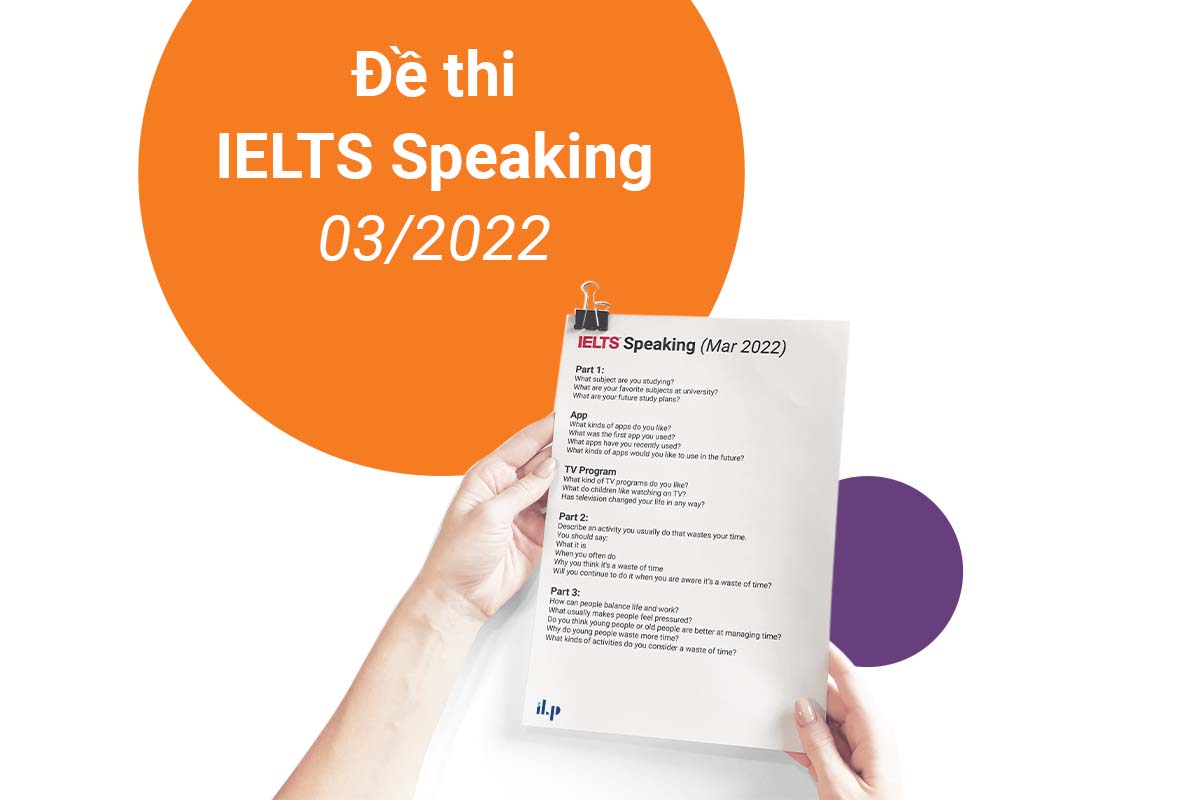
Đề thi IELTS Speaking tháng 03/2022

đề thi ielts speaking tháng 03/2022 ilp new

Ngày 02/03/2022 – Tại BC Thuỵ Khuê Hà Nội

Part 1:

Colours

  1. What’s your favourite colour?
  2. What’s the colour you dislike? Why?
  3. What colours do your friend like most?
  4. What colour makes you uncomfortable in your room?

Headphones

  1. Do you use headphones?
  2. What type of headphones do you use?
  3. When would you use headphones?
  4. In what conditions, you won’t use headphones?

Part 2: 

Describe an item on which you spent more than expected.

You should say:

  • What it is?
  • How much did you spend on it?
  • Why you bought it?
  • And explain why you think you spent more than expected.

Part 3:

  1. Do you often buy more than you expected?
  2. What do you think young people spend most of their money on?
  3. Do you think it is important to save money? Why?
  4. Do people buy things that they don’t need?

Ngày 06/03/2022 – Tại IDP Ngọc Khánh Hà Nội (Computer-Based)

Part 1:

Work or Study

  1. Do you work or are you a student?

Daily Routine

  1. Do you have study routines?
  2. What’s your routine like in your everyday study?
  3. Do you want to change your daily routines in the future?

Car trip

  1. Do you like to travel by car?
  2. When do you travel by car?
  3. Where is the farthest place you have traveled to by car
  4. Do you like to sit in the front or back when traveling by car?

Part 2: 

Describe someone you really like to spend time with.

You should say:

  • Who this person is?
  • How you knew him/her?
  • What you usually do together?
  • And explain why you like to spend time with him/her?

Part 3:

  1. How many generations usually live together in your country?
  2. Is it important to visit family members?
  3. What are the values of family in your country?
  4. Why is family bonding necessary for happiness in life?

Ngày 10/03/2022 – Tại IDP Ngô Gia Tự

Part 1:

Hometown

  1. Where have you grown up?
  2. Do you think your hometown is a good place for growing up?
  3. Do you want to move to the countryside in the future?

Weather

  1. Do you think the weather is changing too much?
  2. Do you want to live in another country that has different weather from VietNam?
  3. Do you think all people like summer?

Headphone

  1. Do you usually use headphones?

Part 2: 

Describe a time when you gave advice to someone.

You should say:

  • who you gave the advice to
  • what advice you gave
  • why this person needed your advice

Part 3:

  1. Do you think in the future, people will get more advice from computers than humans?
  2. Why receiving advice from professionals are expensive?
  3. How do professionals receive advice?

Ngày 12/03/2022 – Tại IDP Mạc Đĩnh Chi TP.HCM

Part 1:

Work or Study

  1. Do you work or are you a student?
  2. What is your main major?
  3. What do you think your major will help for your future career?

Weather

  1. What’s the weather like in your hometown?
  2. What kind of weather do you like most?
  3. Do you prefer dry or wet weather?
  4. Do you think Vietnamese will like sunny like you?
  5. Would you like to live in other parts of the world with a climate completely different from your hometown?

TV Programs

  1. What types of TV programs do you like watching?
  2. Why do you like watching comedian show?
  3. Would you like to watch another TV program besides comedy?
  4. Do you think Vietnamese people nowadays tend to watch TV too much?

Part 2: 

Describe a famous person that you are interested in.

You should say:

  • Who this person is
  • How you know about this person
  • What this person is famous for
  • Why you are interested in this person

Part 3:

  1. What sorts of people are famous in your country?
  2. Do you think famous people have negative impact on ordinary people? Like they behave badly?
  3. Is it good or bad to be a celebrity? Which side is more dominant?
  4. If a celebrity suddenly loses everything, will they be sad? What do you think about their feelings?
  5. Do you think it’s okay for parents to post pictures of their kids on social media at an early age?

Ngày 17/03/2022 – Tại IDP Ngô Gia Tự

Part 1:

Hometown

  1. Where is your hometown?
  2. What is your homework famous for?
  3. Do you learn about the history of your hometown?

Email

  1. Is email popular in your country?
  2. Do you use email?
  3. Do you think sending emails will be more or less popular in the future?

Cinema

  1. Did you usually go to the cinema when you were a kid?
  2. Do you usually go to the cinema with your friends?
  3. Do you still like watching movies that you liked when you were a kid?

Part 2:

Describe a person you follow on social media.

You should say:

  • Who he/she is?
  • How do you know him/her?
  • What did he/she post on social media?
  • And explain why you follow him/her on social media?

Part 3:

  1. Do you think older people and younger people will use the same kind of social media software?
  2. Do older people spend much time on social media?
  3. What is the difference between mass media and social media?

Ngày 18/03/2022 – Tại BC Thuỵ Khuê Hà Nội

Part 1:

Hometown

  1. Where is your hometown?
  2. Will you continue to live here in the future?
  3. Do you like to live in the countryside?

Drawing and Art galleries

  1. Do you like drawing?
  2. Do you like to go to the gallery?
  3. Do you want to learn artistic things?

Getting Lost

  1. Have you ever lost your way?
  2. How can you find your way when you are lost?
  3. Can you read a map when you get lost?
  4. Have you ever helped someone who got lost?

Part 2: 

Describe a rule that you don’t like.

You should say:

  • What it is?
  • Why don’t you like it?
  • How do others feel about the rule?
  • And explain whether you’ve followed the rule?

Part 3:

  1. What are the rules students should follow at school?
  2. Are the rules at school good or bad?
  3. Do people often violate the rules in Viet Nam?
  4. What rules should children follow at home?

Ngày 23/03/2022 – Tại BC Thuỵ Khuê Hà Nội

Part 1:

Pets and Animals

  1. Do you like to see animals in the zoo?
  2. What’s your favorite animal? Why?
  3. Have you ever had a pet before?
  4. What animals would you like to have as pets?
  5. Where do you prefer to keep your pet, indoors or outdoors?

Handwriting

  1. Do you like handwriting?
  2. Do you think handwriting is important?
  3. Which do you prefer, handwriting or typing?
  4. What’s the difference between handwriting and typing?

Part 2: 

Describe a time when you felt proud of a family member.

You should say:

  • When it happened
  • Who the person is
  • What the person did
  • And explain why you felt proud of him/her

Part 3:

  1. When would parents feel proud of their children?
  2. Should parents reward children? Why and how?
  3. Is it good to reward children too often? Why?
  4. On what occasions would adults be proud of themselves?

Ngày 27/03/2022 – Tại IDP Ngọc Khánh Hà Nội (Computer-Based)

Part 1:

Study

  1. Do you work or study?
  2. What subjects do you study at school?
  3. What did you enjoy about studying those subjects at school?
  4. How do you think this subject will help you in real life?

Handwriting

  1. Do you like handwriting?
  2. Do you think handwriting is important?
  3. Which do you prefer, handwriting or typing?
  4. What’s the difference between handwriting and typing?

Mobile apps

  1. What app have you recently used?
  2. What kinds of apps are you usually interested in?
  3. What was the first app used?
  4. What kinds of apps would you like to use in the future?

Part 2: 

Describe a person who solved a problem in a clever way.

You should say:

  • Who the person was
  • When you met the person
  • Where you met the person
  • And explain why you think he or she was clever.

Part 3:

  1. Do you think children are born clever or they learn to become clever?
  2. How do children become smart at school?
  3. Why are some people well-rounded and others only good at one thing?
  4. Why do you think it’s better to specialize in one subject or area?

Ngày 29/03/2022 – Tại IDP Ngọc Khánh Hà Nội

Part 1:

Hometown

  1. Where is your hometown?
  2. Is your hometown a good place to live/grow up?

Handwriting

  1. Do you like handwriting?
  2. Do you think handwriting is important?
  3. Which do you prefer, handwriting or typing?
  4. What’s the difference between handwriting and typing?

Public gardens and Parks

  1. Would you like to play in a public garden or park?
  2. What do you like to do when visiting a park?
  3. How have parks changed today compared to the time when you were a kid?
  4. Would you prefer to play in a personal garden or public garden?

Part 2:

Describe something that you are interested to learn or improve.

You should say:

  • What it is
  • How you will learn or improve it
  • Why you are interested in it
  • And explain how you feel about learning it

Part 3:

  1. Is it hard for adults to continue learning? Why?
  2. Is it the government’s responsibility to assist people to learn?
  3. What are the differences between education in the past and now?
  4. What are the advantages and disadvantages of distance learning?

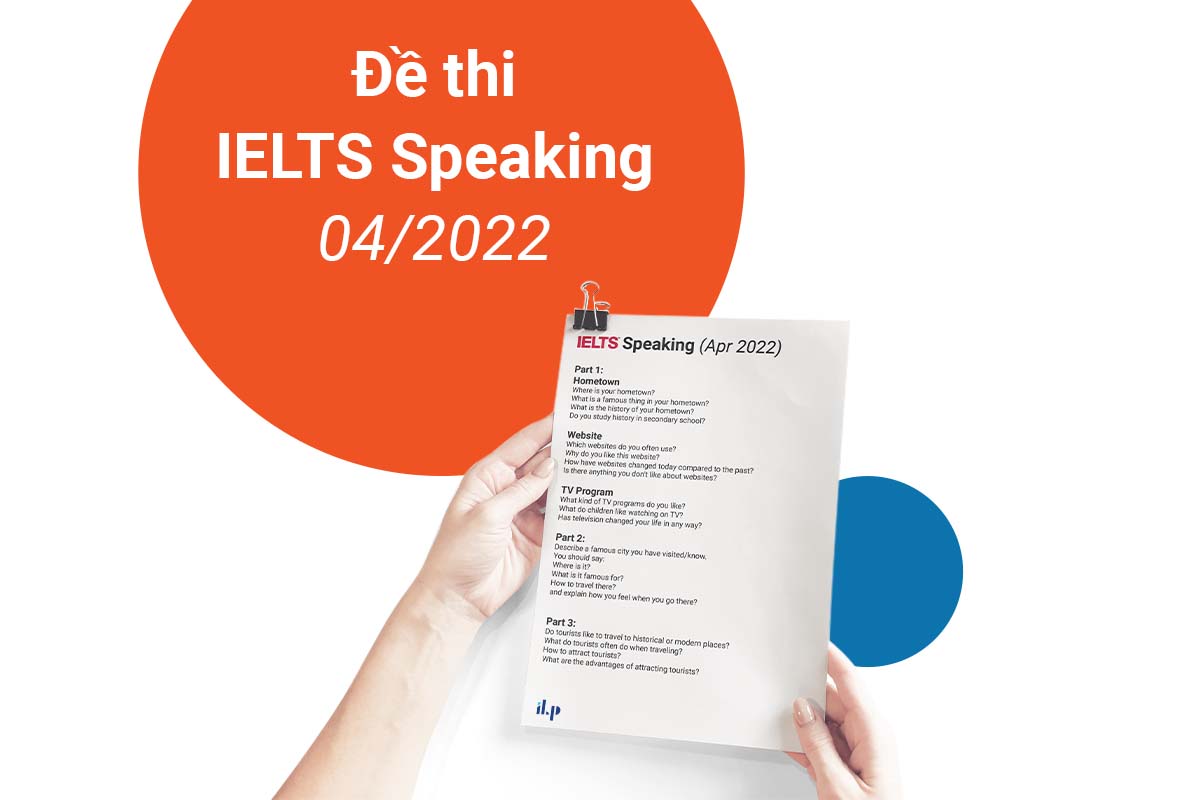
Đề thi IELTS Speaking tháng 04/2022

đề thi ielts speaking tháng 04/2022 ilp new

Ngày 03/04/2022 – Tại IDP Triệu Việt Vương Hà Nội

Part 1:

Hometown

  1. Where are you from?
  2. Do you learn about the history of your hometown?

Daily routine

  1. What is your daily routine in the morning?
  2. Would you prefer to go to the bed early or late?
  3. Do you want to change your daily routine in the future?

Street market

  1. What things do people usually buy at the street market?
  2. When was the last time you go to the street market?
  3. Do you prefer to go to the street market on the holiday?

Part 2: 

Describe a lesson that you remember well.

You should say:

  • When it was?
  • Where it was?
  • What do you do?
  • What does your teacher do?
  • Why It was special?

Part 3:

  1. Why do people have a good memory but others don’t?
  2. What things do people usually have to memorize in a day?
  3. What kind of things do people forget easily?
  4. How can people improve their memory?

Ngày 07/04/2022 – Tại BC Thuỵ Khuê Hà Nội

Part 1:

City life

  1. Where do you grow up, in a city or the countryside?
  2. Do you like the city you are living in now?
  3. Do you prefer the city or the countryside?

Writing by hand

  1. When do you have to write by hand?
  2. What is the difference between writing by hand and typing by the keyboard?
  3. Which do you prefer, writing by hand or typing?

Public gardens and parks

  1. Would you like to play in a public garden or park?
  2. Did you visit parks when you were small?

Part 2: 

Describe a time when you are waiting for something special that would happen.

You should say:

  • What you waited for
  • Where you waited
  • Why it was special
  • And explain how you felt while you were waiting.

Part 3:

  1. What are the things that people wait for every day?
  2. Are adults better at waiting than children?
  3. Some people do not like waiting, why do you think it is so?
  4. Do you think people are less patient now than they were in the past?

Ngày 10/04/2022 – Tại BC Thuỵ Khuê

Part 1:

Hometown

  1. Where is your hometown?
  2. Do you study the history of your hometown at school?
  3. What is your hometown famous for?

Dreams

  1. Do you often remember your dream?
  2. Do you like to listen to people’s dreams?
  3. Do you think the dream has a special meaning?
  4. Do you like to study dreams?

Part 2:

Describe a story someone told you and you remember.

You should say:

  • What the story was about?
  • Who told you this story?
  • Why do you remember it?
  • And how do you feel about it?

Part 3:

  1. What stories do children like to read?
  2. Why do children like stories?
  3. How has technology changed storytelling?
  4. Which way is better, traditional storytelling or the use of technology in storytelling?

Ngày 12/04/2022 – Tại BC Thuỵ Khuê

Part 1:

Hometown

  1. Where is your hometown?
  2. Do you study the history of your hometown at school?
  3. What is your hometown famous for?

Spending time with others: (Bộ đề Forecast 1)

  1. Do you like talking with people?
  2. How do you like spending time with your friends?
  3. Would you prefer to study alone or with others?
  4. Do you remember a time when you need to cooperate with others?

Headphones:

  1. Do you use headphones?
  2. What type of headphones do you use?
  3. When would you use headphones?
  4. In what conditions would you not use headphones?

Part 2: 

Describe a time when you got up early.

You should say:

  • When was it?
  • Why did you get up early?
  • What did you do after getting up?
  • How did you feel about it?

Part 3:

  1. Why do people in Vietnam get up early?
  2. Why do some people like to stay up late? 
  3. What kinds of occasions need people to arrive early?
  4. Arrive early or arrive on time better? 
  5. Important to arrive early?
  6. Why do some people think it’s important to be early, while others don’t?

Ngày 19/04/2022 – Tại BC Thuỵ Khuê

Part 1:

Self-introduction

  1. Do you work or study?
  2. Where is your hometown?
  3. How do you plan your studying day?
  4. Is it difficult for you to plan your day?

Dreams

  1. Do you remember your dream? How often?
  2. Do you like listening to others’ dreams? Why?
  3. Do you think dreams have special meanings?
  4. Do you want to study dreams?

Mirror

  1. Do you like looking at yourself in the mirror? How often
  2. Have you ever bought mirrors?
  3. Do you buy clothes without looking in the mirror?
  4. Do you think mirrors are a necessary decoration?

Part 2:

Describe a rule in your school that you want to change

You should say:

  • What is the rule about
  • Why you don’t like it
  • What would you do to change the rule

Part 3:

  1. Why should schools have laws for students?
  2. Do parents have rules for children at home?
  3. Is it normal for people to break the rules?
  4. If someone breaks the small law, how should they be punished?

CHỌN THI TOEFL HAY THI IELTS?

Mục lục

Ngày nay các chương trình học bổng và các chương trình du học ngày một tăng lên. Chứng chỉ TOEFL hoặc IELTS cũng là điều kiện kèm theo để xét tuyển. Cả hai chứng chỉ đều dùng để xác định trình độ tiếng Anh của người học, tuy vậy lại có sự khác biệt với nhau về hình thức, cách tính điểm, …

Bạn đang có ý định phát triển tương lai ở môi trường quốc tế? Bạn muốn du học nhưng chưa biết lựa chọn chứng chỉ nào? Thi TOEFL và thi IELTS có những gì giống và khác nhau?

Theo dõi thật kỹ thông tin từ bài viết để có cho mình sự lựa chọn phù hợp cũng như phân biệt rõ hơn về TOEFL và IELTS các bạn nhé!

Tổng quan về bài thi IELTS và TOEFL

bài thi toefl và ielts khác nhau như thế nào ilp

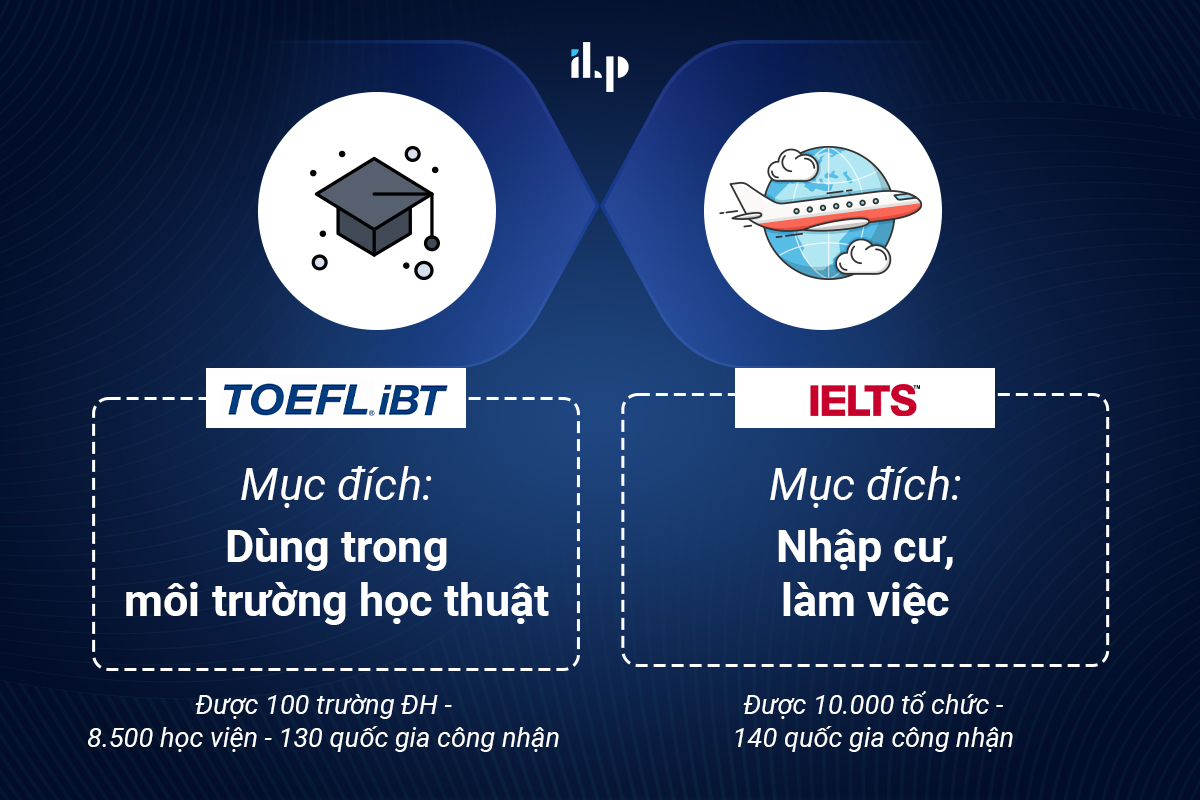
Bài thi IELTS là bài kiểm tra đánh giá năng lực với mục đích cho học tập, nhập cư và làm việc, được 10.000 tổ chức tại 140 quốc gia trên thế giới công nhận.

Tuy vậy, bài thi TOEFL lại chỉ dùng trong các môi trường học thuật, được hơn 8.500 học viện ở 130 quốc gia và 100 trường Đại học hàng đầu thế giới chấp nhận.

Nếu như với IELTS phải hoàn thành trong 2 giờ 45 phút với đa dạng các loại câu hỏi và các dạng bài tập, được thi ở 2 hình thức trên giấy và trên máy tính (được áp dụng từ năm 2016 đến nay), thì TOEFL mất đến 4 giờ để hoàn thành với hình thức đề trắc nghiệm và được thi hoàn toàn trên máy.

Điểm khác biệt về cấu trúc của từng loại bài

Bài thi Nói (Speaking)

bài thi nói toefl và ielts ilp

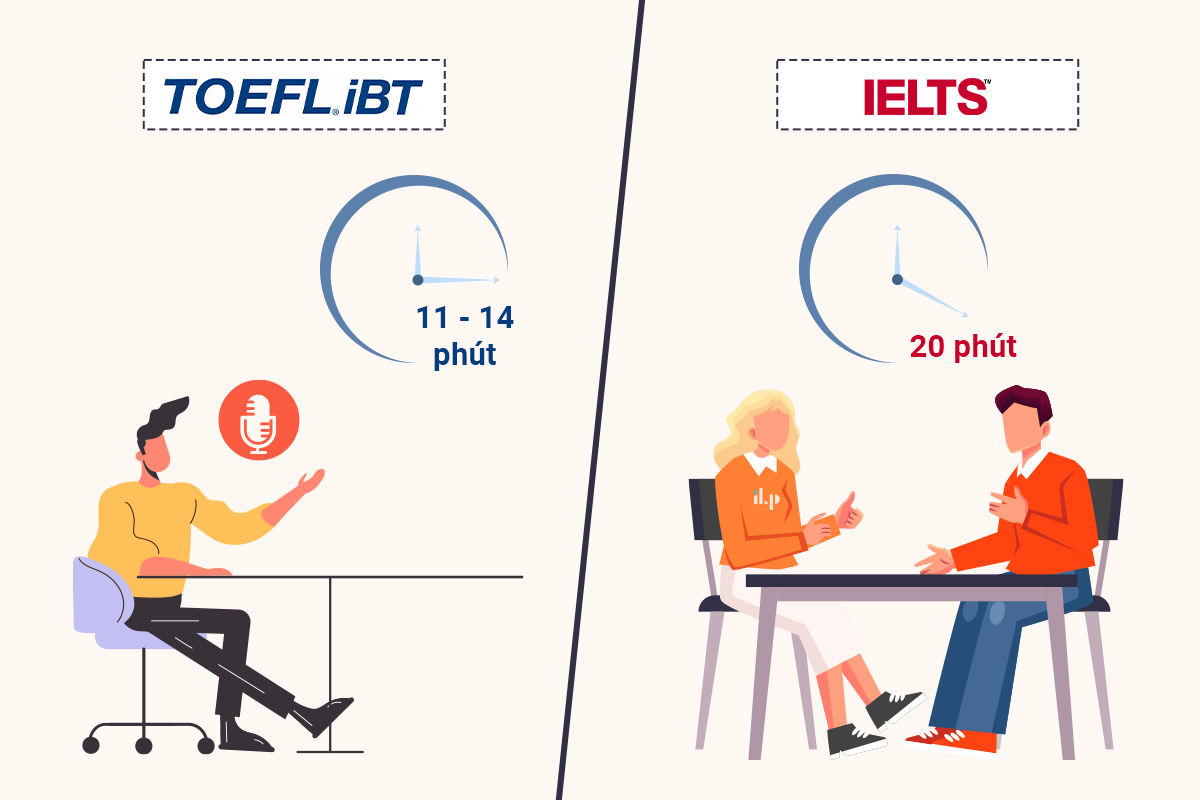
Bài thi IELTS Speaking sẽ được diễn ra từ 11-14 phút, thí sinh sẽ giao tiếp trực tiếp với giám khảo và không nhất thiết phải thi cùng ngày với các bài thi khác.

Tuy vậy, đối với bài thi TOEFL, thời gian diễn ra sẽ kéo dài đến 20 phút, theo đó người thi sẽ phải trả lời 6 câu hỏi và được thu âm lại. Bài nói TOEFL bắt buộc được diễn ra cùng ngày với các bài thi khác.

Bài thi Viết (Writing)

bài thi writing ielts và toefl ilp

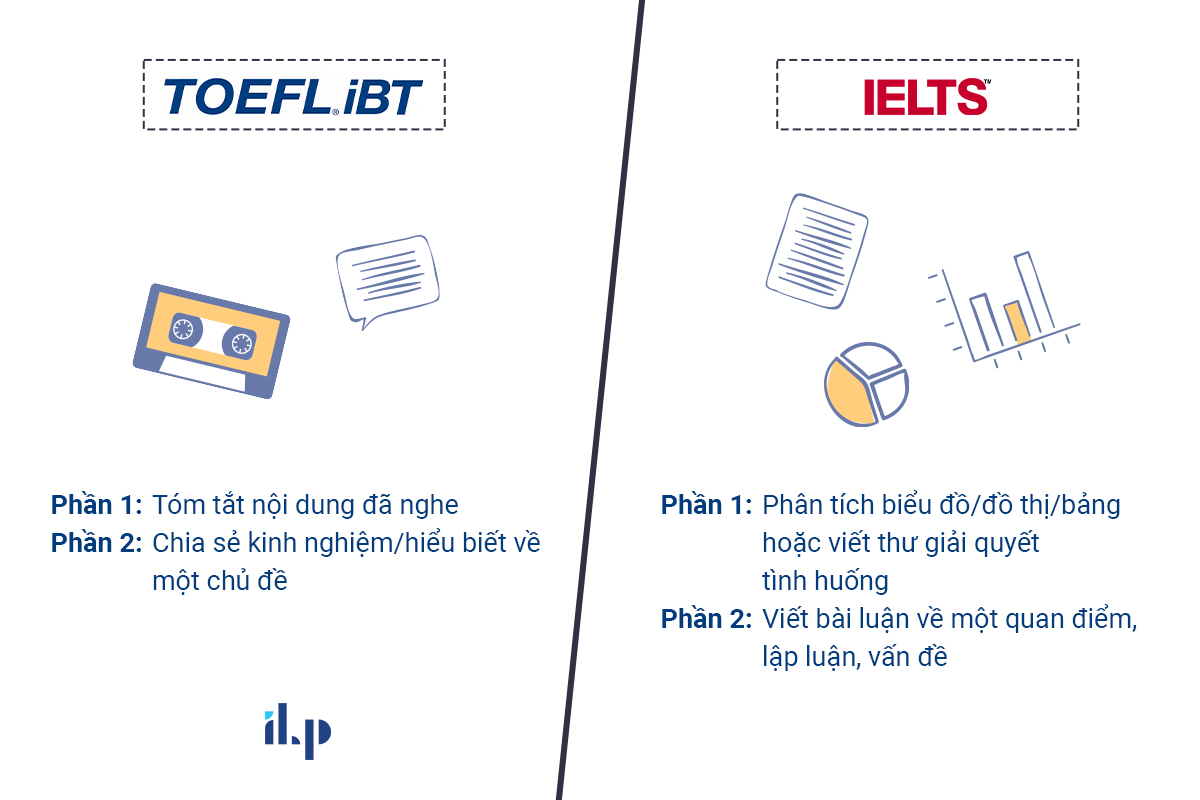
Đối với TOEFL, bài thi sẽ được thực hiện hoàn toàn trên máy tính (đánh máy) với cấu trúc đề được chia làm 2 phần:

  • Phần 1: Các bạn sẽ đọc một đoạn văn khoảng 250 từ và nghe một bài giảng liên quan với thời lượng 1 tiếng 45 phút. Sau đó bạn sẽ được yêu cầu viết một đoạn tóm tắt về nội dung trên với số lượng khoảng 200 từ.
  • Phần 2: Các bạn sẽ viết một đoạn văn với số lượng từ khoảng 300 từ chia sẻ kinh nghiệm và hiểu biết của bạn về một chủ đề quen thuộc.

Với bài thi IELTS, đề sẽ được thực hiện ở cả 2 hình thức đánh máy và trên giấy (tùy vào hình thức thi bạn lựa chọn ban đầu) với tổng thời lượng là 60 phút và được chia làm 2 phần.

Bài thi IELTS Writing (Academic)

  • Phần 1: Ở phần này, đề bài sẽ cung cấp một đồ thị, biểu đồ hoặc bảng và yêu cầu các bạn phải miêu tả, tóm tắt hoặc giải thích về các nội dung, thông tin được đưa ra. Bên cạnh đó, đề bài cũng có thể yêu cầu thí sinh mô tả, giải thích dữ liệu, hoặc phân tích một đối tượng, hiện tượng, sự kiện.
  • Phần 2: Các bạn sẽ được yêu cầu viết một bài luận nhằm phản hồi lại một quan điểm, một lập luận hay một vấn đề đã được yêu cầu.

Bài thi IELTS Writing (General)

  • Phần 1: Đề sẽ cho một tình huống và yêu cầu thí sinh phải viết một lá thư đề nghị cung cấp thông tin hoặc giải thích tình huống đó. Lá thư có thể viết theo phong cách thân mật, trang trọng hoặc bình thường.
  • Phần 2: Các bạn sẽ được yêu cầu viết một bài luận nhằm phản hồi lại một quan điểm, một lập luận hay một vấn đề.

Bài thi Đọc (Reading)

bài thi reading ielts và toefl ilp

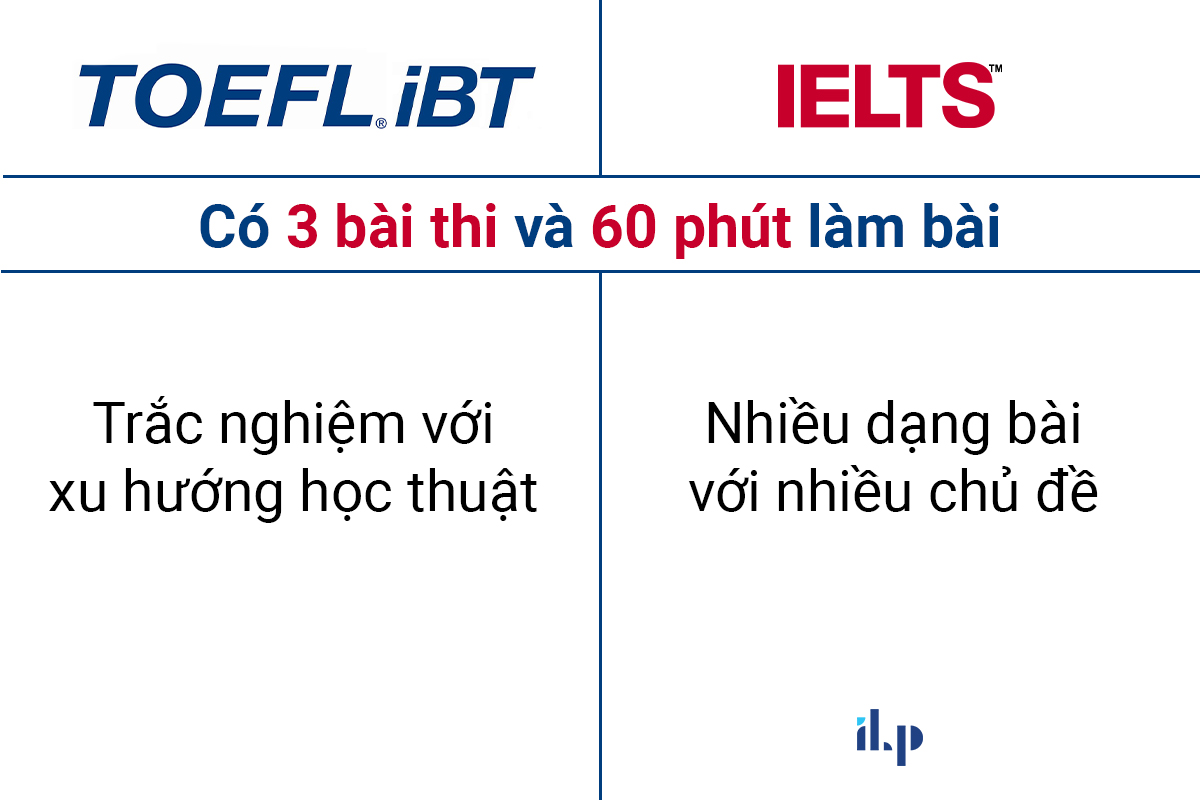
Đối với bài thi đọc, cả 2 có khá nhiều về sự tương đồng về cả thời gian diễn ra (đều là 60 phút) và cấu trúc đề bài (3 bài – mỗi bài có khoảng 20 phút để hoàn thành).

Riêng với TOEFL, các câu hỏi sẽ ở dạng trắc nghiệm và có xu hướng học thuật. Bài thi IELTS có phần phức tạp hơn, cấu trúc câu hỏi ở nhiều dạng (điền vào chỗ trống, sắp xếp,…). Theo đó các câu hỏi được thiết kế với mục đích để kiểm tra mức độ đọc hiểu văn bản.

Bài thi Nghe (Listening)

bài thi listening ielts và toefl ilp

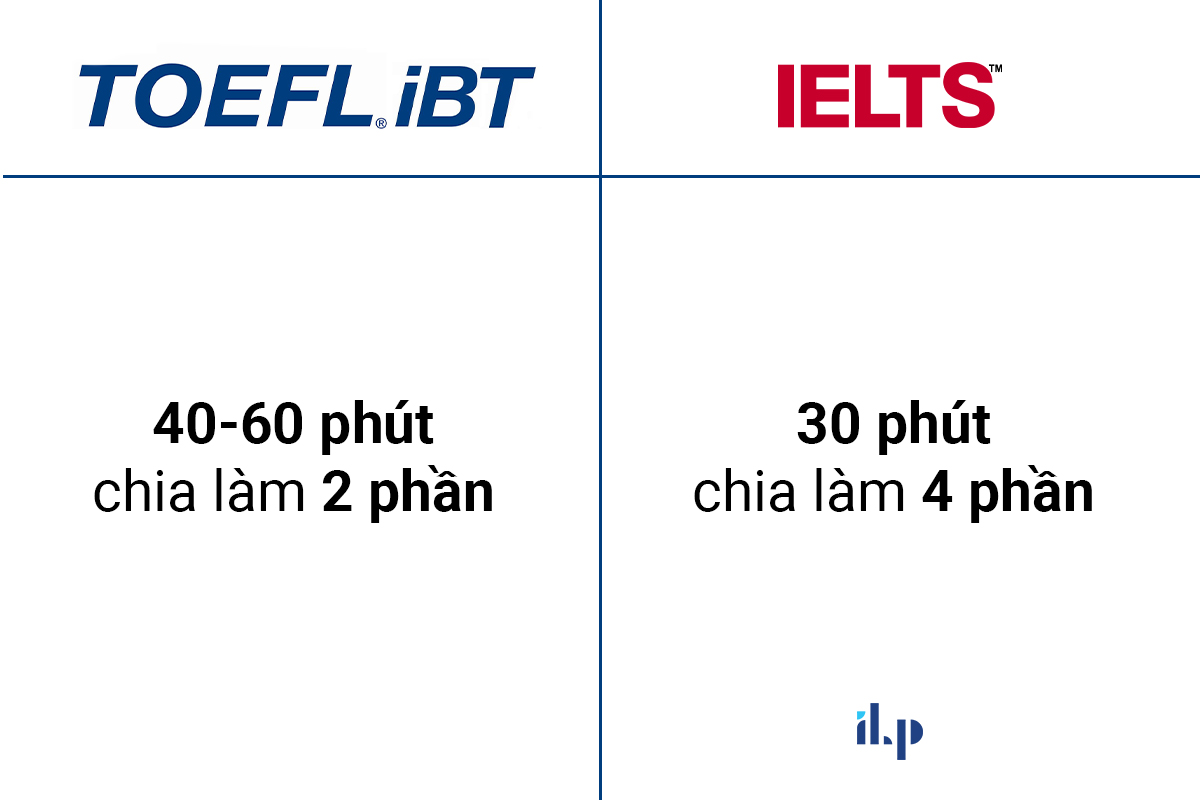
Bài thi IELTS Listening sẽ kéo dài 30 phút được chia làm 4 phần:

  • Phần 1: Một cuộc đối thoại giữa 2 người về một ngữ cảnh xã hội hằng ngày (các chủ đề về cuộc sống quen thuộc).
  • Phần 2: Một cuộc độc thoại về một ngữ cảnh xã hội hằng ngày.
  • Phần 3: Một cuộc đàm thoại tối đa 4 người trong một ngữ cảnh giáo dục hoặc đào tạo.
  • Phần 4: Một cuộc độc thoại về chủ đề học tập.

Bài thi nghe TOEFL sẽ kéo dài từ 40 – 60 phút được chia làm 2 phần :

  • Phần 1: Gồm 4-6 bài giảng, mỗi bài khoảng 3-5 phút và đi kèm theo đó là 6 câu hỏi cho mỗi bài giảng.
  • Phần 2: Gồm 2-3 đoạn hội thoại, mỗi đoạn sẽ có thời gian 3 phút và 5 câu hỏi.

Điểm khác biệt về cách chấm điểm

Bài thi TOEFL đánh giá thí sinh dựa trên các tiêu chí từ vựng, ngữ pháp và lối hành văn. Theo đó điểm được chấm dựa trên các cấp độ riêng biệt như tính logic, liên kết, ngữ pháp và sự trôi chảy. Mức điểm tối đa có thể đạt được đối với TOEFL đạt đến 120 điểm.

Đối với IELTS thang điểm chấm từ 1.0 – 9.0 với điểm trung bình tổng điểm của 4 bài thi (Nghe, Nói, Đọc, Viết) được làm tròn đến số thập phân thứ nhất. Mức điểm tối đa IELTS có thể đạt đến là 9.0.

Nhìn tổng quan, bài viết đã làm rõ được về sự khác nhau giữa TOEFL và IELTS ở các mặt. Các bạn cần cân nhắc lựa chọn mục đích và quốc gia mình muốn đến để có một lựa chọn thật sự phù hợp bạn nhé!

BÀI MẪU IELTS WRITING TASK 2 BAND 7.0 CHỦ ĐỀ SOCIAL MEDIA

Dưới đây là một chủ đề xuất hiện khá nhiều trong bài thi Writing. Các bạn tham khảo bài mẫu IELTS Writing task 2 này để luyện viết nhé!

Write about the following topic:

Some people believe that social media sites, such as Facebook or Twitter, have a negative impact on young people and their ability to form personal relationships. Others believe that these sites bring people together in a beneficial way.

Give reasons for your answer and include any relevant examples from your own knowledge or experience.

Write at least 250 words.

Model answer – bài mẫu IELTS Writing Task 2

New types of technology mean that you can easily connect with people throughout the world. Many believe that this is harmful and prevents us from forming meaningful friendships with others, while some people argue that using social media improves our ability to build new relationships. In my opinion, the negative impact is greater than the benefits, as I will explain.

Firstly, let us consider what makes a meaningful relationship. Being able to talk and meet with people is key and this can be done in person in the traditional way, or, increasingly, online. However, seeing people in the real world is very different from meeting them online. You can learn more about them and see them at both their best and their worst; therefore, your relationship is based on more than short text communication.

Many argue that modern social media allows us to connect with a variety of people from different places and backgrounds, which can be true. Nevertheless, these websites often lead young people into dangerous situations, for example, they may be bullied because of how they look. Also, their personal information becomes available to all if they are not careful and they never really know who they are connecting with.

In conclusion, While it is true that social media sites can be very useful and help us to connect and keep in touch with others, we need to be careful and not forget that we can only make real friends in the real world. I personally believe that these are the relationships that last a lifetime.

Vocabulary

Từ vựng

Nghĩa tiếng Anh

Nghĩa tiếng Việt

throughout (the world)

in every part, or during the whole period of

Khắp (thế giới)

meaningful

intended to show meaning, often secretly

đầy ý nghĩa

a variety of 

a lot of things of the same type that are different from each other in some way

nhiều

Nevertheless

despite what has just been said or referred to

tuy nhiên

bully

to threaten to hurt someone, often frightening that person into doing something

bắt nạt

a lifetime

the period of time during which someone lives or something exists

một đời người

Tham khảo một số chủ đề và bài mẫu IELTS Writing task 2 khác tại đây.

Khóa học Luyện viết tiếng Anh chuyên sâu – Writing Mindset Mastery tại ILP

writing mindset mastery web ilp new

Khóa học tập trung giúp các bạn học sinh cấp THCS, THPT và Sinh viên Đại học làm quen với lối tư duy tiếng Anh học thuật, xây dựng nền tảng, có tầm nhìn tổng quan, hiểu rõ nguyên lý và thông thạo việc viết tiếng Anh học thuật và viết tiếng Anh trong bài thi chuẩn hóa ngôn ngữ quốc tế như IELTS Academic & General Training, TOEFL iBT hay PTE Academic.

Tham khảo thông tin chi tiết và nhận tư vấn ngay TẠI ĐÂY.

REVIEW CHI TIẾT BỘ SÁCH CAMBRIDGE IELTS 1-16

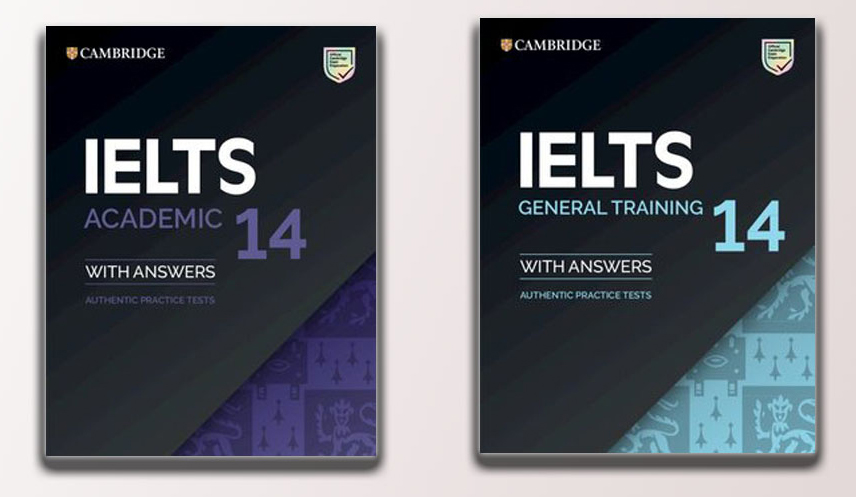
Cambridge Practice Tests For IELTS là bộ sách do một trong số 3 tổ chức sáng lập ra kỳ thi IELTS – Đại học Cambridge viết và phát hành từ năm 2006 đến nay. Qua 15 năm, đã có 16 volumes được ra mắt và được hầu hết những sĩ tử IELTS lựa chọn cho quá trình ôn luyện của mình. Nếu bạn là người đã, đang và sẽ ôn luyện IELTS, chắc chắn bạn sẽ không muốn bỏ lỡ bộ tài liệu này.

Cùng tìm hiểu về thông tin của bộ sách Cambridge IELTS 1-16 cũng như những hiệu quả bộ sách có thể giúp cho bạn trong quá trình ôn luyện IELTS nhé!

Thông tin bộ sách Cambridge IELTS 1-16

Tựa sách: Cambridge IELTS 

Nhà xuất bản: Đại học Cambridge 

Sách phù hợp: Cho những bạn IELTS khoảng 4.0 trở lên 

Nội dung sách: Bộ sách được thiết kế chuẩn với cấu trúc của bài thi IELTS thực tế, được sử dụng cho cả hai hình thức thi là IELTS General Training IELTS Academic.

Ưu điểm: Sách có độ khó phân chia rõ ràng theo cấp độ bài test, xu hướng cập nhật theo từng năm tương ứng từng quyển, nội dung đề thi có nguồn tương tự đề thư thật. Điều này giúp cho các IELTS-er dễ dàng tiếp cận với xu hướng ra đề từng năm, có thể ôn luyện và chuẩn bị một cách kĩ càng hơn đối với nhiều dạng bài và cấu trúc đề qua nhiều năm khác nhau.

Nhược điểm: Bộ sách chỉ phù hợp với các bạn đã có kiến thức về IELTS (khoảng band 3.5 trở lên). Đối với các bạn chưa học IELTS hoặc có kiến thức nền chưa vững thì cần ôn luyện từ vựng và cấu trúc ngữ pháp cũng như nên tìm hiểu về IELTS trước khi thực hiện giải các đề từ bộ sách Cambridge IELTS này.

Thiết kế nội dung của bộ sách Cambridge IELTS 1-16

  • 4 bài đề IELTS với độ khó và cấu trúc đề theo xu thế từng năm.
  • Các bài test đều có kèm đáp án và Audio scripts.
  • Thực hiện một số bài mẫu Speaking và Writing để người học dễ dàng tham khảo.
  • Có đủ các file .PDF và Audio để phục vụ bài nghe và các bài test khác.

Lời khuyên: Các bạn nên lựa chọn bộ sách từ 7-15 sẽ phù hợp với cấu trúc và xu hướng ra đề hiện nay. Hãy tham khảo và làm bài thông qua bộ sách Cambridge IELTS để có cái nhìn đúng nhất về dạng bài và cấu trúc đề thi trước khi thi thật.

Review chi tiết bộ sách Cambridge IELTS 1-16

Bộ sách Cambridge Practice Tests For IELTS được xem là bộ tài liệu chất lượng dành cho các IELTS-er và luôn được “săn đón” nồng nhiệt. Sách được xuất bản dựa trên cấu trúc đề thi IELTS giúp người học ôn luyện sát với thực tế, nắm vững cấu trúc đề thi theo xu hướng, có sự chuẩn bị chu đáo trước bài thi chính thức.

IELTS Cambridge được xuất bản bởi trường Đại học Cambridge với phiên bản đầu tiên vào năm 1996.

Thời gian trước, Cambridge chỉ phát hành 6 quyển trong bộ sách Cambridge IELTS là Cambridge IELTS 1, Cambridge IELTS 2, Cambridge IELTS 3,… Cambridge IELTS 6. Hiện tại, tính từ năm phát hành cuốn đầu tiên đến 2021 đã có tất cả 16 cuốn.

Review bộ sách Cambridge IELTS 1-16 ilp

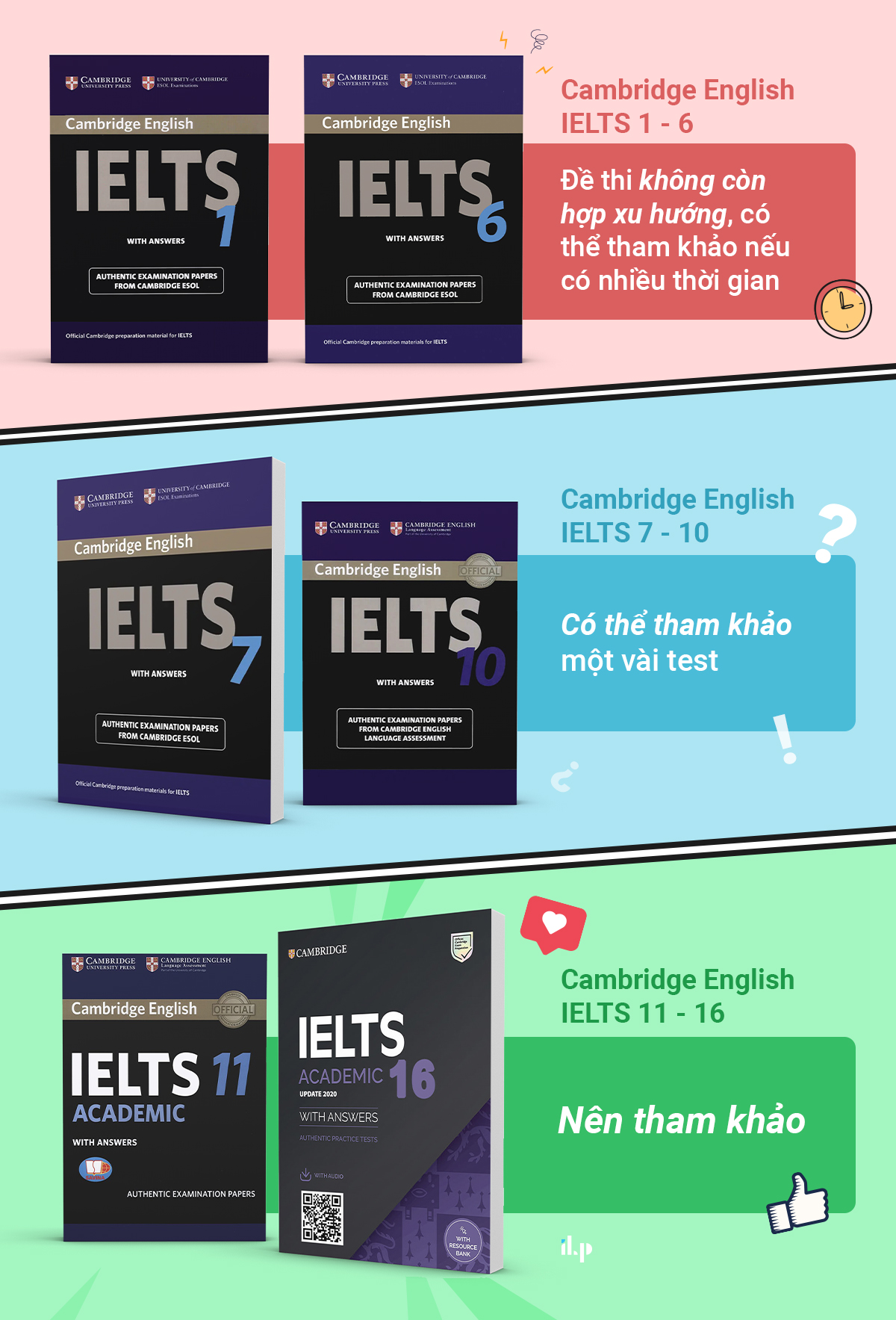
Với bộ sách Cambridge IELTS 1-6, bạn sẽ được làm và tìm hiểu kỹ về các dạng nghi vấn với một số chủ đề bài Writing, tuy nhiên format đề thi đã khá cũ và lỗi thời, không còn phù hợp với xu hướng đề thi hiện nay. Vì vậy, bạn có thể cân nhắc tham khảo qua hoặc chỉ luyện khi thực sự bạn đang có nhiều thời gian.

Với bộ sách Cambridge IELTS 7-10, các bạn hoàn toàn có thể tận dụng một số giá trị mà bộ sách đã đem lại về các dạng nghi vấn, format đề thi và các chủ đề Writing, Speaking đã được Cambridge sửa đổi và làm mới. Bên cạnh đó, các bài Writing cũng được cung cấp nhiều bài mẫu hoàn chỉnh, kèm theo phần nhận định của giám khảo dựa trên các mục tiêu chấm thi.

Với bộ sách Cambridge IELTS 11-16, bài test của hai phương thức Academic và General Training đã được tách riêng làm 2 cuốn. Điều này làm giảm đi sự phức tạp của một quyển sách, giúp bạn quy tụ vào một phương thức đã chọn một cách thuận lợi hơn. 

sách ielts cambridge 11 - 16

Format đề thi được thay đổi và cải cách để nắm bắt đúng xu thế đề thi, với bài thi Listening dạng nghi vấn điền từ đã không còn xuất hiện cụm từ “Write NO MORE THAN TWO WORDS” mà thay vào đó sẽ là “Write ONE WORD ONLY” tại một số bài điền từ. Các bài test đầu tương đối khá thuận lợi và sẽ khó dần tại Test 2 về sau.

Cách sắp xếp này thật sự phù hợp với bài thi thực tế vì đi từ dễ đến khó, tập cho các IELTS-er quen dần và thuần thục với các dạng đề IELTS.

Tải trọn bộ file PDF và Audien của bộ sách TẠI ĐÂY.

Qua những thông tin trên, hy vọng bạn sẽ có thể có được thông tin và cách nhìn tốt nhất về bộ sách Cambridge IELTS 1-16.

Chúc bạn sẽ có kiến thức nền thật vững chắc và có thật nhiều kiến thức bổ ích thông qua thời gian ôn luyện cùng bộ sách nhé! 

SÁCH LUYỆN NGHE IELTS CHO NGƯỜI MỚI BẮT ĐẦU

Mục lục

Thành thật với nhau nhé, giai đoạn mới bắt đầu học nghe, các bạn đã có những lần “chật vật” và “loay hoay” với việc phải bắt đầu từ đâu? Nên học sách luyện nghe IELTS nào phải không?

Thật ra việc lựa chọn một cuốn sách, tài liệu luyện nghe IELTS để bắt đầu cũng giống như việc “làm nền” cho ngôi nhà của mình vậy, phải thật sự tốt và chắc chắn thì mới có thể đứng vững và phát triển được.

Cùng tìm hiểu chi tiết về những cuốn sách luyện nghe IELTS “gối đầu giường” cho người “mới bắt đầu” và cân nhắc lựa chọn cho mình tài liệu phù hợp để phát triển kỹ năng nghe nhé!

Get ready for IELTS Listening

Đây là cuốn sách nằm trong bộ “Get ready for IELTS”, rất phù hợp dành cho các bạn đang bắt đầu học IELTS. Đối với các bạn “newbie” hoặc “mất gốc” hoàn toàn có thể lựa chọn tài liệu luyện nghe IELTS này vì thiết kế khá đơn giản và mức độ bài tập rất phù hợp.

sách luyện nghe IELTS get ready for ielts listening 1

Sách bao gồm 12 Unit theo các chủ đề khác nhau, được trình bày, diễn giải một cách cẩn thận, kỹ lưỡng và thật sự rõ ràng. Trong mỗi bài học, mỗi chủ đề bạn sẽ được củng cố về cả từ vựng lẫn ngữ pháp và theo đó là các bài nghe ngắn để thực hành.

Mỗi Unit được chia thành 4 phần với các bài tập được sắp xếp theo mức độ khó tăng dần, giúp người học phát triển khả năng ngôn ngữ, hoàn thiện dần các kỹ năng cần thiết để hoàn thành được bài thi. Bên cạnh đó, cứ mỗi 3 Unit sẽ có bài review các nội dung đã học, cuối sách còn có cả phần “practice test” để bạn làm quen với đề thi thật.

Đối với cuốn sách luyện nghe IELTS này, mỗi Unit bạn cần phải học kỹ “từ đầu đến đuôi” để nắm vững từ vựng và ngữ pháp, từ đó mới luyện được nhiều dạng bài tập khác nhau.

Khi đã quen dần bạn mới có thể thực hiện được các bài practice test với mức độ khó hơn. Với mỗi bài practice, bạn cũng nên tạo dần thói quen cho mình, chỉ nghe 1 lần để dễ thích nghi với đề thi IELTS Listening.

CHIA SẺ KINH NGHIỆM THI IELTS: CHIẾN LƯỢC LUYỆN NGHE ĐỂ ĐẠT 7.0 IELTS LISTENING

Basic Tactics for Listening 

Cuốn sách luyện nghe IELTS này là cuốn đầu tiên trong bộ 3 quyền “Tactics for Listening”. Ngay từ tên sách, có thể thấy rằng đây là tài liệu thiết kế dành riêng cho các bạn mới bắt đầu làm quen với IELTS Listening.

sách luyện nghe IELTS tactics for listening 1

Sách giúp các bạn luyện tập từ những đoạn hội thoại cơ bản, với những bài nghe khá đơn giản và tương đối dễ. Bạn sẽ dần làm quen với tốc độ nghe và giọng điệu. Bên cạnh đó, bạn còn có thể nghe dần từ số đến từ đơn, điều này sẽ rất có ích trong bài thi IELTS Listening với dạng “Fill in the blank”.

Sách trình bày theo 24 Unit, với mỗi Unit là một chủ đề liên quan đến cuộc sống hằng ngày hoặc trải nghiệm của giới trẻ, có thể kể đến như Clothes, Dates, Jobs, Small talk,…

Qua việc học với cuốn sách luyện nghe IELTS này, bạn sẽ dần cải thiện và phát huy nhiều kỹ năng, chẳng hạn khả năng nghe từ khóa, nghe chi tiết và nghe ý chính, kỹ năng lắng nghe và suy luận, đoán thái độ của người nói, khả năng nghe câu hỏi và phản hồi, khả năng ghi nhận và xác định thông tin.

Intensive IELTS Listening

Đây là cuốn sách luyện nghe IELTS dành cho người mới, là 1 trong 4 cuốn của bộ sách “Intensive IELTS”. Sách tập trung vào việc rèn luyện kỹ năng nghe cho “newbie”, và cũng được xem như một nguồn tài liệu tham khảo về các dạng bài tập cho giáo viên nhằm xây dựng kỹ năng cho học viên từ cơ bản đến nâng cao.

sách luyện nghe IELTS intensive IELTS listening 1

Intensive IELTS Listening gồm 5 phần chính: 

  • IELTS Overview (tổng quan về IELTS) 
  • Chapter 1: IELTS Listening Task Types (Các dạng câu hỏi trong IELTS Listening)
  • Chapter 2: IELTS Listening Practice Test (Bài kiểm tra ôn tập IELTS Listening)
  • Chapter 3: Tapescripts (Nội dung các đoạn ghi âm)
  • Chapter 4: Answer Key (Đáp án)

Thông qua tài liệu này, các bạn có thể thấy rằng bài tập cho từng dạng câu hỏi vô cùng phong phú với đa dạng các bối cảnh, giọng điệu và ngữ âm khác nhau.

Ngôn từ và nội dung của quyển sách luyện nghe IELTS này khá tiệm cận với bài thi thực tế, thuận tiện cho người học vừa ôn tập kỹ năng nghe vừa có thể bổ sung vốn từ vựng cho bản thân.

Bên cạnh đó, sách còn chia nội dung thành từng dạng bài riêng và trình bày một cách rõ ràng; giúp bạn dễ lựa chọn và ôn luyện các dạng bài, các kĩ năng chưa được tốt của bản thân.

05 VẤN ĐỀ THƯỜNG GẶP KHI LUYỆN NGHE IELTS VÀ CÁCH KHẮC PHỤC

Tuy vậy, Intensive IELTS Listening không có phần hướng dẫn sử dụng ở đầu sách, cũng như ở Chapter 1 được chia thành các dạng bài riêng biệt nhưng lại không có phần lý thuyết cơ sở, hướng dẫn làm bài và những lưu ý khi thực hiện từng dạng câu hỏi. Nên có thể nói “newbie” cũng cần nắm sơ lược về IELTS trước khi học với quyển sách này.

Bên cạnh đó, dù sách khá tốt nhưng các bạn nên cân nhắc vì sách được xuất bản năm 2013 và các tái bản sau cũng chưa được hiệu chỉnh bổ sung.

Chính vì thế, sách luyện nghe IELTS này thiếu các dạng xuất hiện trong đề những năm gần đây là Plan, diagram labelling (định nhãn cho kế hoạch, biểu đồ); Form, note, flowchart, summary completion (hoàn thành biểu mẫu, ghi chú, lưu đồ, tóm tắt); Sentence Completion (Hoàn thành câu).

Listen Carefully 

sách luyện nghe IELTS listening carefully 1

Từ trang bìa, các bạn có thể thấy rằng sách dành cho đối tượng học viên có khả năng tiếng Anh ở Elementary level (Theo British Council, elementary level tương đương với trình độ IELTS 3.5). 

Nhìn chung, cuốn sách luyện nghe IELTS này thích hợp cho những bạn mới bắt đầu luyện IELTS và mới học tiếng Anh thông thường nhưng cũng đã có kiến thức cơ bản.

Sách chia thành 15 chủ đề tương ứng 15 Unit với mức độ khó tăng dần từ 1 đến 15. Đặc biệt, tài liệu mang đến nhiều bài học khác nhau, gồm cả độc thoại và đối thoại với nhiều dạng bài tập. 

LỢI ÍCH VÀ CÁCH TẬN DỤNG TRANSCRIPT ĐỂ CẢI THIỆN KỸ NĂNG NGHE IELTS

Điểm khác biệt của cuốn sách này là nội dung chia thành chủ đề (chương), không chia theo dạng bài test. Cũng chính vì thế mà mục lục của sách trình bày rõ ràng, liệt kê một cách chi tiết giúp các bạn dễ dàng tìm nội dung mình muốn. 

Không những thế, các dạng bài tập cũng được sắp xếp theo mức độ khó tăng dần. Điều này tạo điều kiện để bạn làm quen dần, không gây ra tình trạng quá sức từ đầu dẫn đến nản từ đầu.

Về nội dung, cuốn sách này bao gồm các chủ đề gần gũi, không chứa nội dung mang tính quá học thuật, quá khoa học. Nhờ vậy, các bạn có thể dễ dàng tiếp thu hơn và không cảm thấy khô khan.

Listen Carefully được xuất bản từ năm 1990, đến nay bản cứng của sách hầu như không còn được bán trên thị trường Việt Nam gây khó khăn trong việc mua sách bảng cứng và CD. Tuy vậy bạn cùng đừng lo lắng vì bạn có thể tải file sách (PDF) và file nghe (audio). 

Basic IELTS Listening – sách luyện nghe IELTS cho người mới

Cuốn sách luyện nghe IELTS này là cuốn sách nổi tiếng nhất trong bộ 4 quyển “Basic IELTS”. Sách tập trung vào 5 chủ đề liên quan đến xã hội, văn hóa và cộng đồng. 

Cuốn sách đi sâu vào sự đa dạng của ngôn ngữ tiếng Anh giao tiếp hằng ngày. Nhìn chung, đây là một lựa chọn sáng suốt để bạn “trang bị hành trang”, sẵn sàng đương đầu các bài thi Listening. 

sách luyện nghe IELTS basic ielts listening 1

Không quá khó đoán vì từ tên sách “Basic”, bạn cũng có thể biết rằng sách dành cho những người mới bắt đầu ôn luyện IELTS. Nội dung sách bao gồm phần giới thiệu về Listening và những câu hỏi thường gặp; các tips đơn giản để làm bài nghe hiệu quả và phân phố thời gian làm bài; các chủ đề, file Audio và keys nằm ở cuối sách giúp thí sinh kiểm tra lại đáp án.

5 Unit tập trung 5 chủ đề thường gặp: Name and Places, Number, Survival English, Popular Science, Academic English.

NGHE IELTS: HƯỚNG DẪN CHI TIẾT DẠNG BÀI COMPLETION (PHẦN 3)

Kèm theo đó là 5 -1 5 bài tập đơn giản, giọng đọc dễ nghe giúp các bạn có thể tập quen dần và “nâng cấp” kỹ năng bản thân. Đồng thời, ở mỗi bài đều có mục Notes dùng để ghi chú những điểm cần lưu ý, lỗi sai hay mắc phải khi luyện nghe.

Các bạn cần nghe đi nghe lại nhiều lần cho quen tai. Đồng thời cũng cần ghi chú lại từ vựng, bẫy, từ hay cụm từ dễ nhầm lẫn, lỗi sai thường gặp để khắc phục lần sau, từ đó xây dựng cho mình khả năng nhận diện từ, ngữ điệu, cũng như giọng đọc.

Với những tài liệu trên, hy vọng các bạn sẽ cân nhắc là lựa chọn cho mình một cuốn sách luyện nghe IELTS thật phù hợp để xây dựng và trau dồi kỹ năng nghe của bản thân mình. Chúc các bạn có một khởi đầu thật tốt và một kết quả đáng mong đợi nhé!

Trần Nguyễn Anh Khoa